


Key Takeaways
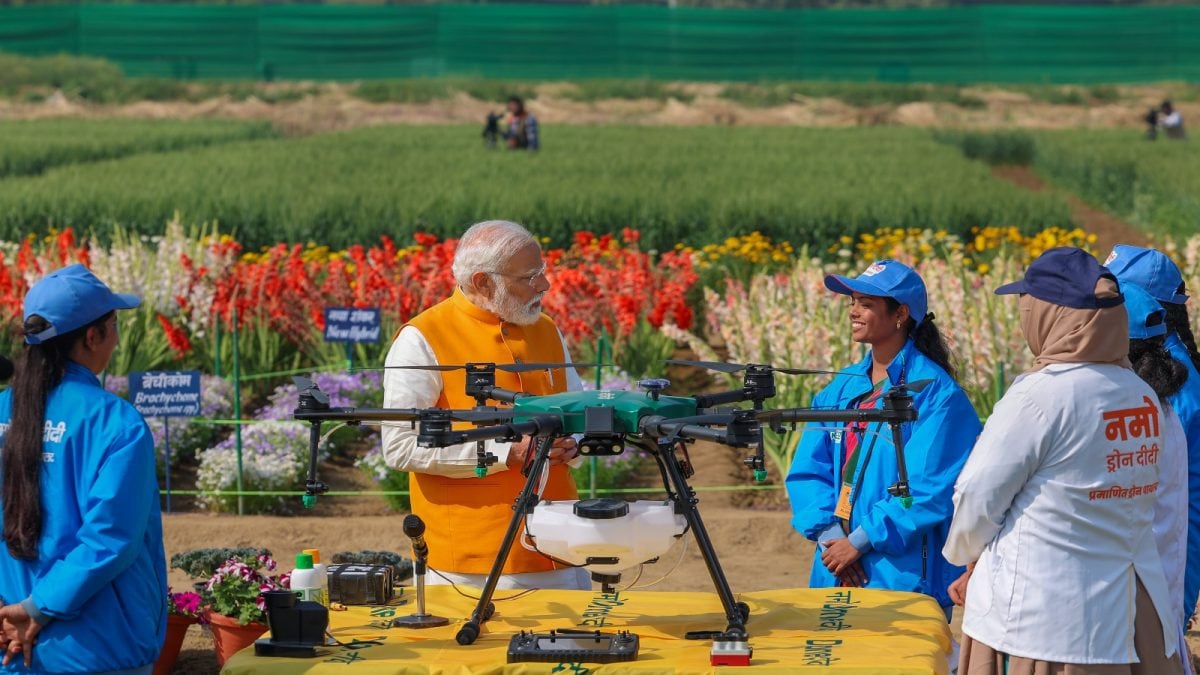
- The Namo Drone Didi Yojana empowers women-led Self-Help Groups by providing drones for agricultural use, aiming for Rs 1 lakh additional income per year.
- 80% of the drone costs will be subsidized, with training included to enhance farming efficiency and sustainability.
- India’s drone market is projected to grow significantly, driven by government initiatives to foster indigenous manufacturing and innovation.
Empowering Women in Agriculture with Drones
The Namo Drone Didi Yojana (NDDY), introduced by the Modi government, aims to empower women-led Self-Help Groups (SHGs) by providing drones for agricultural tasks. The initiative targets 15,000 women, enabling them to earn an additional income of at least Rs 1 lakh annually as “Drone Didis.” Under this scheme, women will receive 80% of the drone costs, up to Rs 8 lakh, as a subsidy, alongside low-interest loans and comprehensive training in drone piloting.
Drones equipped with advanced technology facilitate important agricultural activities such as crop monitoring, soil analysis, and resource management. This technology promotes sustainable farming by reducing chemical use, cutting costs, and enhancing both safety and efficiency in farming practices. Additionally, the training will help women manage irrigation, detect leaks, and overall, improve their agricultural productivity.
The NDDY reflects India’s broader push for advancements in its drone industry, particularly through programs like “Make in India,” which supports local drone manufacturing. Recent statistics indicate that the agricultural drone market is projected to reach $631.4 million by 2030, highlighting a significant opportunity for growth in this sector.
The initiative will not only bolster women’s entrepreneurship but also foster community collaboration through forums and workshops, where participants can share knowledge and experiences. Several government-supported collaborative programs, such as the STREE initiative, further enhance women’s capabilities in agriculture, providing training and resources across multiple Indian states.
Overall, this scheme seeks to create 3 crore “Lakhpati Didis” over the next three years, significantly impacting the rural economy by encouraging diversified livelihood options. In addition, the Modi government has implemented various policy reforms geared towards reducing dependence on foreign drone components while maximizing domestic production.
The drone industry is experiencing rapid growth, with noted milestones such as a significant increase in startups and government initiatives promoting innovation. With ambitious targets set for 2030, India aims to establish itself as a global hub for drones, stimulating technological advances, job creation, and economic growth. As the nation strides towards Industry 4.0, drones are positioned as vital elements in transforming agriculture and enhancing productivity in rural areas.
The content above is a summary. For more details, see the source article.









