Key Takeaways
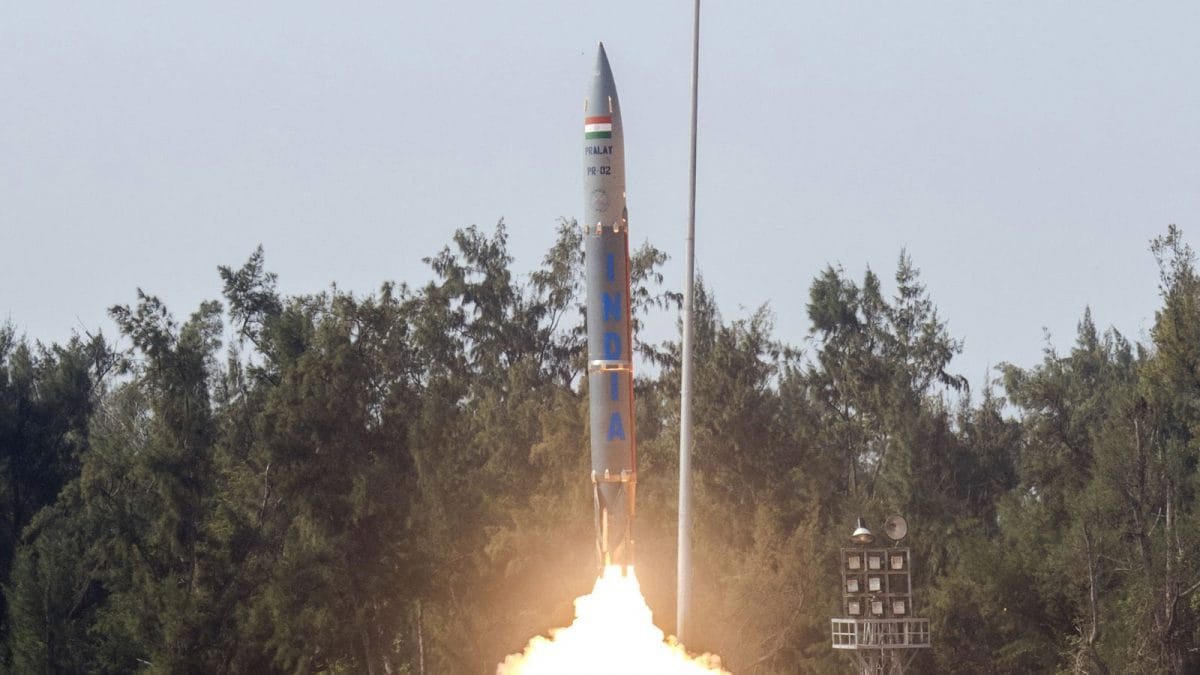
- The Pralay missile is a hypersonic weapon that travels at speeds over Mach 5, offering speed, maneuverability, and survivability.
- This missile’s technology has potential applications in aerospace, particularly in reentry vehicles for space exploration.
Overview of the Pralay Missile
The Pralay missile represents a significant advancement in hypersonic technology, designed to reach speeds exceeding Mach 5 (five times the speed of sound). Unlike conventional ballistic missiles, the Pralay missile exhibits exceptional maneuverability, making it a challenging target for existing defense systems. Its advanced propulsion, including scramjet engines, along with innovative materials designed to withstand extreme temperatures, enhances its military effectiveness while laying the groundwork for advancements in space technology.
The Advantages of Hypersonic Technology
The Pralay missile’s hypersonic capabilities afford several critical advantages:
1. **Speed**: It can hit targets quickly, covering thousands of kilometers in minutes, crucial for both offensive and defensive missions.
2. **Manoeuvrability**: Unlike traditional missiles, hypersonic missiles can alter their flight paths, helping them evade enemy defenses.
3. **Survivability**: Its speed and maneuverability make it exceedingly difficult for adversaries to detect, track, or intercept.
4. **Versatility**: These systems can be equipped with various payloads, including warheads and reconnaissance equipment.
Potential for Aerospace Innovations
The technology developed for the Pralay missile has broad implications beyond military usage, particularly in creating advanced reentry vehicles for space. Notable innovations include:
1. **Thermal Protection Systems**: Materials that withstand extreme heat can enhance the safety of spacecraft reentering Earth’s atmosphere.
2. **Aerodynamic Design**: Knowledge of hypersonic design can improve the stability and control of space capsules during reentry.
3. **Propulsion Systems**: Scramjet technology may inspire new propulsion systems for space flights, improving efficiency.
4. **Guidance and Navigation**: Precision systems can enhance landing success on Earth and other celestial bodies.
5. **Materials Science**: Advances in lightweight and heat-resistant materials could contribute to developing more efficient spacecraft.
Looking Ahead: Challenges and Opportunities
Integrating hypersonic technology into space exploration is poised to redefine aerospace engineering, significantly enhancing mission capabilities to the Moon and Mars. However, there are challenges such as rigorous testing and the ethical implications tied to militarization. To navigate these complexities, international cooperation and regulations will be crucial to ensure responsible development.
The Pralay missile, while a military asset, is a catalyst for innovation that could transform space travel and exploration, making interplanetary journeys a realistic goal. As the aerospace industry continues to develop hypersonic technologies, the potential for advancing space exploration remains vast.
The content above is a summary. For more details, see the source article.