Key Takeaways
- On August 12, 2026, Europe experienced a total solar eclipse, coinciding with ESA’s Proba-3 mission achieving its 65th artificial eclipse.
- The Proba-3 spacecraft, positioned 60,000 km above Earth, uses an Occulter to block the Sun for its Coronagraph, providing clear views of the solar corona.
- The Moon crossed the Proba-3’s field of view shortly after the artificial eclipse, creating a double eclipse event.
Artificial and Natural Eclipses Align
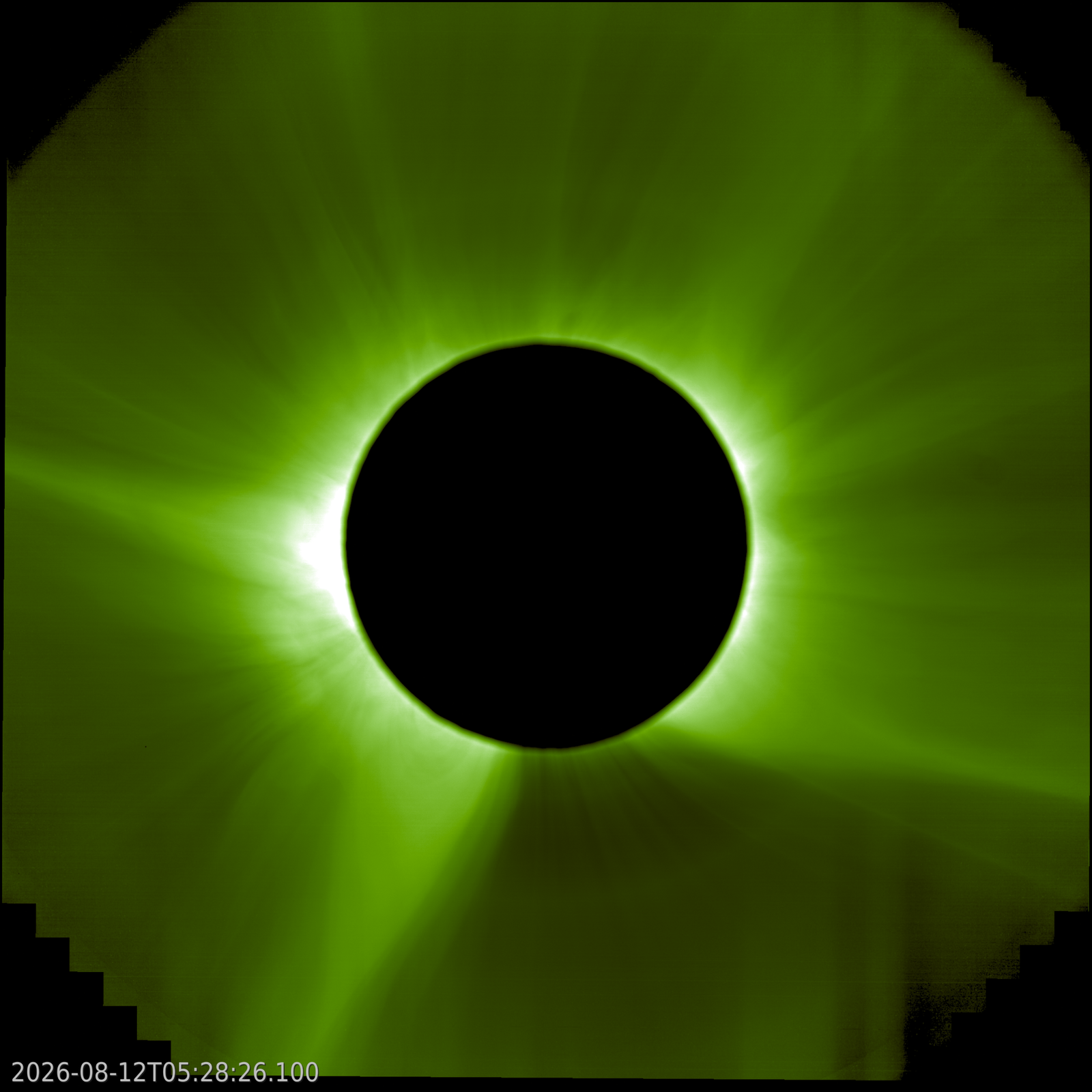
On August 12, 2026, parts of Europe were treated to a spectacular total solar eclipse. However, mere hours prior, the European Space Agency’s (ESA) Proba-3 mission orchestrated an artificial eclipse—marking its 65th such event—thanks to the innovative technology onboard.
At an altitude of 60,000 km above Earth, Proba-3 consists of two spacecraft that align precisely, maintaining a distance of 150 meters apart. The Occulter spacecraft functions as an artificial Moon, blocking sunlight for the Coronagraph spacecraft below it. This configuration grants the Coronagraph uninterrupted access to observe the Sun’s inner corona, which was captured visually shortly after dawn on the day of the eclipse.
Interestingly, the natural solar eclipse took place just as the Moon passed through Proba-3’s field of view, creating a rare double eclipse phenomenon. This event not only highlights the advanced capabilities of Proba-3 but also showcases the synchronicity of natural celestial events.
About two weeks prior to the eclipse, Proba-3 had positioned itself on the other side of the Sun for observation. As it takes approximately two weeks for the Sun to rotate halfway around its axis, the mission’s earlier observations allowed scientists to accurately predict the views for both Proba-3 and those observing from the ground on August 12.
Millions of individuals alongside various space missions documented the natural solar eclipse, contributing to a collection of breathtaking visuals from the event. The juxtaposition of the artificial eclipse with a simultaneous natural occurrence creates a unique narrative about modern astronomy’s capabilities and the awe of celestial phenomena.
The advancements in observation technology, as exhibited by ESA’s Proba-3 mission, continue to enhance our understanding of solar dynamics and deepen the experience of these rare astronomical events for viewers both on Earth and in space.
The content above is a summary. For more details, see the source article.