

Key Takeaways
- The Proba-3 mission by the European Space Agency successfully brought its Occulter and Coronagraph spacecraft to within 200 meters of each other for precision formation-flying.
- The Occulter captured images of the Coronagraph using a Visual Based System, which will be vital for studying the Sun’s corona during the mission.
- The spacecraft will perform its first autonomous pointing, preparing for artificial solar eclipses in orbit to enhance solar research.
Mission Progress and Technology
The Proba-3 mission, led by the European Space Agency (ESA), marks a significant advancement in space observation technology as its Occulter and Coronagraph spacecraft prepare for the world’s first precision formation-flying operation. The groundbreaking mission aims to create artificial solar eclipses in orbit, thereby enabling scientists to study the Sun’s corona for extended periods—a feat not possible with terrestrial observations during natural eclipses.
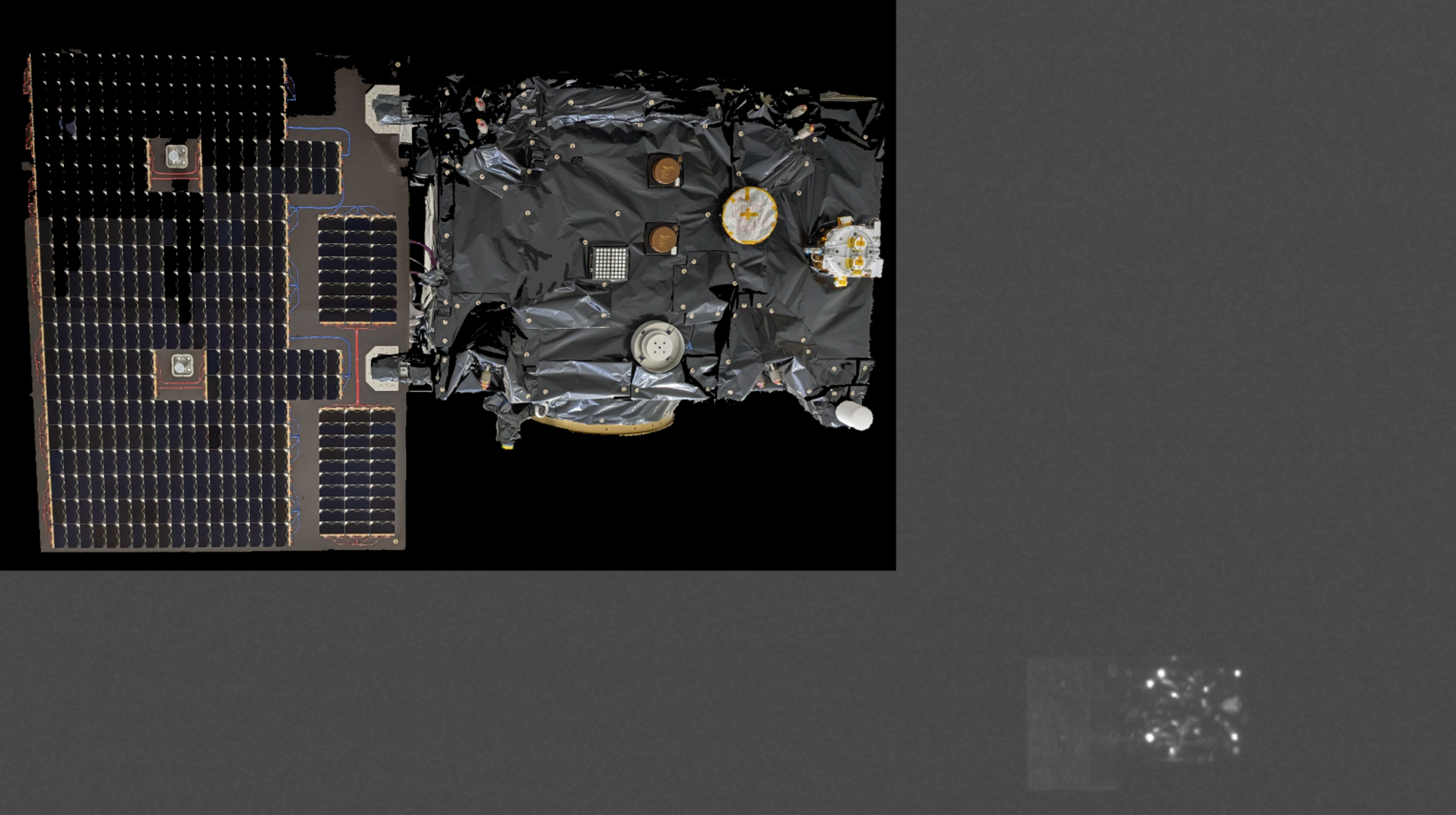
Recently, the two spacecraft were brought to a safe distance of just 200 meters apart, a critical phase in mission preparations. During this close approach, the Occulter used its Visual Based System, equipped with two cameras, to capture a series of images of its twin, the Coronagraph. Notable features of the Coronagraph were discernible in these images, including its solar panel and ASPIICS coronagraph. This successful imaging represents an important milestone in the mission, as the system will be used throughout the mission for enhanced observation capabilities.
The unique design of the Proba-3 mission hinges on a 1.4-meter occulting disk mounted on the Occulter, which will block out the Sun’s bright surface while casting a shadow on the Coronagraph. This configuration allows the Coronagraph to meticulously observe the solar corona, providing invaluable data on solar phenomena.
Initially, the Occulter captured images of the Coronagraph from a distance of approximately 4.5 kilometers. Since then, ESA’s operational team at the European Space Security and Education Centre in Belgium accomplished a vital task by moving the spacecraft closer for accurate alignment. With the spacecraft now at 200 meters apart, the mission control team proceeded to the next critical step: achieving ‘target pointing,’ where the two spacecraft orient themselves towards each other precisely.
Damien Galano, the Proba-3 mission manager, commented on achieving the first successful targeting with the Visual Based System: “This is the ‘first light’ of our Visual Based System sensor, which will be used again later on in the mission, allowing us to see the spacecraft in even more detail.” Following successful data collection, the spacecraft transitioned to autonomous mode for the first time, demonstrating their capability to maintain precise positioning without ground intervention. This autonomy is essential for the next phase, as the spacecraft prepare to execute their formation-flying sequence.
Further advancements are anticipated, as the team eagerly awaits the command to initiate the final alignment of the Coronagraph within the Occulter’s shadow. This alignment is crucial for the next steps in the mission, setting the stage for artificial eclipses that will enhance understanding of solar activity. Proba-3’s pioneering work could significantly contribute to solar research, unlocking new insights into the behavior of the solar corona and its impact on space weather.
The content above is a summary. For more details, see the source article.