Key Takeaways
- NASA’s INSPYRE mission studies the effects of pyroCumulonimbus clouds created by wildfires, which can release ash and gases into the stratosphere.
- The Widemouth 2 fire in Utah produced significant pyroCbs, contributing to atmospheric changes and posing forecasting challenges.
- Research indicates that wildfires may produce about 70 pyroCbs annually, rivaling emissions from volcanic eruptions.
NASA Investigates PyroCumulonimbus Clouds from Wildfires
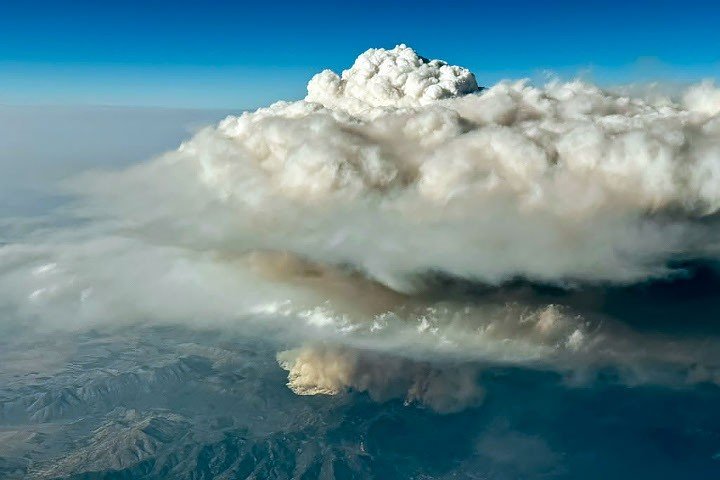
Scientists have discovered that wildfires, similar to volcanoes, can release vast amounts of particles into the stratosphere. These wildfires generate towering smoke clouds known as pyroCumulonimbus (pyroCb), which have been shown to influence the atmosphere over long periods.
A recent effort by atmospheric scientists, part of NASA’s INSPYRE (INjected Smoke and PYRocumulonimbus Experiment), aims to better understand these clouds. This summer, researchers are using NASA’s ER-2 aircraft, NSF/NCAR’s GV, and ground-based sensors to sample pyroCbs directly. Their study commenced with the Widemouth 2 fire in Utah, which ignited on July 27, 2026, and rapidly expanded due to strong winds and dry weather conditions.
The fire produced two pyroCb events, which were documented via satellite imagery. The MODIS (Moderate Resolution Imaging Spectroradiometer) captured these significant bursts of cloud and smoke. Temperatures measured at the cloud tops suggested they were protruding into the stratosphere, indicating intense atmospheric activity.
Morning pyroCbs like the one observed are uncommon since they do not benefit from daytime heating, yet sufficient atmospheric instability allowed for their formation. Multiple pyroCb occurrences within a single day can complicate fire management efforts, making research into these phenomena vital for improving forecasting.
Remote sensing experts regularly track pyroCbs using satellites, but sampling them shortly after their formation is less common. When the Widemouth 2 fire erupted, the GV aircraft quickly targeted the resultant smoke plume, collecting data at roughly 12 kilometers (8 miles) above ground—measurements often excluded from standard forecast models.
Additionally, on-board scientists captured images of a pyrocumulus cloud forming over the fire. These precursor clouds, while not as powerful as pyroCbs, still indicate active fire-driven convection. Current research has identified that wildfires produce around 70 pyroCbs annually, particularly in forested areas of Canada and Russia.
Since pyrocumulonimbus clouds were first documented in the early 2000s, over 700 instances have been recorded. It is estimated that these clouds contribute approximately 25 percent of the black carbon and organic aerosols found in the lower stratosphere. The frequency of pyroCbs could see their total emission mass during wildfire seasons rival that of major volcanic eruptions.
Despite the progress made in understanding pyroCbs, several questions remain. Uncertainties include which types of vegetation trigger their formation, reasons for varying lightning output, and the conditions that lead to their development in only a fraction of wildfires.
The ongoing research emphasizes the complexities and implications of pyroCb clouds, which not only produce hazardous weather phenomena on the ground but also create lasting effects on atmospheric conditions. Scientists continue to be intrigued by the unpredictable nature of these clouds, highlighting the need for further investigation into their role in the global climate system.
The content above is a summary. For more details, see the source article.