Key Takeaways
- An international research team investigated the behavior of graphene aerogels during zero gravity conditions aboard ESA’s parabolic flight in May 2025.
- The study revealed that laser propulsion could significantly enhance the acceleration of graphene aerogels in microgravity, allowing for new possibilities in space navigation.
- Graphene aerogels, known for their ultralight and porous nature, combine high electrical conductivity with impressive structural performance, making them suitable for future space applications.
Research on Graphene Aerogels in Microgravity
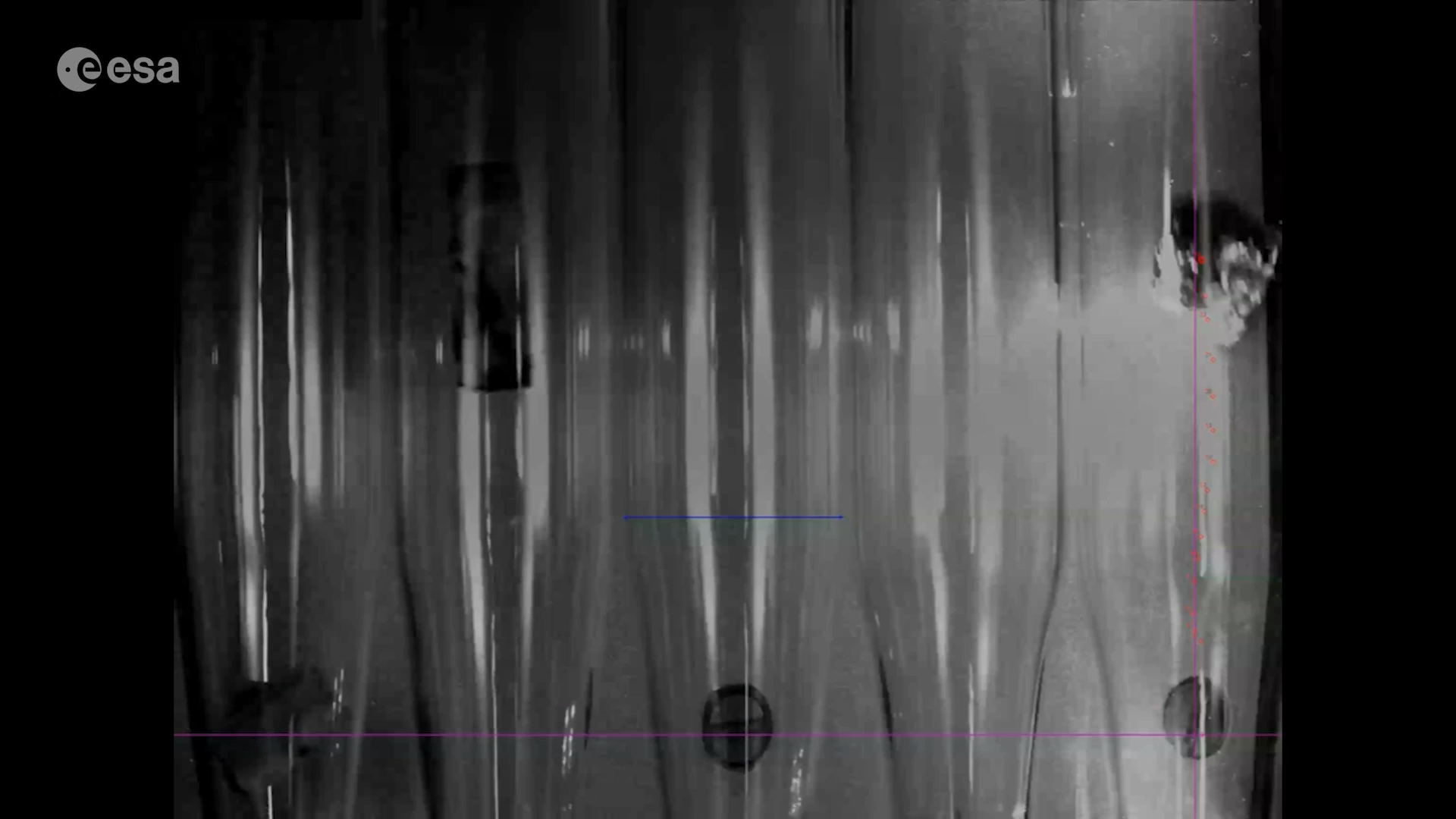
In May 2025, a collaborative international research team participated in the European Space Agency’s (ESA) 86th parabolic flight campaign, where they examined ultralight graphene aerogels. The research aimed to observe the materials’ responses to light during microgravity conditions. Inside a vacuum chamber, three small cubes of graphene aerogel were subjected to a continuous laser while being observed through glass tubes with a high-speed camera. The laser experiments were deliberately brief, lasting just 30 milliseconds, and the footage was recorded at a speed reduced by 10 times for analysis.
The findings of the experiments were striking: under microgravity, the graphene aerogel samples exhibited rapid forward motion immediately upon exposure to the laser. Notably, researchers discovered that the propulsion effect could be manipulated by varying the intensity of the light beam—the stronger the laser, the greater the acceleration. In stark contrast, the graphene aerogels showed almost no movement when tested under Earth’s gravity, highlighting the unique advantages of microgravity for propulsion.
These results, published in the journal Advanced Science, showcase the potential of laser propulsion technology to enhance the velocity, thrust, and distance of graphene aerogels in space. This advancement could pave the way for innovative applications, such as steering solar sails or adjusting satellite positions in outer space using lasers.
Graphene aerogels are remarkable materials characterized by their ultralight weight and highly porous structure. They leverage the exceptional electrical conductivity of graphene while maintaining strong mechanical properties despite their reduced density. The research was spearheaded by scientists from the Université Libre de Bruxelles (ULB) in Belgium and Khalifa University in the United Arab Emirates (UAE), underscoring the global collaboration in advancing space technology and materials science.
The content above is a summary. For more details, see the source article.