Key Takeaways
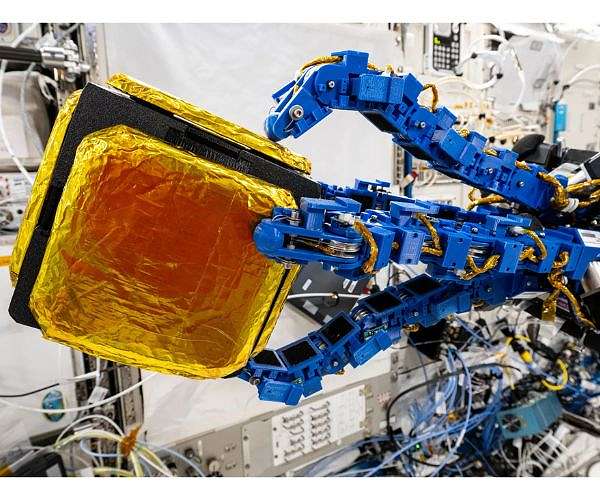
- The Astrobee robot successfully demonstrated a new gripping system by autonomously latching onto a capture cube.
- This technology has significant implications for satellite servicing and space debris removal in low Earth orbit.
- Developed at NASA’s Ames Research Center, the Astrobee includes three robots and utilizes advanced sensors and cameras for navigation.
Robot Demonstrates Advanced Gripping Technology in Space
On February 4, 2025, NASA successfully showcased a cutting-edge gripping technology using its Astrobee robot. In a recent experiment, the blue, tentacle-like gripping system autonomously latched onto a “capture cube,” highlighting potential applications in space, such as debris removal and satellite servicing.
The Astrobee system, developed at NASA’s Ames Research Center in Silicon Valley, consists of three cube-shaped robots named Bumble, Honey, and Queen, along with specialized software and a docking station for recharging. Designed to operate in the microgravity environment of the International Space Station (ISS), these autonomous robots navigate their surroundings using integrated cameras and sensors, propelled by electric fans.
Aside from their ability to traverse the ISS, the Astrobee robots are equipped with perching arms. These versatile arms allow the robots to grip station handrails, thereby conserving energy while securely holding objects. This advancement significantly enhances their functionality for various future space missions.
The successful demonstration of this gripping technology represents a notable progression in the autonomous capabilities of robotic systems for space operations. With improved dexterity, these robots could substantially enhance satellite maintenance, assist in debris mitigation, and simplify other complex tasks beyond Earth’s atmosphere. This innovation may prove vital in ensuring the safety and efficiency of continued space exploration and operations.
This achievement not only underscores NASA’s commitment to advancing robotic technology for use in space but also opens new avenues for addressing challenges associated with satellite servicing and the growing issue of space debris, illustrating the critical role of automation in future space missions.
The content above is a summary. For more details, see the source article.