


Key Takeaways
- The Small Farm Tech Expo at UC Merced focused on innovative agricultural technology for small farmers.
- CAFF introduced a small farms innovation challenge and a report to aid innovators in serving small farm needs.
- A lending library for small farmers offers access to farming equipment, enhancing operational efficiency.
Expo Highlights and Innovations
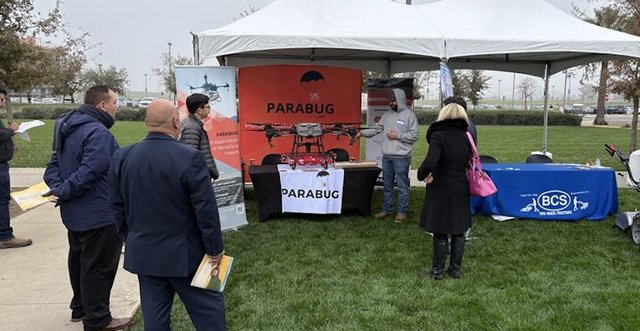
The Small Farm Tech Expo recently took place at UC Merced, gathering researchers, farmers, students, and even local elementary school children to explore advancements in agricultural technology. Sponsored by the Community Alliance with Family Farmers (CAFF) for the fifth consecutive year, the event featured equipment demonstrations, educational sessions, and panel discussions aimed at supporting small-scale farmers.
Leigh Bernacchi, executive director of the Valley Institute for Sustainability, Technology and Agriculture at UC Merced, emphasized the integral role of small farmers, saying, “The small farmer does everything.” They handle various tasks such as planting, nurturing, harvesting, and selling, often without access to advanced agricultural technologies available to larger farms. This lack of resources underlines the necessity for collaboration and support for small farming operations.
CAFF announced a small farms innovation challenge during the expo to encourage innovators to create agtech solutions tailored to smaller operations. Additionally, a report outlining small farm technology needs was released to guide future innovations. Key presentations included discussions on agrivoltaics and farmer challenges, alongside an introduction to a new lending library offered through University of California Agriculture and Natural Resources and F3 Local, based at the ag research and extension center in Parlier.
The lending library serves farmers managing under 50 acres in Fresno, Tulare, Kings, Madera, or Merced counties, allowing them to borrow essential equipment, including tractors and compost spreaders, for one to four days after completing operator training. A nominal fee is expected to apply once the fee structure is finalized. Amber Butland, the coordinator, noted that this initiative is a pilot project to determine its effectiveness.
During the expo, farmers also participated in a workshop to express operational challenges, such as planting strawberries and harvesting citrus from hilly terrain. Marissa Johnson, an agricultural outreach specialist with UCANR, stated that feedback from these discussions will inform the next SF-ADAPT meeting, which connects small farmers with researchers and technologists focused on practical and repairable technology solutions.
Bernacchi envisions a future where farmers have the necessary tools, researchers innovate sustainably, and families can thrive in the agricultural ecosystem. She expressed hope for a collaborative future in agriculture, encouraging continuous partnership to address community food security and sustainable farming practices.
The content above is a summary. For more details, see the source article.









