


Key Takeaways
- A drone, likely of Russian origin, was intercepted near France’s aircraft carrier in Malmö, Sweden.
- The incident prompted an investigation for potential airspace violations by Sweden’s defense forces.
- Sweden is enhancing its drone detection and electronic warfare capabilities amid increased military activities in the region.
Incident Overview
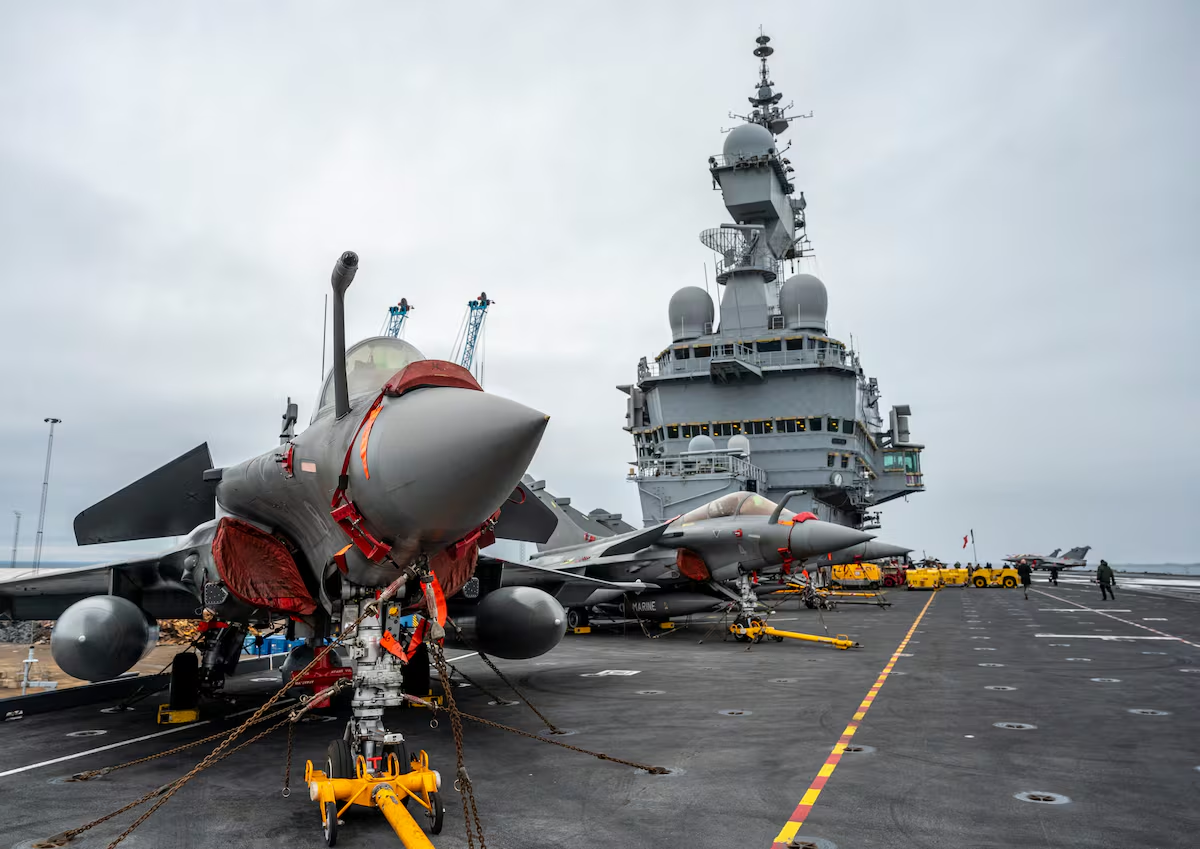
On February 26, a drone, believed to be of Russian origin, was intercepted by the Swedish Navy approximately 13 kilometers from the French nuclear-powered aircraft carrier, Charles de Gaulle, docked in Malmö. While on patrol in the Oresund Strait, which separates Denmark and Sweden, a Swedish Navy vessel detected the unmanned aerial system approaching the French ship.
Following this detection, Swedish defense forces executed countermeasures to disrupt the drone, successfully losing contact with it. Although the Swedish Armed Forces reported no additional drone sightings, the incident raised concerns regarding airspace security. Minister of Defense Pål Jonson described the situation as a probable violation of Swedish airspace and confirmed that an investigation has been initiated to ascertain the legality of the drone’s presence.
The specifics of the Russian vessel operating nearby at the time of the incident remain unconfirmed. However, maritime observers have noted the presence of several Russian-flagged ships in the vicinity, including Sparta IV, a cargo vessel under U.S. sanctions linked to transporting military supplies between Syria and Russia.
In response to growing security threats, Sweden is enhancing its unmanned aerial system capabilities, focusing on acquiring electronic warfare systems and drone detection sensors that can be deployed on ships or ground setups. This strategic move is part of an extensive overhaul aimed at bolstering national defense.
Additionally, the presence of the Charles de Gaulle in Malmö is associated with ongoing NATO exercises, such as the Orion 2026 drills set to occur in the North Atlantic and Baltic regions. These exercises, which commenced in early February, will run until March, underlining the heightened military activity in European waters.
The action taken by the Swedish forces has been described as effective. Guillaume Vernet, spokesperson for the French General Staff, reported that the countermeasures successfully protected the aircraft carrier, ensuring its activities were not disrupted during the incident.
The ongoing tensions in the region reflect broader geopolitical dynamics as nations enhance their military readiness amidst concerns about air and maritime security. With unresolved questions surrounding the identity of the Russian vessel and the intent of the drone, the situation remains a focal point of interest for defense analysts and regional security watchers alike.
The content above is a summary. For more details, see the source article.









