


Key Takeaways
- The Tesla Cybercab has been spotted testing on public roads with a human driver and steering wheel, signaling it is not yet at full autonomy.
- Featuring a two-seat layout, the Cybercab aims to optimize efficiency and reduce production time.
- Production is anticipated to start in April 2026, pending regulatory approval for fully autonomous operation.
Tesla Cybercab Testing in Austin
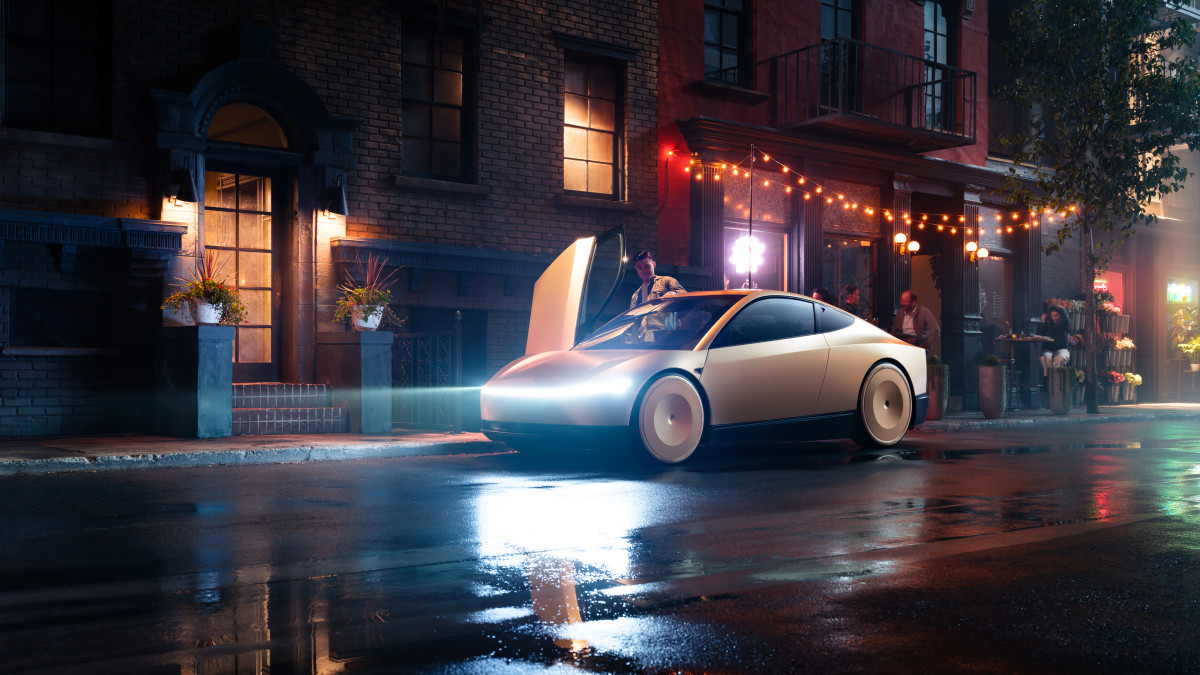
The Tesla Cybercab has recently been seen on public roads in Austin, Texas, where images and videos reveal test vehicles with a steering wheel and a human driver. This setup differs from expectations for the production-intent model. The test vehicles also featured side mirrors, which were missing during the initial debut of this dedicated robotaxi last year.
The Cybercab’s design adheres to a compact, two-seat configuration, which, while limiting passenger capacity, offers the advantage of reduced mass. This minimalism is significant because a lighter vehicle improves energy efficiency and range—key elements in Tesla’s strategy for keeping operational costs low.
Additionally, the smaller size and simpler design of the Cybercab facilitate quicker assembly, aligning with Tesla’s target of producing one vehicle every ten seconds. Though the autonomous driving system did not appear fully operational during the Austin tests, the vehicles managed to navigate traffic without notable issues.
In comparison to Tesla’s Model 3, which employs SAE Level 2 driver-assistance systems requiring constant human attention, the Cybercab is designed to aim for SAE Level 4 autonomy, operating fully autonomously without human intervention. This vision explains the absence of steering wheels or pedals in the planned final design.
Following sightings in Austin, the Cybercab was initially observed in Los Altos, California, and a production-spec version was showcased at a showroom in San Jose. Tesla is currently aiming for production to begin in April 2026; however, this timeline hinges on securing regulatory approval for unsupervised autonomous operation. Without this endorsement, the attraction of a steering-wheel-free, two-seat robotaxi diminishes. Currently, Tesla relies on modified Model Y vehicles to support its early robotaxi initiatives while waiting for further developments.
The content above is a summary. For more details, see the source article.









