


Key Takeaways
- Tesla is increasing production of its electric Semi and launching 66 Megacharger locations across the US.
- The first public Megacharger station for Semi customers opened in Ontario, California, with plans to expand to key freight corridors.
- Competitors are also advancing with charging infrastructure that supports higher speeds, posing challenges for Tesla’s rollout timeline.
Tesla’s Semi Production and Charging Rollout
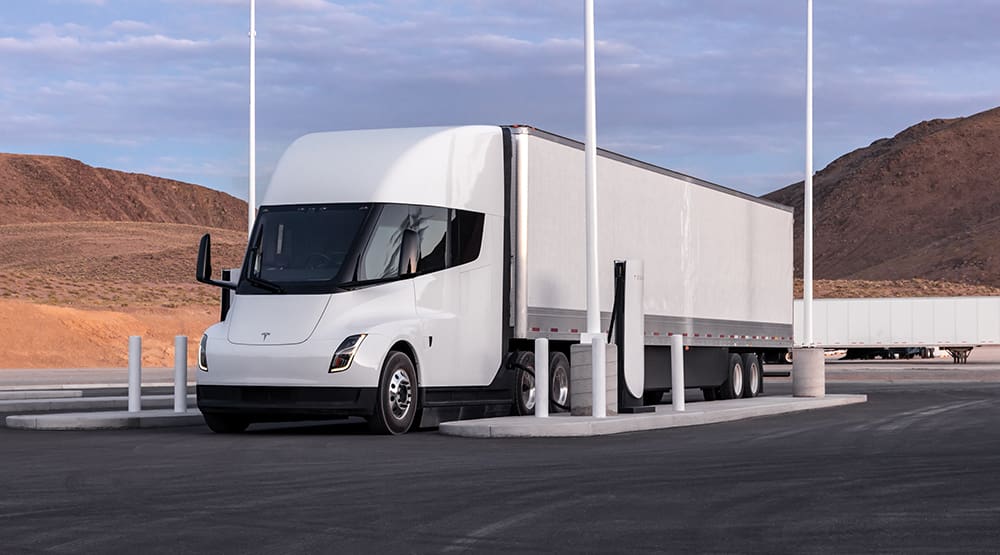
Tesla is significantly ramping up the production of its electric Semi truck while also initiating the installation of a crucial charging infrastructure. The company intends to establish 66 Megacharger locations across the United States. So far, two Megacharger stations are operational—one at Gigafactory Nevada and another in Carson, California—designed primarily for Tesla’s fleet use. Recently, Tesla inaugurated its first customer-facing Megacharger station in Ontario, California, aimed specifically at Semi customers.
These planned Megacharger locations are strategically placed along the most trafficked freight corridors in North America, including Interstate 5 on the West Coast, Interstate 10 running east-west, and Interstate 95 and Interstate 75 on the East Coast. The goal is to have 37 of these sites up and running by the end of 2026, increasing to 46 by early 2027.
The Ontario location is situated within the Inland Empire, a critical hub for freight traffic, near the junction of I-10 and I-15, as well as the busy Ports of Los Angeles and Long Beach. Tesla’s Megachargers can theoretically provide up to 1.2 MW of charging power; however, the current Ontario station offers 750 kW of output.
The opening of the Ontario Megacharger is viewed by industry experts, such as Electrek’s Fred Lambert, as a pivotal moment marking the Semi’s movement from prototype to commercial availability. Tesla has shown rapid advancement in recent months, having demonstrated 1.2 MW charging capabilities and entering a partnership with a truck stop operator earlier in the year.
Despite the momentum, electric truck enthusiasts remain cautious about Tesla’s unfolding timeline. The transition from planning to operational charging stations is often fraught with challenges, including permitting, utility connections, construction, and testing phases. The next few years will be critical for monitoring Tesla’s progress.
In the competitive landscape, Tesla faces challenges from rivals who are advancing their own charging infrastructures. Charging stations based on the Megawatt Charging System (MCS), supporting speeds of up to 3.75 MW, are becoming operational in Europe and the US. Truck manufacturers like Daimler, Volvo, and Scania are also preparing to launch MCS-compatible electric trucks by 2026. Additionally, EVSE manufacturer Kempower has set up MCS charging hubs at various sites, including three in Scandinavia and one in San Bernardino, positioning them as significant competitors near Tesla’s new location.
As the electric vehicle market evolves, keeping a close watch on these developments will be essential for stakeholders and consumers alike. Tesla’s ability to navigate the bottlenecks in establishing its Megacharger network will be vital for its broader impact on the electric trucking sector.
The content above is a summary. For more details, see the source article.









