


Key Takeaways
- The global AI in drug discovery market is projected to reach $24.7 million by 2029, growing at 53.3% annually.
- The UAE is integrating AI in medical imaging and organ transplantation, enhancing diagnostic accuracy and speeding up procedures.
- Professor Hassan Ugail introduced the OrQA tool for organ evaluation, potentially saving lives and costs in the UK NHS.
The healthcare sector worldwide is rapidly adopting Artificial Intelligence (AI) to enhance scientific advancements and improve health outcomes across various conditions. Medlab Middle East, scheduled from February 5-8 at the Dubai World Trade Centre, will explore AI’s significant impact on laboratory practices.
AI’s role in medical imaging is gaining momentum in the UAE, backed by government initiatives. In Dubai, healthcare organizations are implementing AI-based imaging technologies, while Abu Dhabi Health Services Company (SEHA) utilizes AI for automated detection of breast cancer and lung diseases. In Saudi Arabia, AI-powered eye screenings for diabetic retinopathy were announced, streamlining diagnosis and reducing costs.
AI also accelerates drug discovery by testing millions of chemical compounds through computer simulations. According to Data Bridge Market Research, the global AI in drug discovery market is expected to grow significantly, reaching $24.7 million by 2029 with an annual growth rate of 53.3%.
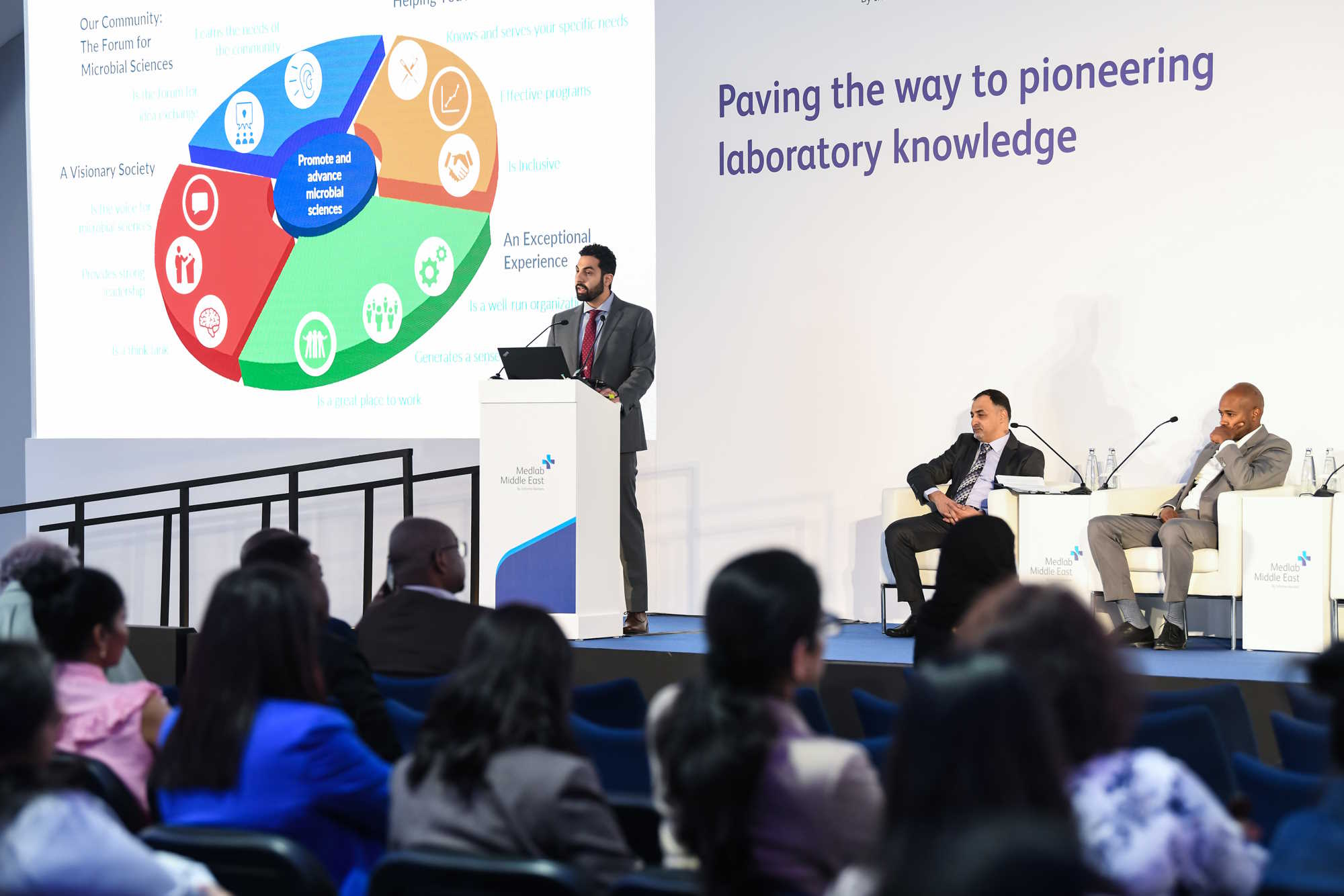
During the Medlab Middle East conference, Professor Hassan Ugail from the University of Bradford discussed his innovative AI tool, OrQA (Organ Quality Assessment), designed to evaluate human organs for transplantation rapidly. Time is crucial during organ assessments, and OrQA can analyze and score an organ within seconds, using a grading system from zero to five. Organs scoring below four are deemed appropriate for transplantation.
Professor Ugail explained the technology behind OrQA, saying, “We train a machine learning algorithm using state-of-the-art AI techniques alongside expert ratings of various organs.” This AI approach aggregates data on characteristics like color, texture, and shape to provide reliable scores.
Funded by the UK’s National Institute for Health and Care Research (NIHR), the £1.2 million project involves collaboration between the University of Bradford, Newcastle University, and the University of Oxford. It could lead to an
The content above is a summary. For more details, see the source article.









