


Key Takeaways
- Toyota announces major upgrades for its bZ4X and Lexus RZ models, focusing on enhanced batteries, improved charging, and advanced tech features.
- Upgraded battery configurations will provide increased range, potentially up to 356 miles in Europe, with expectations of enhanced performance in the U.S. market.
- The introduction of battery preconditioning and upgraded motors signifies Toyota’s commitment to elevating its EV offerings in response to customer demands.
Upgraded EV Lineup
Toyota has made significant strides in its electric vehicle (EV) offerings with the unveiling of substantial upgrades for the bZ4X and Lexus RZ crossovers, along with the introduction of the new C-HR+. The core enhancements include advanced batteries, upgraded motors, and smarter technology, aimed at addressing previous limitations in range and performance.
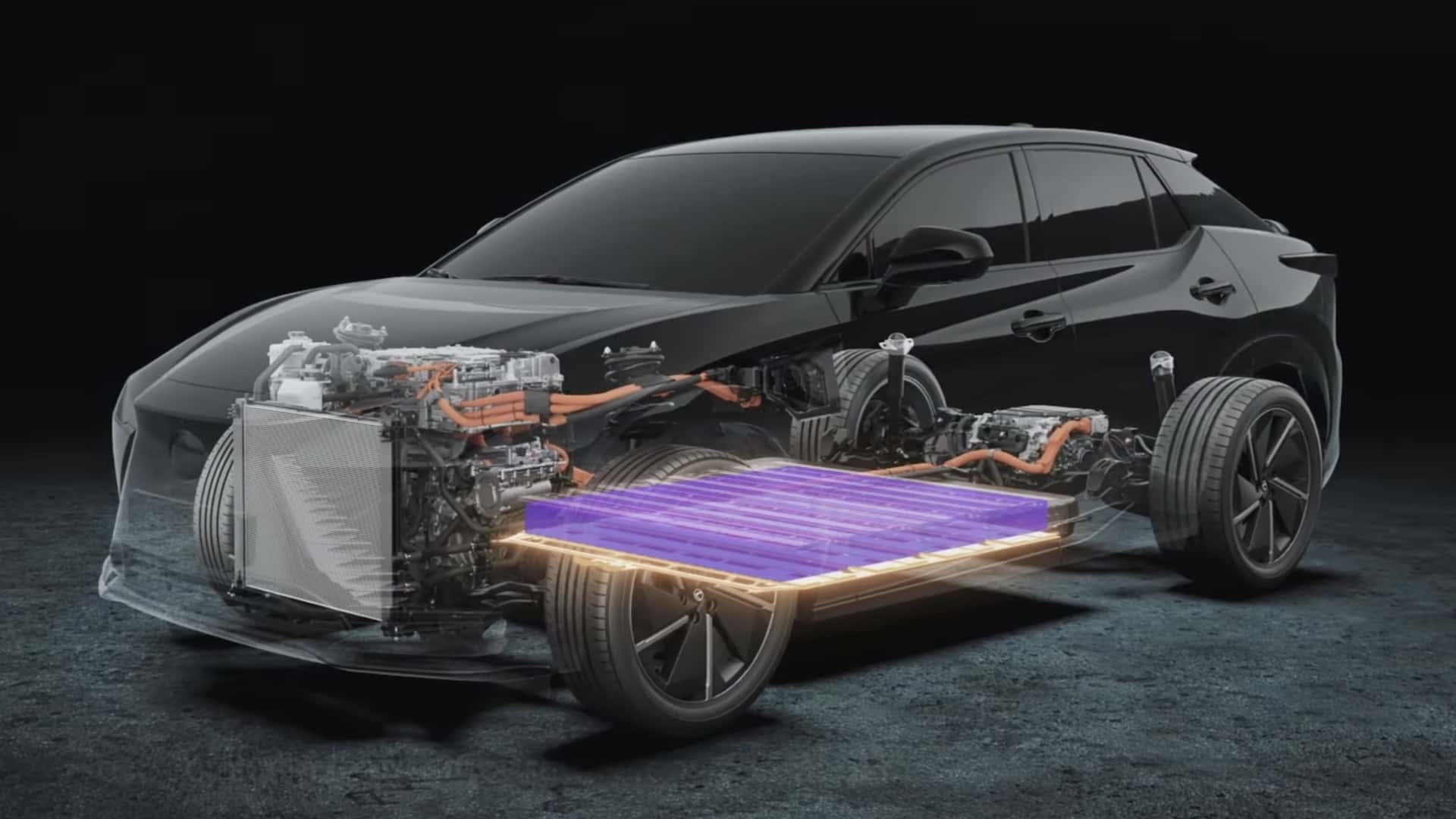
The existing bZ4X model, which was perceived as lagging in range and charging capabilities, will see improvements in battery technology. The revised models will feature two battery options, offering a smaller 57.7 kWh unit and a larger 73.1 kWh variant, both of which are more energy-dense with increased cell counts. Though the exact battery suppliers have yet to be disclosed, it is anticipated that LG Energy Solution or Toyota’s upcoming battery plant in North Carolina will play a role in production. The updated European bZ4X could achieve a WLTP range of up to 356 miles, which suggests that the U.S. model might deliver approximately 280 miles, surpassing the current maximum range.
In addition to the bZ4X, the new C-HR+ will also feature expanded battery options, including a larger 77 kWh pack, expected to provide around 300 miles of EPA range. The Lexus RZ will similarly benefit from these battery upgrades, with the most powerful variant boasting 408 horsepower.
Enhanced Charging Capabilities
Another critical upgrade pertains to the charging performance of the bZ4X, which has previously faced criticism for slow charging times. While the maximum DC fast-charging rate remains at 150 kilowatts, Toyota engineers have modified the vehicle’s charging curve, leading to faster and more stable charging speeds — potentially cutting charging time in half. The improvements extend to Level 2 charging, which now peaks at 22 kW, enhancing home charging capabilities.
Smart Features and Performance Improvements
The inclusion of battery preconditioning is another significant addition that aims to optimize charging speeds. This feature will enable the battery to reach ideal temperatures before arriving at a charging station, enhancing thermal management. Route planning, a newly integrated feature, will suggest charging stops when a destination is entered, eliminating the need for a smartphone app for such functions.
The motor systems in the upgraded models have also been enhanced with silicon carbide inverters, which improve both efficiency and power. The bZ4X will offer up to 343 horsepower, while the Lexus RZ will give drivers robust performance with 408 horsepower. Additionally, the redesigned “eAxle” system promises better power distribution, improving the driving experience during acceleration and braking.
A Shift in Strategy
These upgrades signal a pivotal moment for Toyota, which has faced scrutiny for its slow progress in the electric vehicle sector. The automaker’s extensive customer base and existing service infrastructure provide a solid foundation for its transition into the EV market. With these advancements, Toyota is poised to leverage its position as a major player, potentially influencing the industry to embrace electric mobility more seriously.
The content above is a summary. For more details, see the source article.









