


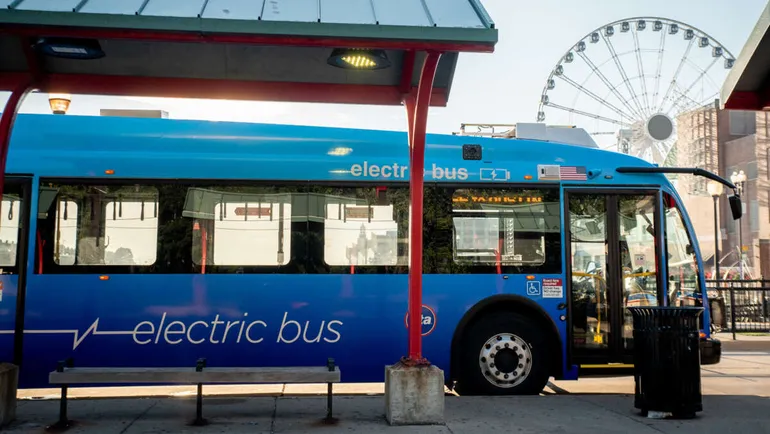
Key Takeaways
- In 2024, the number of zero-emission transit buses in the U.S. increased by 14% to 7,026 vehicles.
- California and New York lead in zero-emission bus adoption, with the New York Metropolitan Transportation Authority possessing the largest fleet.
- Future support for zero-emission buses is uncertain following policy changes by Transportation Secretary Sean Duffy.
Growth of Zero-Emission Buses in the U.S.
According to Calstart’s annual report published on March 11, U.S. transit agencies expanded their fleets of zero-emission buses in 2024. Notably, the number of full-size zero-emission transit buses surged by 14%, totaling 7,026 vehicles that are funded, ordered, delivered, or actively operational as of July 2024. Almost half of the buses financed through the Federal Transit Administration’s Low or No Emission Grant Program and the Grants for Bus and Bus Facilities Program have been allocated for procuring zero-emission buses.
The full-size transit bus category, encompassing buses 30 feet or longer, has seen substantial growth, rising from just over 2,000 in 2019 to more than 7,000 in 2024. Projections from Calstart suggest that this number could exceed 15,000 by 2030. California and New York are at the forefront of zero-emission bus utilization, followed by states like Florida, Washington, and Massachusetts. The New York Metropolitan Transportation Authority boasts the largest fleet, consisting of 545 zero-emission buses. This growth has been accelerated in these states by programs such as California’s Clean Truck and Bus Voucher Incentive Project and New York’s Truck Voucher Incentive Program, which help mitigate the higher costs associated with zero-emission vehicles.
Mike Hynes, deputy director for transit at Calstart, remarked that the increasing availability of zero-emission buses underscores transit agencies’ dedication to promoting cleaner transportation solutions. The report also highlights a significant 55% rise in the adoption of fuel-cell electric buses, which builds upon a 75% increase from the previous year. However, battery-electric buses still dominate as the preferred choice among transit agencies.
Despite this progress, future federal and state support for low- or zero-emission buses appears uncertain. The Federal Transit Administration’s Low and No Emission Program, initiated as part of the 2021 infrastructure law, allocated up to $5.25 billion for such buses. Recently, Transportation Secretary Sean Duffy’s decision to rescind policies favoring environmental factors in infrastructure grant decisions raises concerns about sustained support. Hynes cautioned that ongoing progress relies heavily on strong governmental backing to continue developing the zero-emission bus initiative.
The content above is a summary. For more details, see the source article.









