


Key Takeaways
- The U.S. beauty industry shows resilience, with significant growth across both mass and prestige segments into 2026.
- Fragrance and makeup are leading growth, as consumers focus on value, emotional connections, and innovative offerings.
- E-commerce, social media, and wellness trends are shaping buying behaviors and influencing product development in the beauty sector.
Beauty Industry Growth Overview
Amid economic challenges, the U.S. beauty industry has experienced robust growth, with key data indicating continued resilience. According to Circana, all major segments saw expansion up to Q3 2025, positioning beauty as a strategic asset for brands and retailers.
Sales Growth Performance:
- Prestige beauty achieved a 4% sales increase to $24.1 billion, with unit growth mirroring sales growth.
- Mass beauty outperformed with a 5% sales increase to $54.5 billion, despite only a 2% rise in units.
- Growth spanned various categories, including fragrance, makeup, skin care, and hair products.
Value-Driven Consumers
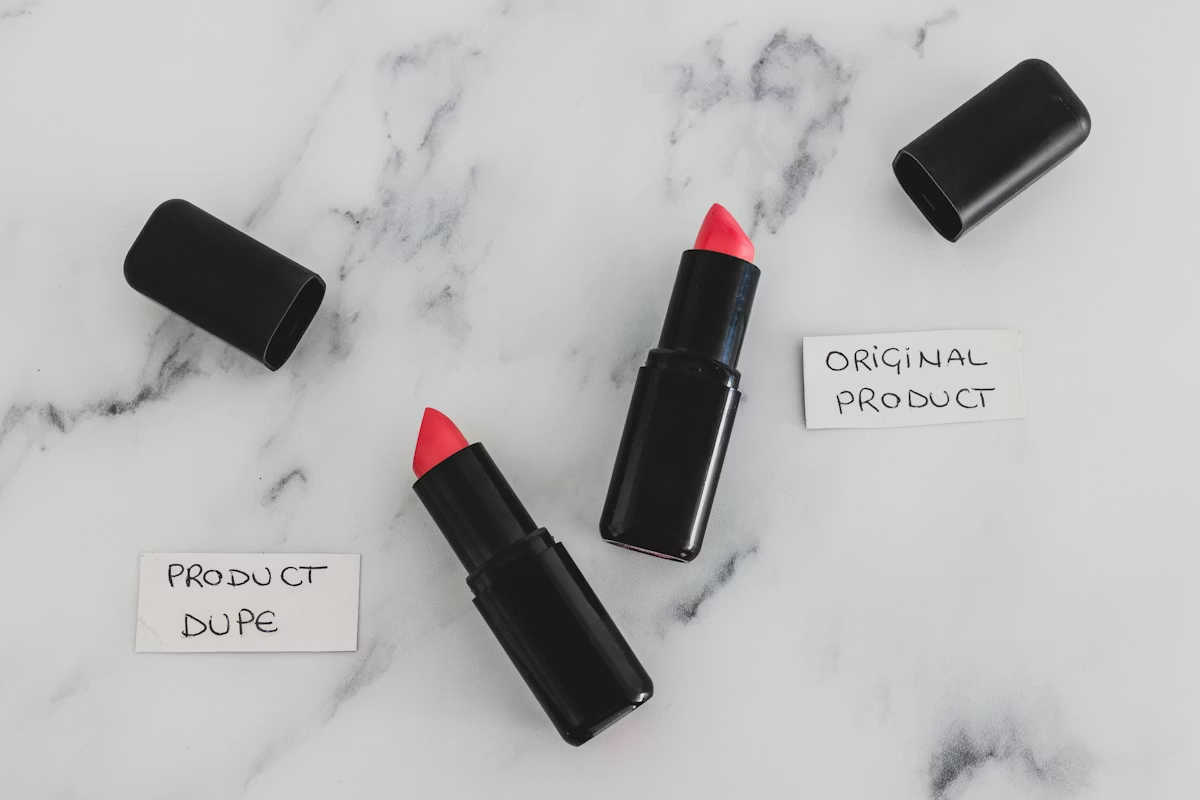
Inflation has affected consumer behavior, prompting a shift toward value-oriented shopping. Instead of reducing spending, many consumers are migrating between price tiers. Masstige brands, which combine mass and prestige elements, reported a 14% rise, indicating that consumers prefer perceived value over brand loyalty. Special formats like “dupes,” mini products, and discovery sets are thriving alongside luxury items. As a result, mid-priced brands with clear efficacy tend to perform well, while premium brands must justify their pricing with innovation and compelling narratives.
Fragrance Leads Growth
Fragrance has emerged as a strong category, showcasing consumers’ willingness to invest in emotional and identity-related products. In Q1–Q3 2025, prestige fragrance sales increased by 6% to $5.9 billion, while mass fragrance rose by an impressive 17%. Mini and travel-size fragrances also saw significant unit sales growth up to 12%, reflecting a continued interest in novelty and gifting.
Makeup and Skin Care Trends
Makeup rebounded with prestige sales reaching $7.9 billion, driven by strong performance in lip and eye products. Skin care growth was more muted, with prestige sales increasing to $6.7 billion, highlighting a consumer shift towards effective daily routines. The fastest-growing categories within skin care were body and sun care, revealing a preference for products that demonstrate clear value and benefits.
Hair Care Gains and Treatment Demand
Hair care, particularly in high-performance segments, experienced substantial growth with prestige sales at $3.5 billion, driven by effective treatments and styling products. This category remains significant in mass beauty, suggesting strong consumer interest in scalp health and product efficacy.
Evolving Shopping Behaviors
The retail landscape is changing, heavily influenced by e-commerce, social commerce, and AI technologies. E-commerce continues to lead growth, especially in skin care, while physical stores thrive on immediate fulfillment and experiential shopping. Social media platforms like TikTok have become crucial for product discovery, while AI-enabled features are enhancing the shopping experience by providing tailored recommendations.
Impact of Wellness and Generational Trends
Consumers are increasingly influenced by lifestyle factors, focusing on mental well-being, self-care, and clean ingredients. Different generations exhibit unique preferences: Gen Z prioritizes mental health and sustainability; Millennials seek convenience; and Boomers emphasize health benefits. The rising use of GLP-1 medications is also reshaping consumption habits, impacting beauty and wellness choices.
Outlook for 2026
The beauty industry’s growth trajectory remains promising but increasingly complex. Consumers expect value, effectiveness, emotional resonance, and personalization. Brands that succeed in this environment will strategically focus on delivering value without compromising their identity, aligning beauty with overall wellness, and leveraging social media and AI to enhance customer experience. Trust and transparency will be paramount, ensuring that beauty products continue to enrich the lives of consumers.
The content above is a summary. For more details, see the source article.









