Key Takeaways
- The electromagnetic spectrum extends beyond visible light, encompassing various wavelengths that reveal different aspects of the universe.
- The Square Kilometre Array (SKA) will utilize a vast network of antennas to study the earliest stars and galaxies, expanding our understanding of cosmic history.
- Astrophysics combines observations from different parts of the spectrum, aiding in the search for extraterrestrial life and the study of planetary atmospheres.
Unveiling the Invisible Universe
The electromagnetic spectrum consists of various wavelengths of light, extending from gamma rays to radio waves, each revealing distinct aspects of the universe. While human eyes are adapted to see only a small portion of this spectrum, our understanding has expanded significantly over the centuries through scientific discovery.
Starting with Isaac Newton’s 1665 experiment that demonstrated the decomposition of light into colors, progress continued into the 19th century with the discovery of infrared light by William Herschel, and later, the revelation of radio waves, microwaves, X-rays, and gamma rays. This collective knowledge has equipped astronomers with tools to interpret cosmic phenomena.
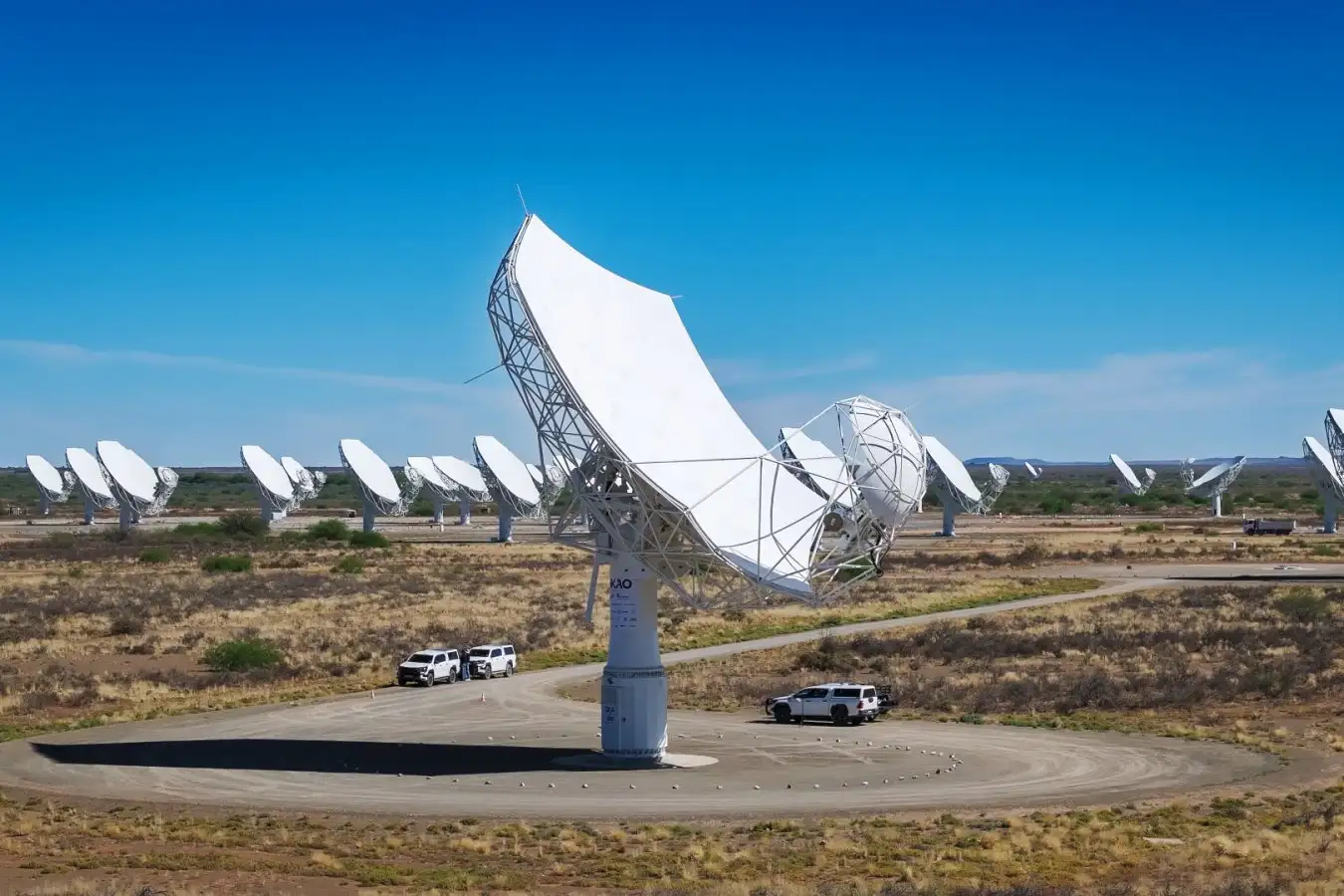
Radio waves, known for their long wavelengths, can travel vast distances with minimal interference. This characteristic has made them invaluable for both terrestrial and cosmic communication, facilitating studies of distant celestial bodies. The upcoming Square Kilometre Array (SKA), based at Jodrell Bank Observatory in the UK, will consist of over 100,000 antennas spread across Western Australia. This enormous radio observatory aims to detect faint signals that originated just tens of millions of years after the Big Bang, offering insights into early galaxies and star formations.
In concert with advancements in optical and infrared astronomy, these observations form a comprehensive approach to understanding the universe. The James Webb Space Telescope (JWST), positioned 1.5 million kilometers from Earth, provides unprecedented views of the cosmos in infrared wavelengths. Capturing light that has been redshifted due to the universe’s expansion, JWST has begun to challenge existing theories about the formation and size of early universe galaxies.
Additionally, UV light observations reveal phenomena such as water plumes on Europa, one of Jupiter’s moons, highlighting how different wavelengths interact with cosmic materials to elucidate elemental compositions and other significant features.
Astrophysicists are also utilizing a multimodal approach to explore the potential for extraterrestrial life. Instruments such as the Transiting Exoplanet Survey Satellite (TESS) identify exoplanets, while the JWST examines their atmospheres for biosignatures. With radio telescopes, such as the SKA, researchers aim to decipher any signals potentially sent by intelligent life.
This multifaceted investigation into the cosmos illustrates the importance of employing an extensive range of wavelengths. The electromagnetic spectrum serves as a Rosetta Stone, unlocking hidden histories and messages written in light. As scientists continue their quest, each discovery not only enriches our understanding but also raises deeper questions about life beyond Earth, opening doors to more profound cosmic revelations.
Emma Chapman, an astrophysicist at the University of Nottingham and author of “Radio Universe: How to Explore Space Without Leaving Earth,” emphasizes that while humans are born with the ability to perceive visible light, the universe communicates in a diverse array of languages. By expanding our observational capabilities across the electromagnetic spectrum, humanity can tune into a universe far richer than what is visible to the naked eye.
The content above is a summary. For more details, see the source article.