


Key Takeaways
- Toyota’s success stems from the integration of traditional Japanese principles with modern engineering, creating reliable vehicles.
- The philosophies of Jidoka and Kaizen underpin Toyota’s production processes, emphasizing quality and continuous improvement.
- Recent innovations showcase Toyota’s shift toward performance while maintaining its commitment to reliability, as seen in the new GR Yaris and the ambitious Woven City project.
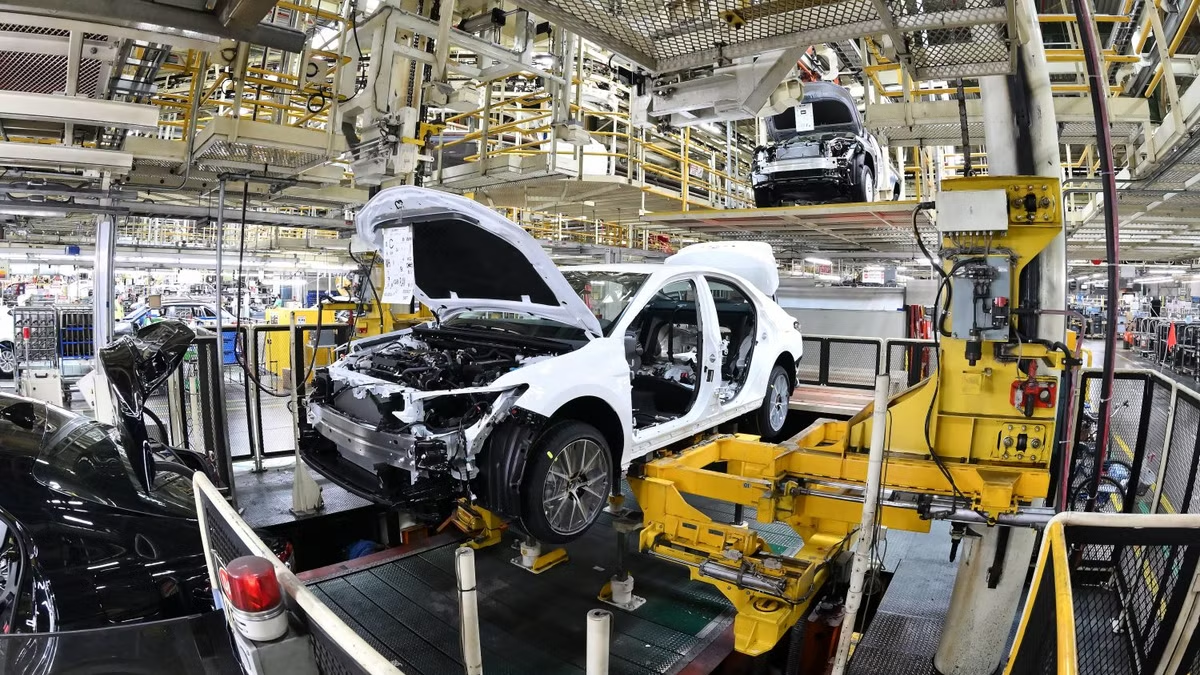
Toyota’s remarkable success is a reflection of its unique blend of traditional Japanese craftsmanship and modern engineering practices. Central to this success are two key philosophies: Jidoka and Kaizen. Jidoka emphasizes the integration of human intuition with automation, ensuring each component meets high quality standards through meticulous human involvement before machines take over. Unlike many manufacturers, Toyota prioritizes thorough understanding and functional integrity in its production processes. This philosophy has led to consistency in parts across models, exemplified by the reliable 2GR-FE V6 engine, which is found in a variety of Toyota cars ranging from the Camry to the Lexus RX 350.
Kaizen, meaning “change for the better,” promotes a culture of continuous improvement within the company. This philosophy empowers employees at all levels to halt production when potential enhancements are identified, fostering proactive problem-solving. The emphasis on quality over speed has helped Toyota catch issues early, saving costs associated with recalls. This commitment to perfection has not only contributed to Toyota’s legendary reliability but has also inspired industry competitors to adopt similar practices.
Unlike other car manufacturers that focus on performance, Toyota prioritizes practicality, generating vehicles known for their longevity and fuel efficiency. This is epitomized by the iconic 22R-E engine, which was praised for its robustness and minimal modifications over the years, showcasing Toyota’s philosophy of durability over flashy performance.
In a bold move in 2014, Toyota announced its intention to shift away from producing “boring cars,” introducing models like the GR Yaris, which exemplifies a focus on performance without sacrificing reliability. This evolution is part of Toyota’s broader shift toward crafting a compelling blend of reliability and innovation, reshaping its identity in the automotive landscape.
In addition to vehicle innovations, Toyota unveiled the ‘Woven City’ project, envisioned as a future smart city at the base of Mount Fuji. This city aims to serve as a testing ground for new technologies, including autonomous vehicles and hydrogen fuel cell infrastructure. Incorporating the principles of Jidoka and Kaizen into urban living, it poses questions about balancing innovation with daily life functionalities.
Overall, Toyota’s unwavering commitment to reliability, combined with recent advances in technology and performance, reflects its vision for the future. While initially recognized for dependable economy cars, the brand is now redefining itself in competitive arenas while ensuring that reliability remains a core attribute of its vehicles. Toyota serves as a model of progress and innovation, advocating for a sustainable and efficient future in both the automotive industry and urban living.
The content above is a summary. For more details, see the source article.









