


Key Takeaways
- NATO’s Dynamic Front exercise demonstrated enhanced artillery interoperability among 23 nations across Europe.
- Participants simulated complex threats akin to those faced in Ukraine, conducting 1,500 strikes and intercepting up to 1,200 aerial threats daily.
- The exercise highlighted advancements in communication technology, with artillery units reducing coordination time to one-sixth of previous drills.
NATO Enhances Artillery Interoperability in Dynamic Front Exercise
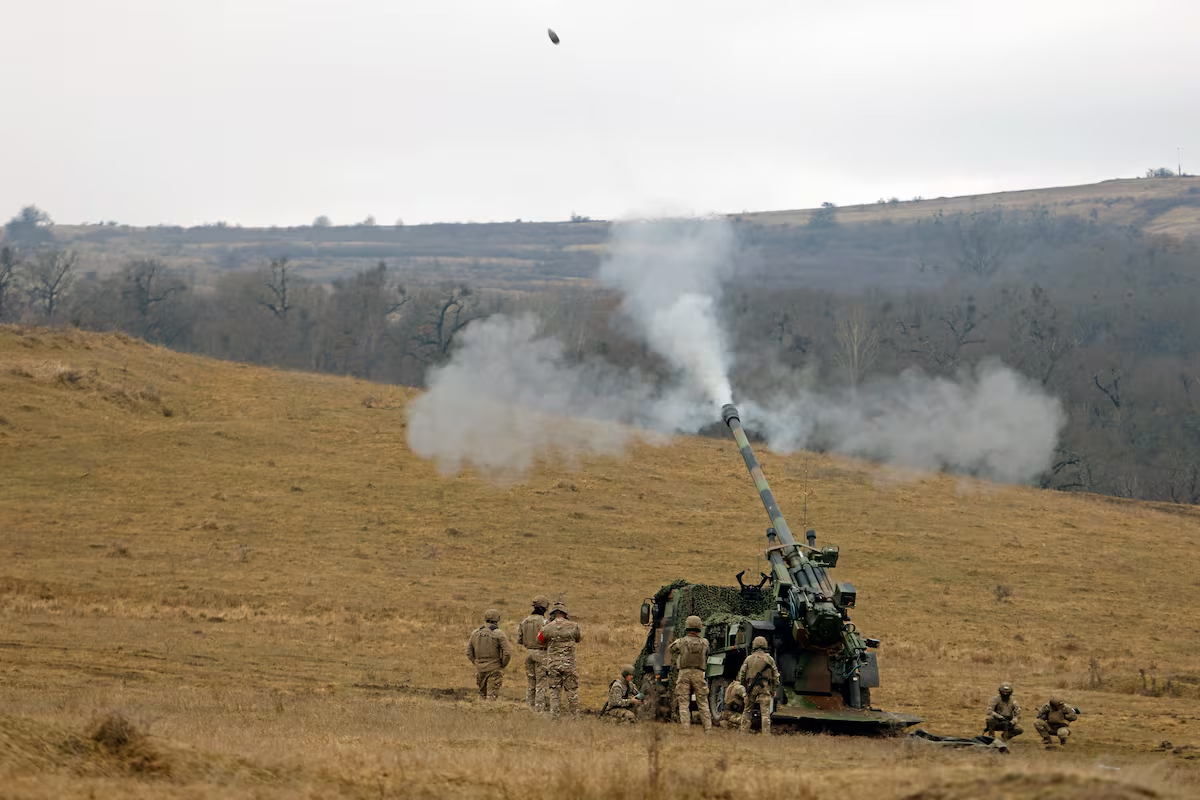
NATO artillery units engaged in a multi-national drill across Europe, aimed at testing their capabilities to execute precise strikes and counter aerial threats in scenarios reminiscent of combat in Ukraine. Organized from January 26 to February 13, the U.S.-led exercise, known as Dynamic Front, involved 23 nations and took place across five countries and nine training areas.
This exercise had a clear focus: to validate the interoperability of artillery forces. Allied troops were tasked with the significant challenge of conducting 1,500 strikes daily and intercepting between 600 and 1,200 aerial threats. This high-intensity environment was designed to simulate the complexities warriors currently face in Ukraine.
Brig. Gen. Steven Carpenter of the 56th Multi-Domain Command Europe emphasized in a press briefing that the objective of massed artillery fire is to establish a deterrent effect so overwhelming that potential adversaries would hesitate to engage. According to reports, participating units achieved a dramatic improvement in coordination, successfully setting up the necessary command systems in one-sixth of the time required in previous iterations of the exercise.
A key technological advancement facilitating this rapid connectivity is the encrypted software suite known as ASCA (Artillery Systems Cooperation Activities). This digital platform serves as NATO’s unified communication tool, enabling diverse national artillery systems to collaborate effectively and share real-time targeting data. Officers noted that ASCA is continuously refined based on feedback from exercises, and over a dozen NATO nations have integrated it into their operational frameworks.
The exercise not only underscores the importance of artillery preparedness but also highlights NATO’s commitment to evolving its capabilities in response to changing military landscapes. With a focus on enhancing tactical communication and operational efficiency, Dynamic Front serves as both a preparation for potential real-world conflicts and a demonstration of allied solidarity in the face of common challenges.
Elisabeth Gosselin-Malo, a Europe correspondent for Defense News, reported on various topics related to military procurement and international security, with a specialization in the aviation sector, from her base in Milan, Italy.
The content above is a summary. For more details, see the source article.









