


Key Takeaways
- Solinftec’s spot-spray robots offer a sustainable solution for farms amid rising costs and labor shortages.
- The strategy involves autonomous, solar-powered robots that can operate continuously and are designed for ease of use.
- Solinftec aims to make this technology affordable for smaller farms, targeting the 200-acre average U.S. farm size.
Innovative Approaches to Farming
Solinftec, an agricultural robotics startup, is revolutionizing farming with its spot-spray weed-killing robots, which provide a sustainable and cost-effective solution to face the increasing challenges of input costs and labor shortages. The company currently operates nearly 80 robots in North America and around 100 in South America.
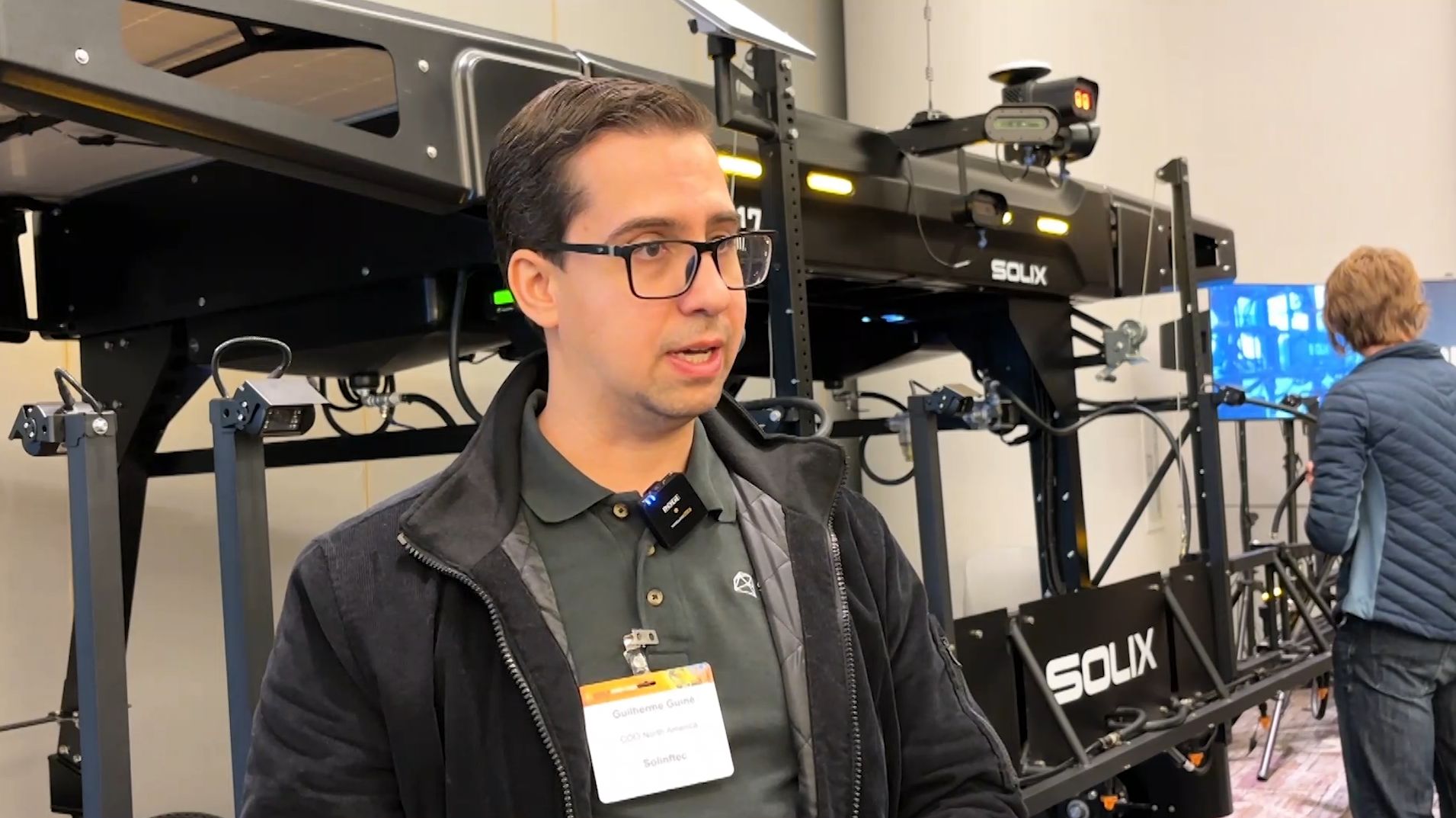
Guilherme Guiné, the North American COO, discussed the technology during the recent World Agri-Tech summit in San Francisco. He emphasized that using a Solinftec robot is as simple as operating a household robot vacuum like a Roomba. “If you can operate a Roomba to vacuum your house, you can operate a Solix ‘bot to spray your field,” he said, highlighting the user-friendly nature of the technology.
Guiné noted that while many spot-spray solutions still require a human operator, Solinftec is launching a fully autonomous solar-powered spraying robot equipped with a docking station for refueling with chemicals. This innovation allows the robots to function independently throughout the growing season. He indicated that farmers typically recover their investment within one or two seasons, though the business model is still evolving.
Though currently selling the units directly to farmers and agricultural retailers, Solinftec is exploring new models to increase accessibility and affordability. Those using Solinftec’s technology report substantial savings on chemicals and labor, coupled with increased agricultural yields.
Targeting medium-sized farms, approximately 500 acres are considered the ‘sweet spot’ for these robots, although Guiné expressed the intent to eventually cater to smaller operations, particularly those averaging 200 acres in the U.S. Row crops, including corn, beans, wheat, cotton, and sugar cane, are the primary focus.
In the broader context of agricultural robotics, the emergence of various companies offering similar technologies is a welcome development in addressing diverse farming challenges. However, Solinftec stands out with its accompanying digital platform. This platform allows for comprehensive monitoring of plant development, identification of issues, and data collection for improved decision-making regarding crop management.
Guiné stated that the Solix platform allows for future adaptations beyond spraying, potentially including spreading and planting functionalities. He emphasized that the core challenge in agricultural robotics is not only automation but also enhancing crop production. While reducing chemical usage is beneficial, the ultimate goal must also include increasing yields per acre.
Currently, Solinftec is making strides with its existing 80 units in the U.S. and 100 units in South America, focusing on the row crop sector before possibly expanding into specialty crops. The primary challenge ahead for Solinftec remains developing affordable solutions tailored for smaller farms, particularly as they seek to penetrate the market of average-sized farms in the U.S.
The content above is a summary. For more details, see the source article.









