


Key Takeaways
- Vietnamese students are increasingly pursuing semiconductor studies in Taiwan, which offers lucrative job opportunities.
- AI and semiconductor fields face significant labor shortages, leading to increased international student enrollments.
- The Vietnamese government aims to train 50,000 chip engineers by 2030 to meet rapid industry demands.
Surge in Vietnamese Students Pursuing Semiconductor Studies in Taiwan
Thu Huong, a recent physics graduate, has been encouraged by her lecturers to study semiconductors in Taiwan, highlighting the field’s lucrative prospects. With a master’s degree in semiconductors, starting salaries can exceed VND 50 million (US$1,960) per month and rise to VND 80 million for doctorate holders, complemented by substantial bonuses.
Vietnamese students are increasingly enrolling in Taiwan, a leading global chip producer, to take semiconductor courses. Notable universities in Taiwan offer English-speaking programs, and scholarships are more accessible in this field compared to other disciplines. The AI boom has further fueled interest among students.
In the U.S., STEM degrees, especially in computer science, are highly sought after by international students, including a notable 45-50 percent annual increase in Vietnamese STEM students. A report indicates over 1.5 million international students pursued semiconductor studies in 2023, reflecting a 10.4 percent growth from the previous year. Taiwan, South Korea, Singapore, and Hong Kong also report rising numbers of international students in AI and semiconductors.
Dr. Ho Pham Minh Nhat, a professor in the U.S., has seen a significant rise in Vietnamese students seeking his guidance for AI studies abroad. He anticipates that these numbers will continue to grow significantly as AI becomes more prevalent in society.
The demand for semiconductor professionals is critical, with a 2022 Deloitte report predicting a shortage of 70,000-90,000 workers in the U.S. semiconductor industry in the coming years. Countries like Taiwan, facing their own labor shortages, are also investing in international talent through scholarship programs.
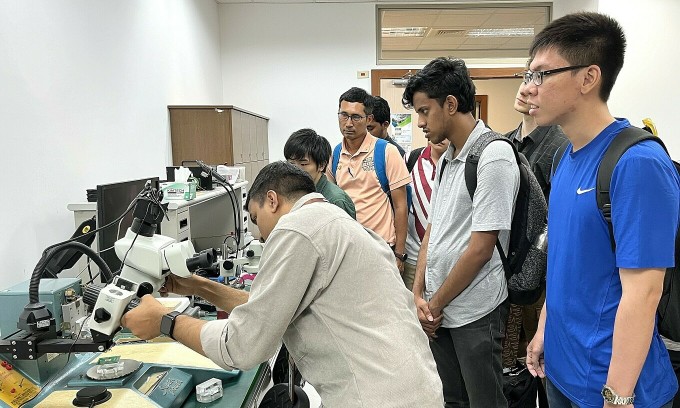
Taiwan is appealing for overseas students in AI, with a government goal to triple the number of international students by 2030 and retain 70 percent of them after graduation. Thu Huong benefits from a master’s scholarship, providing a monthly stipend and waiving tuition fees. She appreciates the advanced lab equipment in Taiwan, contrasting it with her educational experience in Vietnam, where practical training was limited.
As the global competitive landscape stresses tech talent, many nations, including the U.S., are revising visa policies and offering scholarships to attract international students in AI. Opportunities for part-time work can sometimes exceed those of entry-level positions, adding further appeal for prospective students.
In Vietnam, there are over 5,000 vacancies for AI engineers, and the country is expected to need 15,000 design engineers and 35,000 operational engineers in chip manufacturing by 2030. The Vietnamese government plans to develop 50,000 chip engineers by that year, establishing academic programs to support this effort and ensure a steady flow of qualified talent.
The content above is a summary. For more details, see the source article.









