


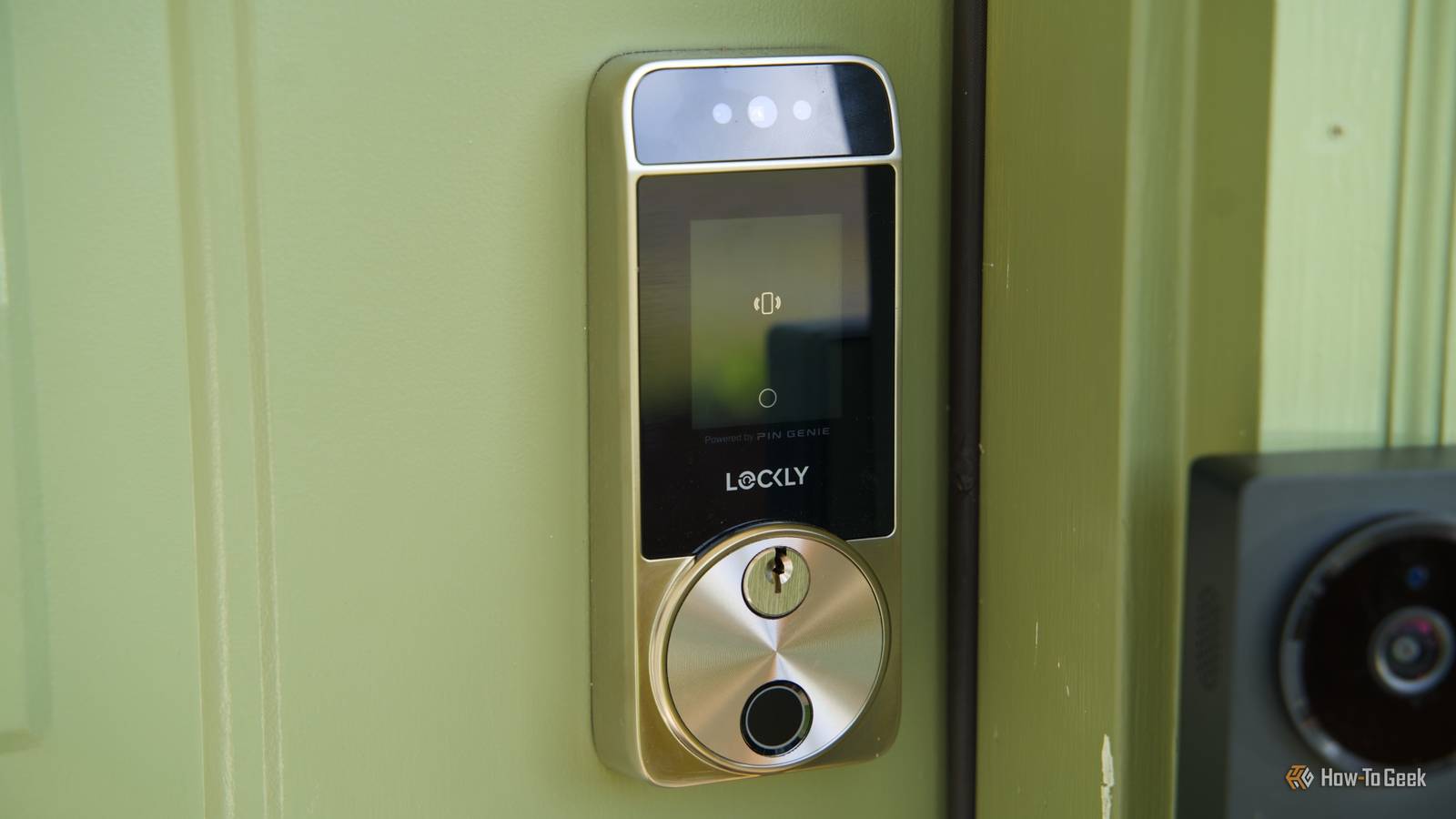
Key Takeaways
- Smart locks can become inoperable if batteries die or connections fail, leading to potential access issues.
- Installation concerns and higher costs compared to traditional locks raise questions about their added value.
- While smart locks offer remote access, they introduce additional security risks that might not justify the investment.
Understanding Smart Locks: Limitations and Considerations
Smart locks are often viewed as advanced alternatives to traditional locks, but several drawbacks warrant careful consideration before making a purchase.
A primary concern is that smart locks depend on battery power for operation. When batteries run out, users may find themselves unable to unlock their doors, as many models don’t offer physical key access to their smart features. Even locks with backup batteries can fail if those run out too, effectively rendering the security feature useless.
Connectivity is another significant issue; smart locks often rely on Wi-Fi, Bluetooth, or other wireless technologies for remote access. Any disruption in connectivity can prevent control of the lock, increasing the chances of being locked out. Unlike traditional locks, which have fewer points of failure, smart locks introduce multiple failure modes linked to their technology.
Moreover, compatibility with your door’s mechanics can pose challenges. Some smart locks only work when doors are in specific positions, and additional sensors may not effectively solve these positional issues.
Cost is also a consideration. While basic traditional locks are readily available for as little as $20, reliable smart locks typically start at $100 and can exceed $300. Many features boastable by smart locks can be achieved through less expensive alternatives.
Finally, security vulnerabilities remain a concern. While smart locks may offer advanced features, they also increase potential points of attack, such as remote hacking if a smart home server is compromised.
Ultimately, smart locks may be beneficial for specific scenarios, such as short-term rentals, but for many users, the advantages may not justify the expense and risks associated with these high-tech devices.
The content above is a summary. For more details, see the source article.









