


Key Takeaways
- A UH-60 Black Hawk helicopter collided with an American Airlines passenger jet over Reagan National Airport, resulting in no survivors from the helicopter.
- The experienced crew was involved in a standard training flight, and investigations are ongoing to determine the cause of the crash.
- The incident has raised questions about training in congested airspace and aviation safety practices within the Army.
Collision Details
A tragic midair collision occurred between a UH-60 Black Hawk helicopter and an American Airlines passenger jet above Reagan National Airport in Washington, D.C., on Wednesday night. The American Airlines flight, arriving from Wichita, Kansas with 64 aboard, was approaching the runway over the Potomac River when the incident took place. The Black Hawk, on a routine training mission from Davison Army Airfield at Fort Belvoir, Virginia, was carrying three service members.
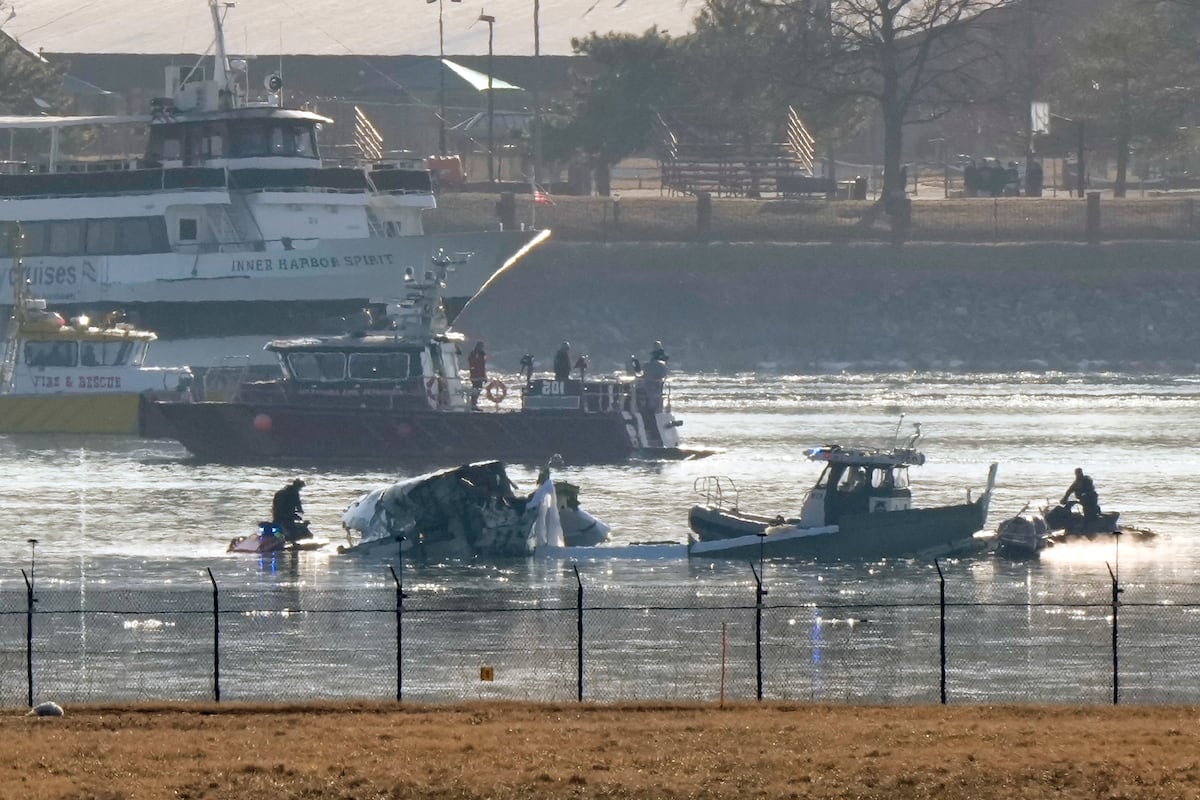
The wreckage of the helicopter was found in waist-deep water, with the fuselage having broken apart in three places. Recovery efforts are still ongoing, and regrettably, there were no survivors.
Investigation Ongoing
Investigators are currently focused on recovering the black boxes from both aircraft to understand the sequence of events leading to the crash. Jonathan Koziol, a retired Army chief warrant officer with over 30 years of experience, emphasized the importance of these flight recorders for getting to the bottom of the incident. Until this data is retrieved, speculation regarding the cause will not be productive.
Koziol highlighted the credentials of the crew members involved, noting that the instructor pilot had logged 1,000 flight hours, while the second pilot had 500 hours. Each Army aviator participates in annual evaluations to ensure proficiency, and Koziol noted that the crew was highly experienced and familiar with the operational area.
Responses and Reactions
In a related press briefing, President Donald Trump attributed blame to air traffic controllers and helicopter pilots, referencing federal policies without offering evidence. The cause of the collision remains unclear as investigations continue.
Koziol pointed out that the Black Hawk’s flight was routine leading up to the crash, maintaining that training missions in congested airspace, like that around Reagan, are vital. The 12th Aviation Battalion conducting the training aims to prepare pilots for missions involving senior U.S. leadership and emergency situations in the area.
Despite ongoing operational challenges, Koziol stressed that the flight path along the Potomac is generally straightforward and familiar for pilots, who utilize moving maps for real-time navigation and adhere to strict altitude regulations.
Broader Context
This incident marks the deadliest in U.S. aviation since 2001 and follows a series of aviation mishaps within the Army in recent years, prompting leadership to implement a stand-down in 2023 to address these safety concerns. The Army has also noted a decline in pilot experience levels in the current force compared to those during the Iraq and Afghanistan conflicts.
As attention turns to understanding the crash’s implications for aviation safety standards, further analysis will be required to see how this fits into broader patterns of aviation incidents involving military aircraft.
The content above is a summary. For more details, see the source article.









