


Key Takeaways
- The U.S. Air Force increased funding for the NGAP prototype engine contracts with General Electric and Pratt & Whitney to $3.5 billion each, a significant jump from the original $975 million limit.
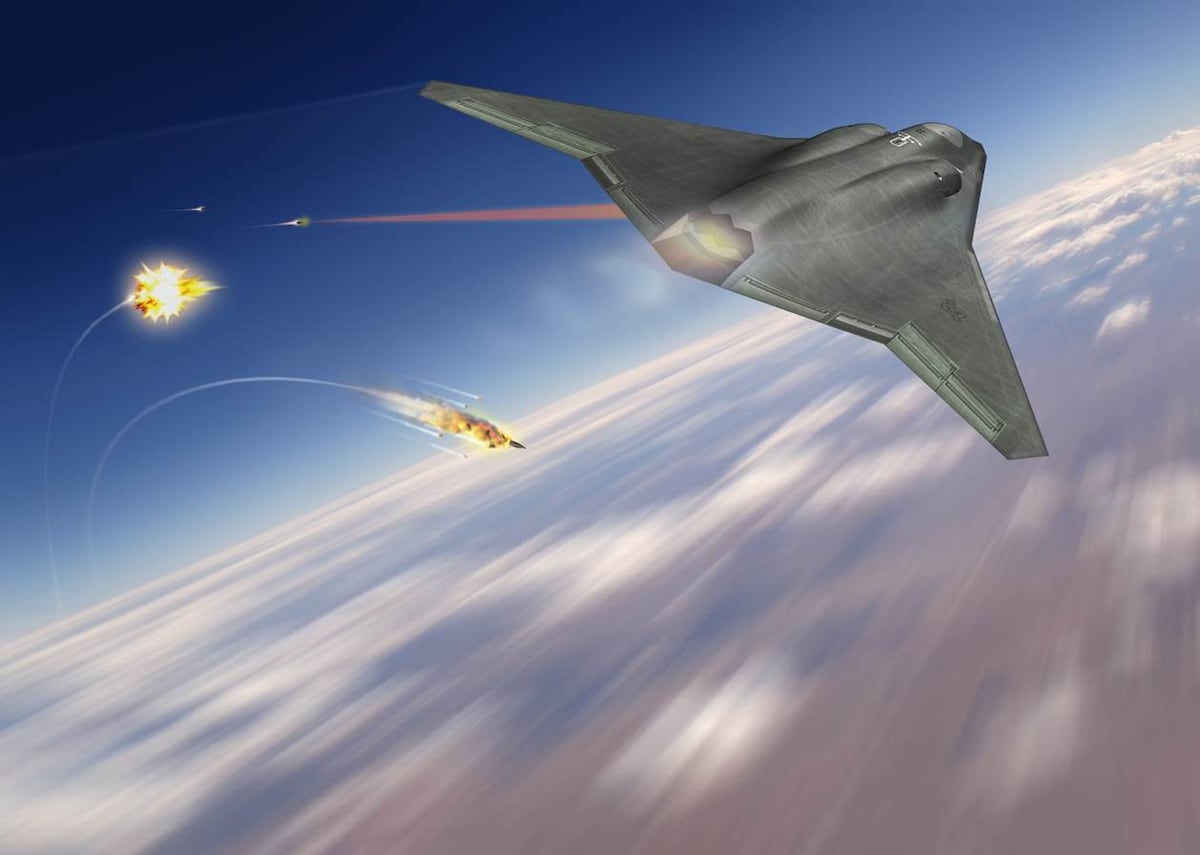
- The NGAP is intended for the upcoming sixth-generation fighter, which aims to improve air dominance capabilities.
- Despite initial cost concerns delaying the program, the Air Force is committed to advancing adaptive engine technology, expecting completion by July 2032.
Funding Boost for Next Generation Adaptive Propulsion
On Monday, the U.S. Air Force announced a substantial increase in funding for its Next Generation Adaptive Propulsion (NGAP) program, aimed at developing prototype engines for the planned sixth-generation fighter. The Air Force has modified contracts with General Electric (GE) and Pratt & Whitney to raise the maximum funding for each company to $3.5 billion, significantly higher than the previous limit of $975 million set in 2022.
The NGAP engines are designed to offer “adaptive” capabilities, allowing them to shift thrust configurations based on the aircraft’s needs in various operational scenarios. Although the Pentagon had considered upgrading the existing F-35 Joint Strike Fighter with these advanced engines, they decided to maintain the current engines due to cost considerations and incompatibility with all F-35 variants.
Over the years, progress in adaptive engine technology has influenced the NGAP initiative. This contract modification indicates that the Air Force intends to continue its efforts towards developing these advanced engines despite ongoing evaluations of the NGAD program and its air dominance strategy.
The Pentagon emphasized that the new funding would facilitate the development of “a state-of-the-art propulsion system” that can be customized for future combat aircraft and reshape the propulsion industrial base. The completion date for this work is projected for July 2032.
Pratt & Whitney’s parent company, RTX, expressed optimism regarding this additional funding, stating that it will help mitigate risks associated with developing the XA103 adaptive engine. In a recent earnings call, CEO Chris Calio highlighted the positive results from rigorous testing conducted over the past few years. The XA103 recently passed a significant design review with the Air Force and is expected to begin ground testing in the late 2020s.
Similarly, GE reported that its NGAP engine, named XA102, successfully completed a major design review in December 2023 and is progressing towards prototype testing.
The NGAD program has ambitious goals, including the development of a “family of systems” that comprises a sixth-generation crewed fighter, drone wingmen known as collaborative combat aircraft, and other sophisticated systems and weapons. However, the initiative has faced challenges, particularly regarding cost. Initial estimates for the NGAD’s development were significantly higher than expected, approaching three times the cost of an F-35, at approximately $250 million to $300 million per aircraft. This prompted the Air Force to pause the program in summer 2024 while it reassessed its path towards maintaining air superiority.
The shift in strategy came in the wake of the 2024 presidential election, where the Air Force leadership opted to defer further decisions on the NGAD program until the new administration took office.
Stephen Losey, an experienced air warfare reporter, contributes insights into the evolving landscape of U.S. Air Force operations and advancements in aerial combat technology.
The content above is a summary. For more details, see the source article.









