


Key Takeaways
- AI is increasingly marketed as empathetic and caring, particularly in reproductive health and elder care.
- Concern exists that AI technologies commodify care while exploiting vulnerable workers in feminized occupations.
- Emphasizing access to AI tools does not equate to achieving broader social and reproductive justice.
AI’s Impact on Care Sectors
Artificial intelligence is expanding into sectors traditionally associated with care, such as reproductive health and elder care. Polls reveal significant skepticism toward AI in the U.S., with many preferring human-led initiatives over automated systems. As AI evolves, its applications are being framed as emotionally intelligent tools aimed at providing care and support, dubbed “artificial feminist intelligence” (AFI). This contrasts with the long-standing notions of AI as a hyper-intellectual, male-dominated field focused on strategic dominance.
AFI offers emotional support while commodifying soft skills traditionally deemed feminine, without addressing serious societal issues directly tied to feminism, such as labor rights and social justice. For instance, AI chatbots aimed at women’s reproductive health address a gap in sexual education in a landscape where traditional avenues of care are dwindling. However, while these tools may provide immediate assistance to over 50,000 monthly users of platforms like the Julie chatbot, they often enforce profit-driven models, raising concerns over privacy and data ownership.
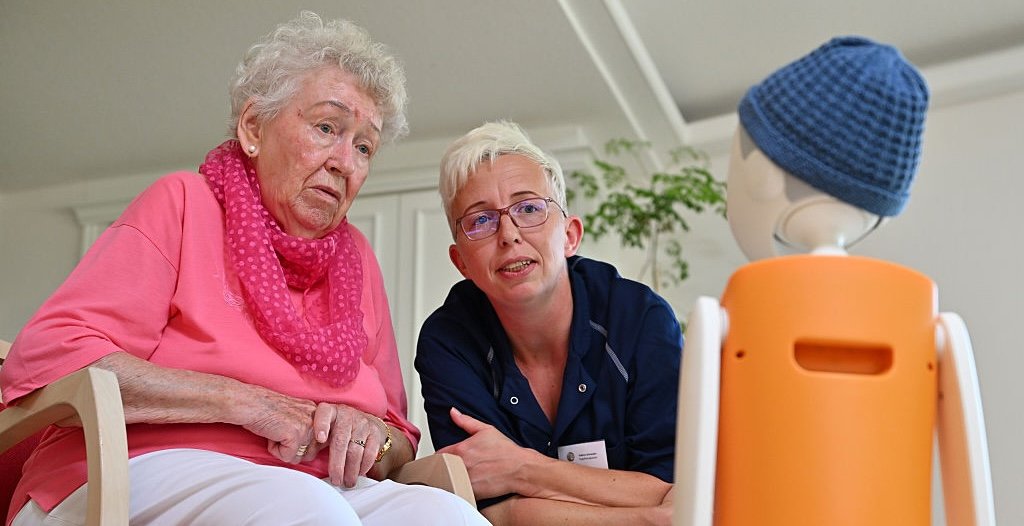
In elder care, robots like Abi are introduced to mitigate loneliness among seniors, showcasing a market need of tens of billions globally. However, reliance on such technologies often sidesteps broader concerns about the adequacy and accessibility of human care systems. The automation of care could obscure underlying crises related to the quality of human interaction, labor exploitation, and the potential diminishment of personal relationships.
Moreover, vulnerable populations, particularly women and people of color, remain overrepresented in occupations susceptible to AI replacement. Recent data indicates that though women comprise 47% of the workforce, they occupy 83% of AI-vulnerable roles. The situation is exacerbated by examples such as the recent firing of 12 nurses replaced by AI at Montefiore Hospital, underscoring the risks of financial gain at the expense of essential human services.
The benefits of AI tools cannot be ignored; they can expand access and provide assistance to those in need. However, an over-reliance on them highlights a systemic failure to address care issues effectively. Feminism advocates for genuine care systems rather than substitutes that exploit labor and divert attention from social equity. Therefore, the discussion around AI’s role in caregiving raises critical questions about who benefits from these technologies and at what cost, advocating for a care model that includes both technological advancements and robust social support systems.
The content above is a summary. For more details, see the source article.









