

Key Takeaways
- Miguel Claro is a renowned astrophotographer known for capturing stunning images of the night sky from Portugal.
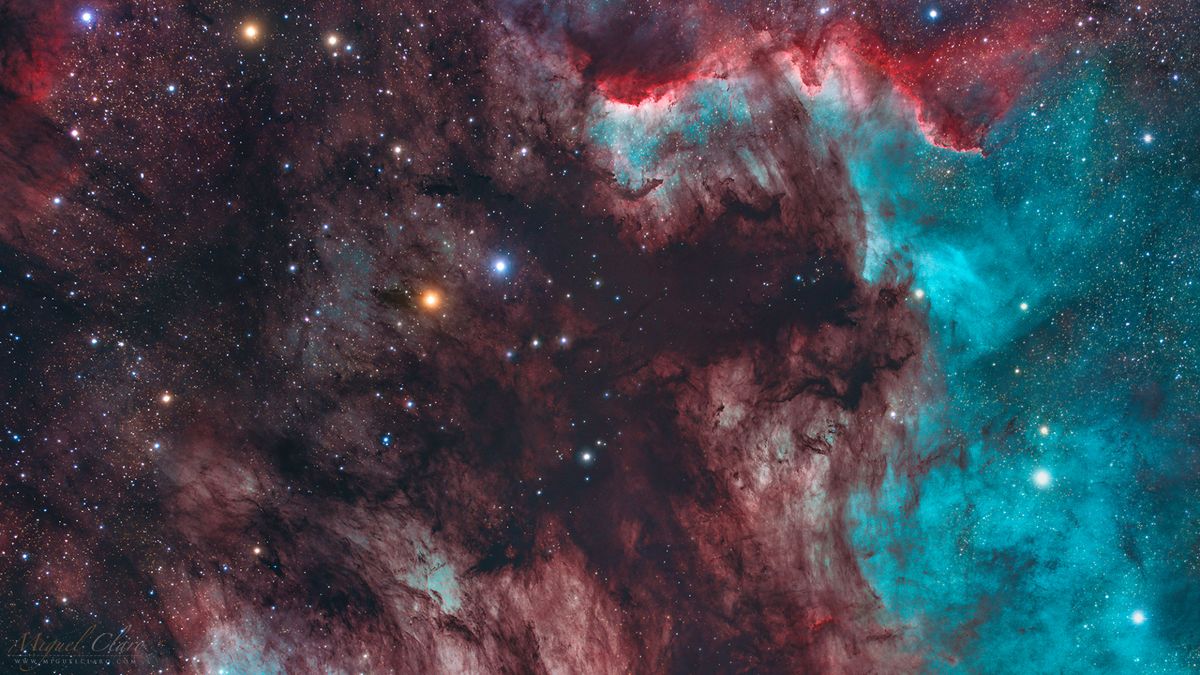
- His latest work features the “Great Dragon of Pelican,” highlighting a dark nebula resembling a dragon and located between the Pelican Nebula and the Cygnus Wall.
- Claro’s photography showcases the dynamic interaction of gases and starlight in these celestial regions, achieved through ten hours of observation with advanced equipment.
Capturing the Night Sky: The Art of Miguel Claro
Miguel Claro, a professional photographer, author, and science communicator based in Lisbon, Portugal, specializes in breathtaking night sky imagery. As a Photo Ambassador for the European Southern Observatory and a member of The World At Night, he focuses on creating “Skyscapes” that beautifully connect Earth with the cosmos. His recent work, titled the “Great Dragon of Pelican,” showcases a fascinating dark nebula that is part of the North America Nebula, situated within the constellation Cygnus.
This particular area in space, located between the Pelican Nebula and the Cygnus Wall, is frequently photographed due to the prominence of NGC 7000, known for its resemblance to the North American continent. Claro’s interpretation sheds light on a less-commonly depicted aspect of this region by emphasizing its dragon-like shape—an homage to the nebula LDN 935, also referred to as the “Gulf of Mexico” for its geographical silhouette.
The image vividly portrays the dark nebula, which absorbs and scatters light, creating a mysterious space between the Pelican Nebula and the Cygnus Wall. The bright edge on the right highlights the Cygnus Wall, an active stellar nursery where young stars are emerging, while the left side features the Pelican Nebula, an evolving cloud of gas engaged in ongoing star formation.
Claro’s intent with this photograph is not merely to present a static image but to convey the dynamic processes occurring in the universe. The light from young, energetic stars is altering the surrounding cold gas, gradually revealing an ionization front—visible in the image as an intricate, brightly colored boundary.
In addition to the main image, Claro has provided a starless version, allowing viewers to appreciate the nebulosity without the distraction of stars. He also offers an annotated version that guides viewers through the various astronomical features depicted.
This impressive capture is the result of ten total hours of observation with advanced imaging tools, including the Anit-Halo PRO Dual-Band 3nm filter and a Poseidon-C Pro Camera from Player One Astronomy, all conducted from the Dark Sky Alqueva observatory in Portugal.
As an independent artist, Claro invites those intrigued by his work to support him through art prints, offering a range of sizes and types available in his print gallery. His newsletter provides early access to future photographic releases, helping enthusiasts stay connected to his ongoing projects and artistic endeavors in astrophotography.
The content above is a summary. For more details, see the source article.