


Key Takeaways
- The Australian government has committed up to $7 billion for counter-drone capabilities within the Australian Defence Force over the next decade.
- Two initial contracts have been awarded to local companies AIM Defence and SYPAQ Systems for developing advanced counter-drone technologies.
- This initiative is part of Australia’s broader strategy to enhance its defence capabilities in response to increasing drone threats globally.
Significant Investment in Counter-Drone Technologies
The Australian government has unveiled plans to invest up to $7 billion in counter-drone capabilities for the Australian Defence Force (ADF) over the next decade. This investment underscores the urgent need to bolster the country’s defence mechanisms in light of the increasing use of drones in modern warfare. The announcement was made by Defence Industry Minister Pat Conroy, who emphasized the importance of developing proprietary systems rather than relying on foreign technologies.
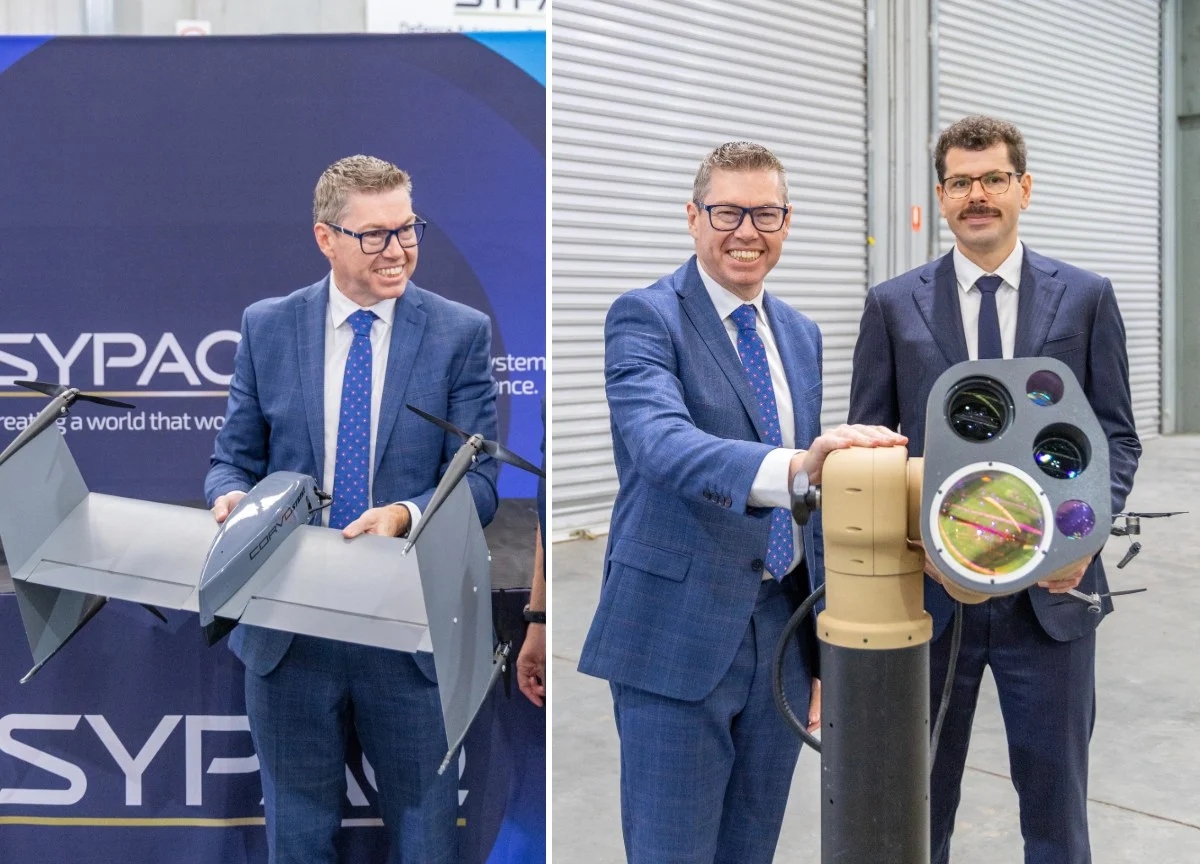
The first contracts under this initiative, named Mission Syracuse, were awarded to two local companies: AIM Defence and SYPAQ Systems. AIM Defence received $21.3 million for its Fractl high-powered laser counter-drone system, which is capable of tracking and engaging both individual drones and swarms. SYPAQ Systems was awarded $10.4 million to develop the Corvo Strike, an interceptor drone designed to target larger unmanned aerial vehicles. Both platforms are Australian-manufactured, highlighting the government’s commitment to fostering domestic innovation.
The Fractl system is noteworthy for its ability to track objects as small as a 10-cent coin moving at high speeds, utilizing a portable high-energy laser powerful enough to engage threats effectively. In contrast, the Corvo Strike aims at physically intercepting larger drones, a relevant capability as drones are increasingly used in military interventions.
Further integration of these systems into the ADF’s existing command and control architecture is planned, ensuring compatibility with the broader air defense network under the LAND156 program. Minister Conroy indicated that these technologies would form an essential part of Australia’s strategy to respond to evolving drone threats, particularly in light of ongoing conflicts around the world, such as those seen in Ukraine and the Middle East.
Major General Hugh Meggitt, leading the Advanced Strategic Capabilities Accelerator, noted that Mission Syracuse aims to leverage Australian expertise in technological innovation to enhance the ADF’s capabilities to counter threats from unmanned aerial systems. He highlighted the pressing need for adaptive technologies to address the complexities of modern warfare involving drones.
The $7 billion commitment for counter-drone systems is part of a larger $22 billion allocation for drone and autonomous technologies under the 2026 Integrated Investment Program. This reflects a strategic shift to prioritize counter-measures against the rising risks posed by medium-sized drones and swarms, a key concern for both domestic security and international operations. The accelerated investment is seen as crucial, especially as military tactics evolve globally.
The Albanese government’s push for domestic solutions aims not only to fortify national security but also to stimulate local industries and foster technological advancement. The journey toward establishing a robust counter-drone capability is seen as an essential step in preparing the ADF for contemporary and future conflicts. Both the Fractl and Corvo Strike contracts signal the start of this decade-long initiative to create comprehensive and efficient counter-drone measures for Australia.
The content above is a summary. For more details, see the source article.









