


Key Takeaways
- The Australian government has launched a life-extension program for six Collins-class submarines, starting with the Farncomb.
- This A$11 billion initiative is seen as critical as Australia awaits future nuclear-powered submarines.
- Government auditors have raised concerns over the project, questioning its budget and capability outcomes.
Life-Extension Program for Collins-class Submarines
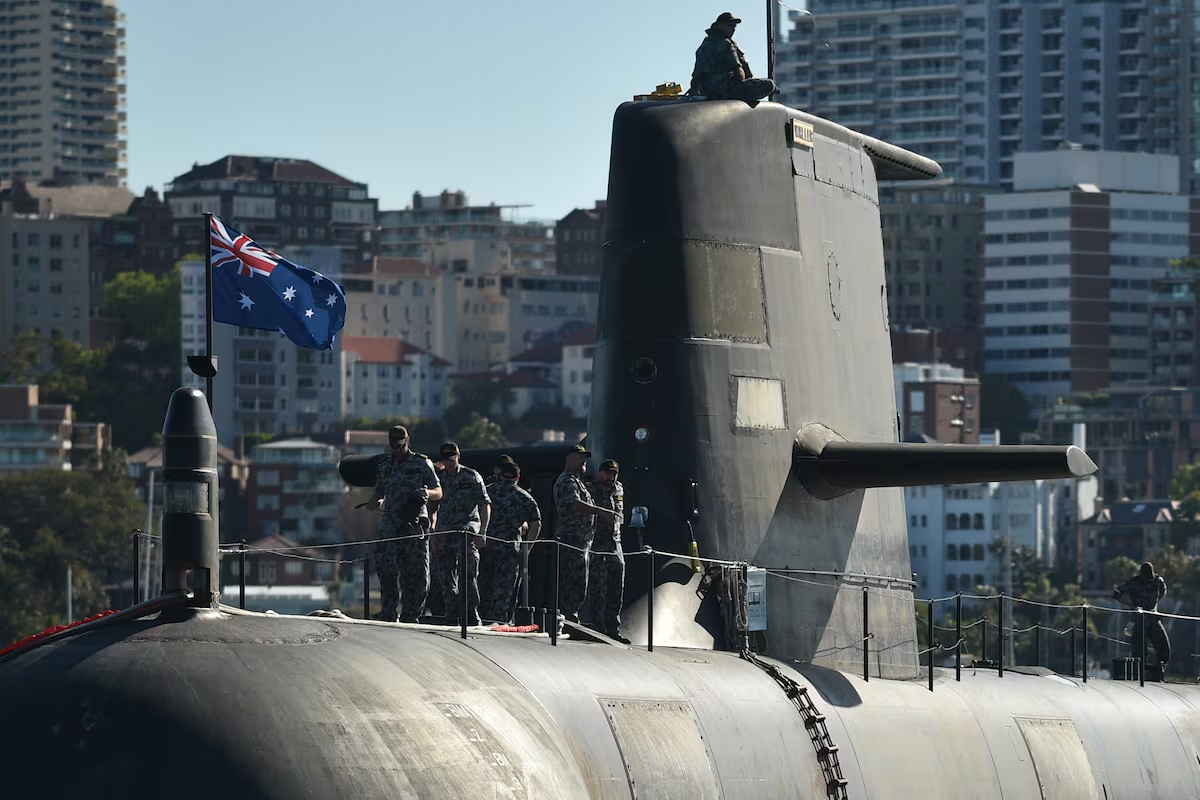
The Australian government recently initiated a long-delayed life-extension program for its Collins-class submarines. This comes as officials flagged the project as high-risk due to accumulated delays and uncertainties regarding future submarine capabilities. The Farncomb, which has the highest operational mileage, is the first submarine to undergo work at the ASC shipyard in Adelaide, commencing in late May.
The Collins-class submarines were introduced between 1996 and 2003, and proposals for their replacement date back to 2009. However, successive governments have hesitated, initially evaluating French designs—which have since been abandoned—and considering AUKUS nuclear-powered submarines. The life-extension program is budgeted at A$11 billion (about US$8 billion) and is considered imperative to bridge the gap until Australia’s Navy receives its first Virginia-class submarines in the early 2030s, followed by the SSN-AUKUS boats in the 2040s.
A report from the Australian National Audit Office (ANAO) described the Department of Defence’s planning for the life-extension project as problematic. It pointed out that significant delays and expenditures have accumulated, raising doubts about whether the project will deliver its intended capabilities or provide good value for taxpayer money. The Defence Department stated that the extension program aims to reduce risks and enhance the submarines’ capabilities through a “conditions-based sustainment approach,” which will include restoring base components and upgrading critical systems.
The initial phase of work on Farncomb will involve a detailed engineering assessment that could reveal unforeseen challenges, such as corrosion. The findings will help guide similar efforts on the remaining submarines, with priority given to the youngest vessels.
Despite expectations that the pathway to deploying nuclear-powered submarines in Australia might face delays, officials maintain that there is no alternative plan for interim conventional submarines. Interestingly, some industry experts argue that new submarines could be more cost-effective than the proposed life-extension of the Collins-class fleet. For context, Japan’s latest Taigei-class submarine is expected to cost around US$760 million.
Rear Adm. Stephen Hughes, Head of Navy Capability, confirmed the program’s challenges, stating, “Are they high risk? Sure – schedule is demanding, technologies are demanding, workforce is demanding.” While he acknowledged various potential setbacks, he expressed confidence in the Defence’s risk management abilities.
Nonetheless, the ANAO has not found the Defence Department well-positioned to assure that this long-term project will sustain the operational capability of the Collins-class submarines through to 2048. The future of Australia’s submarine fleet remains uncertain amid these ongoing challenges.
The content above is a summary. For more details, see the source article.









