


Key Takeaways
- The Australian Army’s 3rd Brigade is undergoing a significant modernization, increasing its armored vehicle fleet by 630% over three years.
- This expansion necessitates substantial logistical adaptations, including a hike in daily fuel requirements from 40,000 to over 300,000 liters.
- New artillery and operational vehicles are being integrated, enhancing capability and firepower by at least 300% for ground forces.
Transformation of the 3rd Brigade
The Australian Army’s 3rd Brigade, based in Townsville, Queensland, is undergoing a major overhaul, marking its most significant enhancement since World War II. Brigadier Ben McLennan, brigade commander, noted this transformation aims to create one of the most lethal armored formations globally. Notably, the brigade’s fleet of heavy armored vehicles will grow by an astounding 630% within three years, alongside an expected increase in personnel from 3,200 to around 4,000.
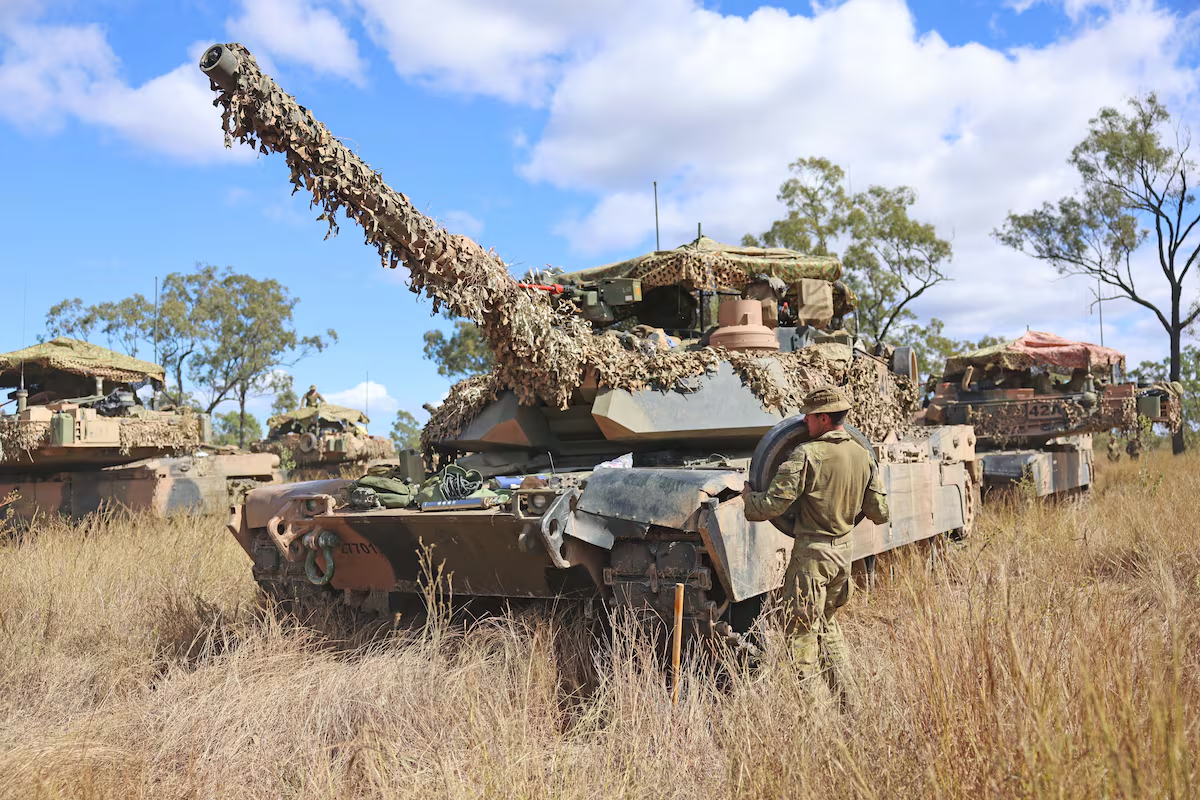
The shift to more powerful armored vehicles, such as the new M1A2 SEPv3 Abrams main battle tanks and the Hanwha AS9 Huntsman self-propelled howitzers, is driving major logistical challenges. Logistics will need to adapt significantly to support these vehicles; for instance, daily diesel consumption during high-intensity operations is projected to rise from 40,000 liters to over 300,000 liters.
Impact of New Vehicles
As part of the modernization effort, the brigade is receiving various new vehicles and tactical systems. By the end of 2026, the brigade will obtain additional Abrams-based combat engineering vehicles, with plans for incorporating more airborne drones for logistics and reconnaissance. The logistics units must prepare for increased ammunition requirements as well; daily ammunition pallets are expected to rise from 30 to 105.
To ensure proper handling and maintenance of these new systems, additional personnel training will be crucial. High-ranking officials emphasize the importance of vehicle husbandry, where soldiers are responsible for the upkeep of their assigned vehicles and weapon systems.
Artillery Advancements
In terms of artillery, the brigade’s 4th Regiment is replacing its M777A2 towed howitzers with AS9 Huntsman vehicles, which promise improvements in capability, firepower, and mobility. The new artillery structure involves six AS9s per battery, marking a significant enhancement in operational effectiveness. The introduction of heavier M88A2 recovery vehicles will be pivotal for maintenance, given the AS9s’ weight of 48 tons.
Infrastructure Development
The brigade’s expansion coincides with substantial upgrades to its infrastructure at Lavarack Barracks. By the year’s end, a new high-tech common user facility will be operational, equipped for light- and medium-grade repairs. Furthermore, a new maintenance hangar is set to increase operational efficiency for the artillery regiment.
As this transformation progresses, additional training facilities will be constructed at the Townsville Field Training Area, ensuring the brigade is well-equipped for upcoming missions.
Commitment to Modern Warfare
While many military units globally are opting for lighter, more mobile structures, the 3rd Brigade is committing to heavier, combined-arms capabilities, including tanks and armored support vehicles. As Brigadier McLennan stated, this strategy is essential in adapting to current threats and technological advancements in warfare. This modernization is part of a broader initiative that also includes raising new units such as a Littoral Maneuver Group and the induction of advanced aircraft like the AH-64E Apache helicopter.
The content above is a summary. For more details, see the source article.









