


Key Takeaways
- BMW is developing a distinct sound for its electric M3 to enhance driver experience without mimicking traditional combustion engine sounds.
- The sound aims to provide feedback and help drivers gauge speed, particularly important for high-performance electric vehicles.
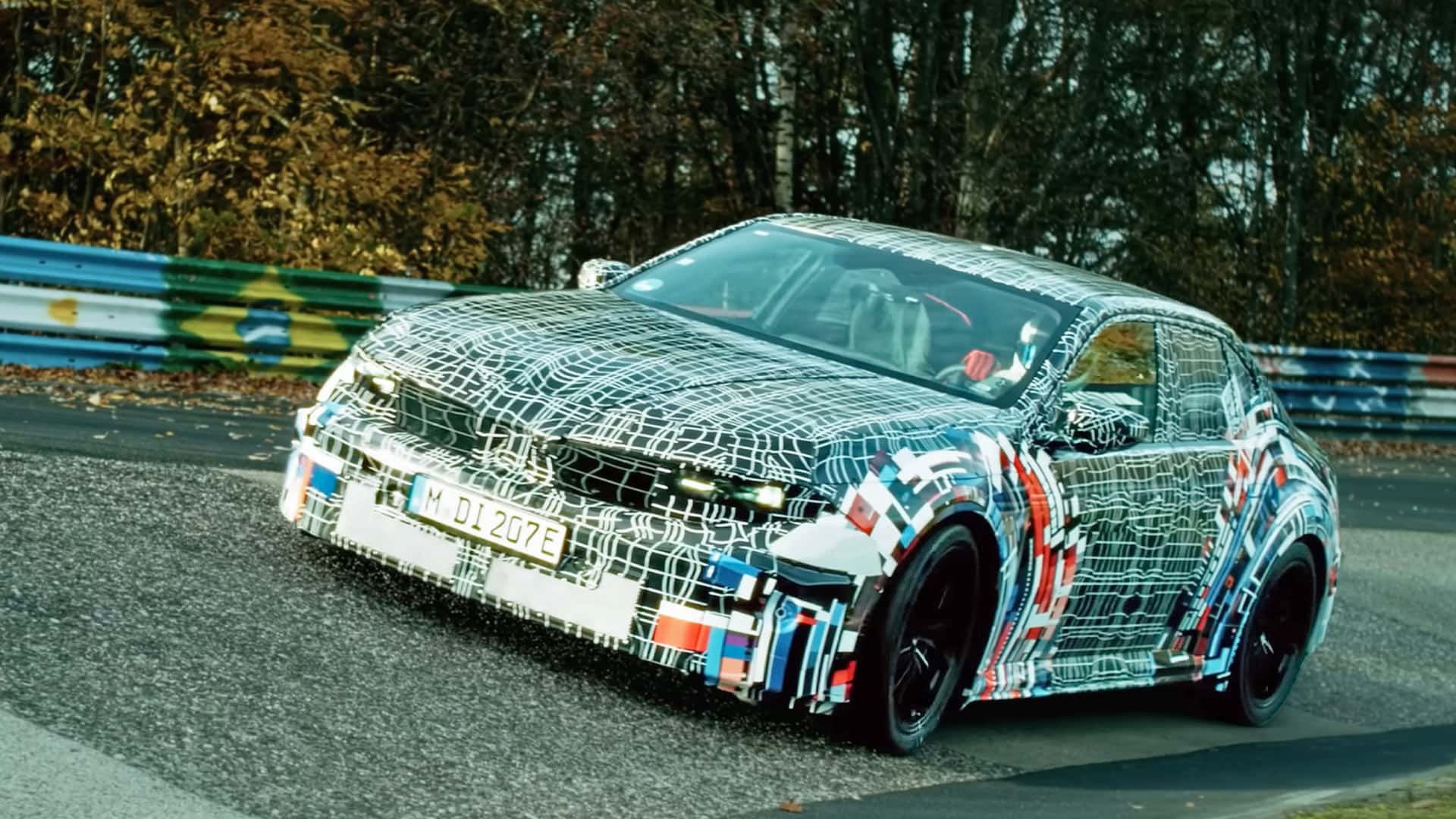
- BMW is testing the M3 EV on the Nurburgring to refine the audio experience, focusing on creating excitement without the monotony of traditional engine sounds.
Innovative Sound Design for the Electric M3
BMW recognizes a significant challenge for electric vehicles (EVs)—the lack of acoustic feedback, which makes it difficult for drivers to gauge their speed. As it develops the M3 EV, the company aims to create a sound that enhances the driving experience, moving beyond merely replicating the sounds of its iconic combustion models.
In a video shared during the M3 EV’s development, engineers analyzed the sounds from several M models. Instead of incorporating these specific engine sounds, BMW has focused on understanding the emotional appeal of these sounds. This understanding will help them craft a unique sound for the electric M3 that resonates excitement and aggression, all while steering clear of the typical “flat EV drone.”
The intention is not to convince drivers they are in a combustion vehicle but to evoke emotions inspired by the powerful sounds typically associated with high-performance engines. Other manufacturers have taken different approaches—such as Hyundai and Mercedes-AMG—by simulating engine sounds and vibrations. In contrast, BMW intends to create something distinctly its own, focusing on the feelings that great combustion engines elicit.
An engineer highlights that even renowned engine notes can sound monotonous at certain RPMs. Thus, BMW’s goal is to design a sound for the M3 EV that remains exciting throughout the full rev range. This approach aims to avoid the common “dead spots” found in combustion engine notes while incorporating hints of the electric motor’s characteristics, drawn from recordings of the vehicle’s own components.
An area of speculation is how BMW will simulate gear shifts in the M3 EV, given that most EVs utilize a single forward gear. Some automakers have opted to create a simulated multi-gear experience for added drama during acceleration. In the video, an engineer is seen using paddle shifters, suggesting BMW is exploring this feature for the M3 EV.
As the car accelerates, the generated sound is set to change, intensifying as the driver navigates through these simulated gears. BMW aims to avoid “drone” sounds, often associated with high-performance combustion engines at consistent RPMs. The sound design will include elements from the electric motor’s audio profile, offering guidance and reference points for speed perception.
Testing is currently underway on the Nurburgring, where audible cues are crucial for understanding speed without constant attention to the speedometer. This need for feedback becomes even more pronounced in electric models like the M3 EV, where rapid power delivery can disorient drivers. Regardless of how drivers interact with simulated gear shifts, BMW is committed to making the M3 EV an exhilarating experience, distinctively separated from existing conventional approaches in electric vehicle design. The anticipation for its performance is palpable as BMW continues to refine this innovative audio experience.
The content above is a summary. For more details, see the source article.









