


Key Takeaways
- Boston Dynamics integrates Google DeepMind’s AI into its Spot robot, enhancing its autonomous inspection capabilities in heavy industries.
- Spot can now perform advanced tasks like identifying hazards, monitoring assets, and executing environmental checks without constant human oversight.
- The integration facilitates real-time data collection and predictive maintenance, addressing labor shortages in the heavy industry sector.
Enhanced Autonomous Capabilities
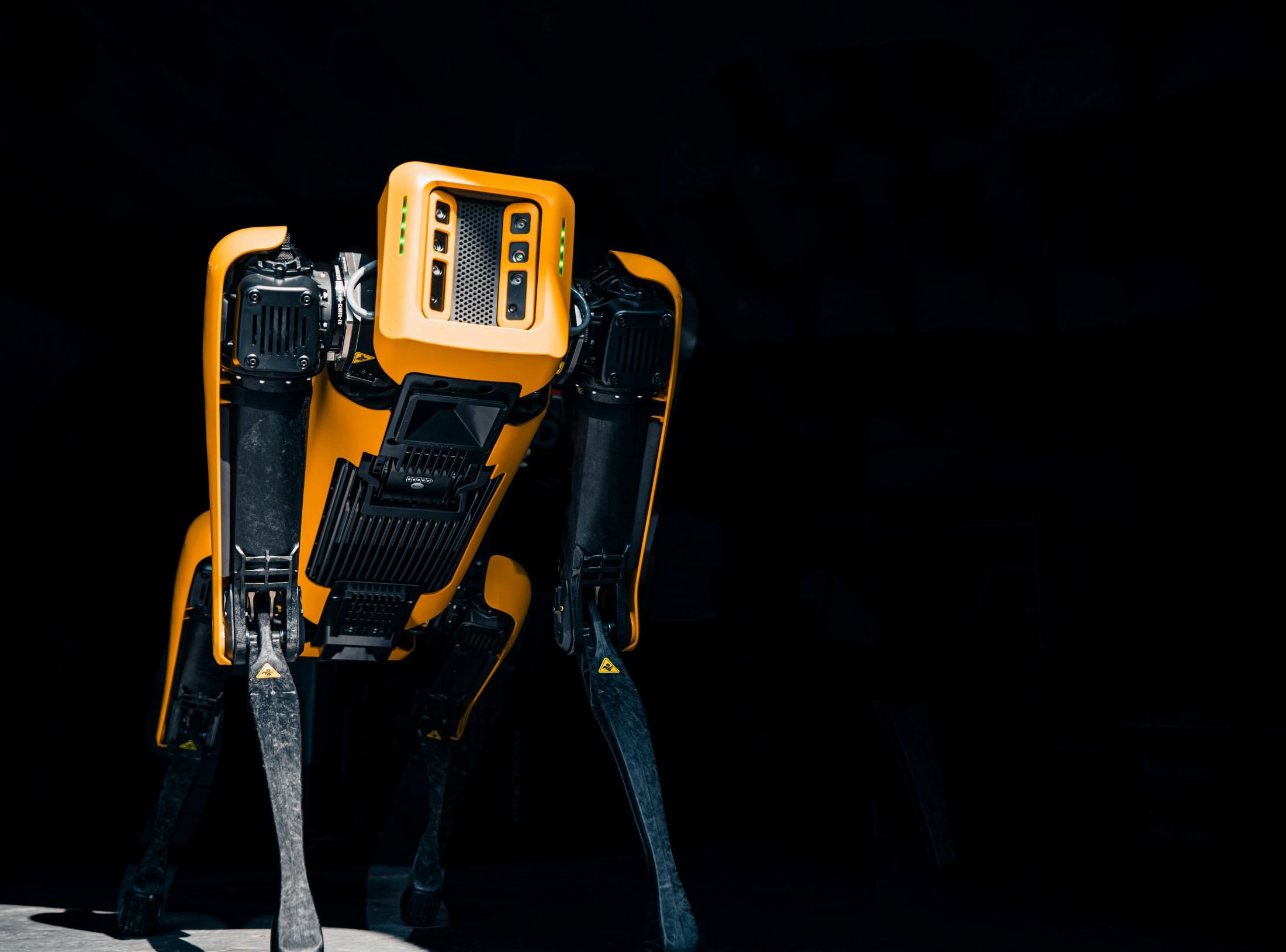
Boston Dynamics has announced a significant upgrade to its Spot robot by integrating Google DeepMind’s AI technology. This partnership aims to empower Spot with sophisticated autonomous reasoning for inspections in heavy industries, using Google Cloud and the Gemini Robotics framework. As a result, Spot can now continuously learn about its environment, improving its ability to perform complex visual analyses and higher-order reasoning.
With this integration, Spot can interactively assess safety by detecting hazardous spills, reading gauges, and navigating the physical workspace without continuous human input. The AIVI-Learning system allows multiple stakeholders to have a consolidated view of operations, enhancing safety, asset monitoring, and regulatory compliance. For instance, Spot performs inspections on critical machinery components to prevent failures, monitors material movements, and automates compliance audits, improving efficiency across multiple operational areas.
The scale of Spot’s deployment is expanding globally, with thousands already in operation at various industrial sites. It not only assesses its surroundings but also recognizes tasks it cannot complete independently by calling upon external AI tools when necessary. Zero-Downtime Upgrades ensure that Spot’s AI models are continuously updated, enhancing inspection accuracy without manual interventions.
Financial Landscape and Technological Advances
Recent analyses indicate that the funding for physical AI technologies, which combine robotics and computer vision, has reached $26.7 billion. Heavy industrial sectors, including mining and automotive manufacturing, are increasingly investing in autonomous technologies capable of navigating complex environments. The integration of AI increasingly demonstrates how robotics can expand operational capabilities.
During a 2025 hackathon, developers utilized Google’s visual-language model, Gemini Robotics-ER 1.5, to enhance Spot’s reasoning abilities. By utilizing conversational language, developers created an interface that allowed Spot to interpret visual data and initiate appropriate actions. For example, when Spot detects a chemical spill, it cross-references the visual data with hazard databases, alerts relevant personnel, and enforces containment measures through industrial software integrations.
Safety protocols are also prioritized. While Gemini Robotics is designed to operate within defined limitations to avoid unpredictable behavior, it can still adapt in various situations. It is programmed to stop its tasks and report obstructions to human operators when faced with uncertainties in the environment.
Predictive Maintenance and Data Consistency
Employing Spot for predictive maintenance can result in substantial savings by addressing machinery issues before they lead to failures. Spot performs routine scans of numerous components and utilizes thermal and acoustic sensors to detect potential malfunctions. Furthermore, it standardizes data collection, ensuring consistent photographic evidence for inspections, which in turn aids in machine learning processes.
Consistent and structured data enhances the overall performance of AI systems by enabling plant managers to monitor gradual wear and tear on equipment. This capability is particularly essential as the heavy industry faces a labor shortage, with experienced technicians retiring and fewer younger workers taking their place. As Spot takes over repetitive, hazardous tasks, engineers can focus on broader strategic goals.
The challenge of integrating these advanced technologies lies in whether existing enterprise networks can handle the substantial data generated by autonomous systems. Continuous advancements suggest that the future of heavy industry involves embracing such innovations to maintain efficiency and safety.
The content above is a summary. For more details, see the source article.









