


Key Takeaways
- Boston initiates a citywide project to prioritize MBTA buses at signalized intersections, based on a successful pilot program.
- The pilot reduced delays by 21% and increased bus travel speeds by 8%.
- The initiative aims to enhance transit appeal by decreasing waiting times caused by red lights.
Bus Priority Initiative in Boston
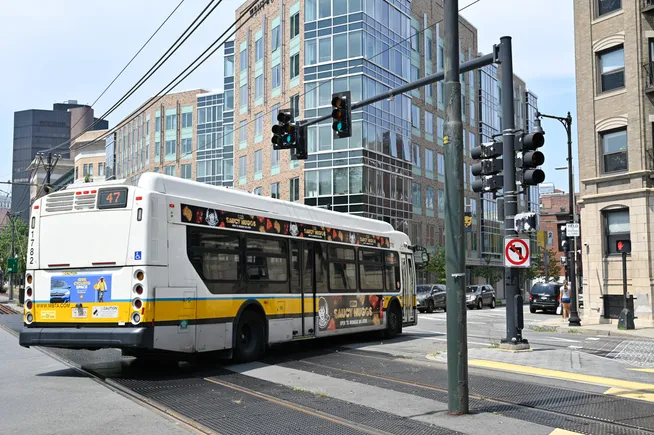
Boston and the Massachusetts Bay Transportation Authority (MBTA) have launched a citywide initiative to prioritize MBTA buses at signalized intersections, aiming to enhance speed and reliability. This decision follows a successful one-year pilot program that tested bus priority at three intersections along Brighton Avenue, starting in July 2024. The results from this pilot showed a significant 21% reduction in delays attributed to red lights, which translated to an average of 8% faster travel times for buses.
To implement this citywide effort, Boston’s traffic signal vendor, Control Technologies, will collaborate with LYT, a provider specializing in connected traffic technology. Their approach relies on machine learning to track and predict bus locations. This predictive capability will allow Boston’s traffic management center to adjust signal timings, granting green lights to approaching buses, thereby facilitating a smoother transit experience.
The MBTA has emphasized that delays caused by waiting at red lights contribute to nearly half of all transit delays. “Traditionally, traffic signals have been timed without prioritizing the flow of bus routes,” noted Boston Mayor Michelle Wu. The revised signal timing aims not only to expedite bus travel but also to optimize traffic movement for all users on the road.
In addition to this new project, the MBTA has already created over 40 miles of dedicated bus lanes and implemented transit signal priority measures at 110 locations across six regional cities. This initiative is part of a broader movement that several cities in the United States have adopted, including Los Angeles and New York City, where transit signal priority systems have been established to improve bus service efficiency.
The adoption of transit signal priority, along with designated bus lanes, has been recommended by the National Association of City Transportation Officials (NACTO). According to NACTO, improving bus service can significantly boost ridership, making public transit a more appealing option for commuters.
This latest initiative in Boston represents a substantial commitment toward modernizing the public transit system, aiming for greater efficiency and better service for its users. The combination of predictive technology and dedicated transit infrastructure strengthens the city’s goal to foster a reliable and user-friendly public transportation environment.
The content above is a summary. For more details, see the source article.









