


Key Takeaways
- The estimated cost of the Navy’s new Trump-class nuclear battleships could reach $275 billion, with each battleship priced at $23.4 billion.
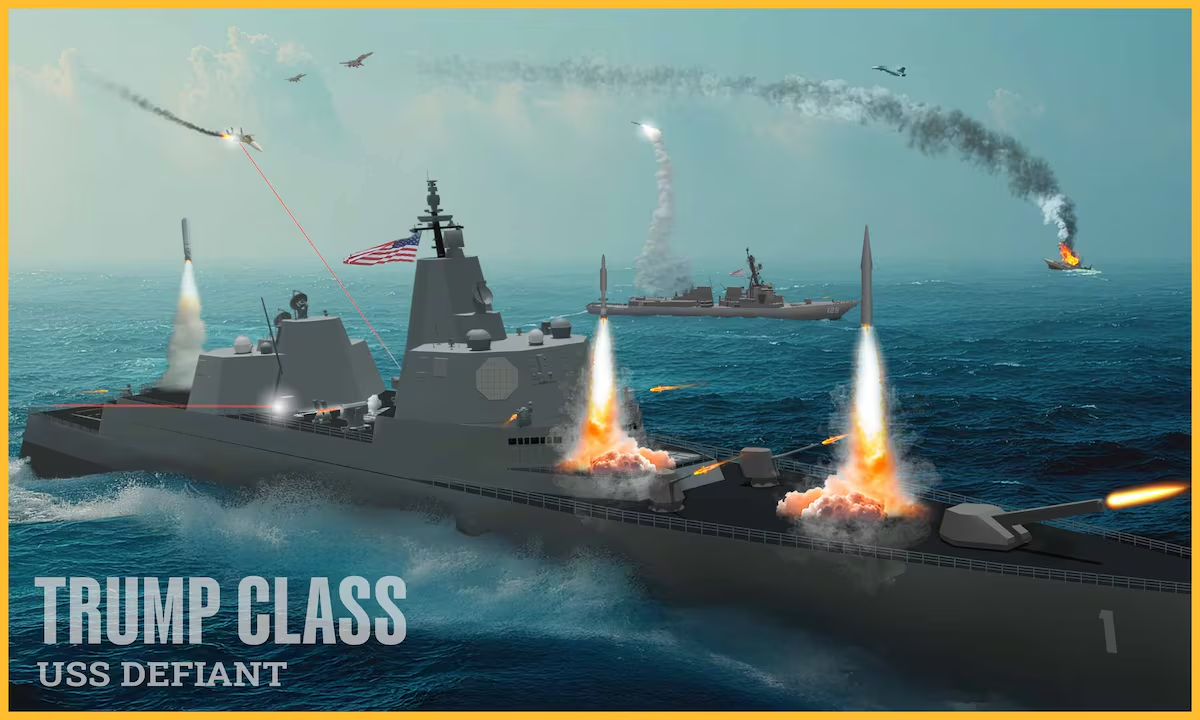
- The Trump-class battleship would be the largest surface combatant in U.S. history, equipped with advanced weaponry, including hypersonic missiles and a rail gun.
- Challenges in U.S. shipbuilding progress could delay production, with the Navy needing to build a battleship approximately every two years by 2056.
Cost and Design of the Trump-Class Battleship
The U.S. Navy’s new Trump-class guided missile battleships are projected to cost a staggering $275 billion, as detailed in a recent Congressional Budget Office (CBO) report. The initial battleship is estimated to cost $23.4 billion, which is significantly higher than earlier projections. The Trump administration announced the design of this new class of surface combatants in December.
If constructed, the Trump-class battleship would weigh around 35,000 tons, making it the most heavily armed surface vessel in history. It is designed to carry a combination of anti-air, land-attack, and anti-ship missiles, including hypersonic and nuclear cruise missiles, as well as large lasers and a rail gun. According to the report, it would surpass the size of contemporary vessels like the Arleigh Burke-class and Zumwalt-class destroyers, being more than three and a half times larger than the former.
Production Timeline and Challenges
The Navy aims to build 15 Trump-class battleships between 2028 and 2056, with each subsequent ship estimated at $18 billion. In comparison, the USS Gerald R. Ford, the current leading nuclear-powered aircraft carrier, cost approximately $13.3 billion. The CBO notes that by 2058, there will be a call to increase the total tonnage of large surface combatants by 60%, a significant challenge for the shipbuilding sector.
As the Navy transitions away from smaller surface combatants, shipyards will need to ramp up production to meet demands. By 2035, projections suggest a 12% increase in tonnage is necessary compared to earlier plans. To achieve its goals, the Navy would need to produce a battleship roughly every two years while also maintaining production of two DDG-51 destroyers annually.
Shipbuilding Concerns
Past reports from the Government Accountability Office (GAO) raise alarms about the U.S. shipbuilding industry’s lack of progress over nearly two decades. Delays in delivery and underperformance of new ships have become common, with some vessels arriving up to three years after their expected launch.
Shelby S. Oakley, a GAO director, testified before the Senate Armed Services Committee, stating that unrealistic expectations surrounding costs and timelines have led to resource diversion and significant delays in shipbuilding efforts. The GAO’s report describes an environment where both Navy programs and shipbuilders are trapped in a continuous crisis mode.
Despite the high initial costs associated with the Trump-class battleship program, its nuclear power is expected to lower operating costs over time by removing the need for fuel purchases. Nonetheless, the GAO did not provide estimates for potential savings, leaving some financial questions open.
The fluctuating costs of Trump-class battleships have raised concerns, with the latest estimates coming in $6 billion above initial Navy projections. The ongoing developments in this procurement program will be closely monitored as it could have significant implications for the future of U.S. naval capabilities.
The content above is a summary. For more details, see the source article.









