


Key Takeaways
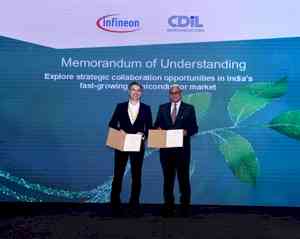
- CDIL Semiconductors and Infineon Technologies Asia Pacific have signed a memorandum of understanding to collaborate in India’s semiconductor market.
- The agreement aims to enhance local production and reduce India’s reliance on semiconductor imports.
- Both companies will work together to develop power semiconductor solutions for automotive, renewable energy, and consumer applications.
Strategic Collaboration in India’s Semiconductor Sector
On March 6, CDIL Semiconductors and Infineon Technologies Asia Pacific entered into a memorandum of understanding aimed at forging strategic partnerships in India’s rapidly expanding semiconductor industry. This collaboration aligns with the Indian government’s focus on achieving self-reliance in semiconductor production, thereby reducing the nation’s dependency on imports.
Under the agreement, Infineon will provide high-performance bare die wafers to CDIL, which will then package these wafers into discrete and module semiconductor products designed for the Indian market. This initiative seeks to enhance India’s domestic manufacturing capabilities and improve its position within the global semiconductor supply chain.
Pankaj Gulati, President of CDIL, emphasized that this partnership exemplifies India’s potential in power semiconductor manufacturing. He stated, “By integrating Infineon’s world-class wafer technology with CDIL’s advanced OSAT capabilities, we are setting new benchmarks in innovation and localization.” The collaboration not only aims for expansion but also emphasizes innovation, accelerating the ‘Make in India’ initiative and positioning the country as a hub for semiconductor excellence.
Richard Kuncic, SVP and General Manager of Power Systems at Infineon Technologies, remarked that the partnership’s goal is to deliver innovative power semiconductor products to meet the evolving needs in e-mobility, renewable energy, and energy-efficient appliances within India.
The collaboration between Infineon and CDIL will tackle critical semiconductor requirements across several sectors, including automotive and mobility, power semiconductors, renewable energy, and other industrial and consumer applications. This agreement also lays the groundwork for future advancements and further engagement in sophisticated semiconductor technologies, responding to India’s needs for next-generation electronics.
CDIL has been a key player in manufacturing high-reliability semiconductor devices since 1964, serving organizations like ISRO, Vikram Sarabhai Space Centre, HAL, and BEL. The Indian semiconductor industry is poised for growth, with five manufacturing units currently under construction, leading to the expected rollout of the first ‘Made in India’ chip by 2025.
The content above is a summary. For more details, see the source article.









