

Key Takeaways
- CH4 Global has launched a commercial-scale EcoPark facility in South Australia for producing Asparagopsis seaweed, aimed at reducing livestock methane emissions.
- The facility can produce over 80 metric tons of Asparagopsis annually, with plans to expand capacity significantly to meet growing market demand.
- Partnerships with major companies like Mitsubishi Corp and UPL will help accelerate the adoption of their feed supplements across various markets, including Asia-Pacific and South America.
New Advances in Reducing Livestock Methane Emissions
CH4 Global has initiated production at what it claims to be the world’s first commercial-scale facility for cultivating Asparagopsis red seaweed in Louth Bay, South Australia. This startup aims to tackle methane emissions from livestock by using a feed supplement derived from this seaweed. According to CH4 Global cofounder and CEO Dr. Steve Meller, the new EcoPark facility demonstrates that large-scale production of Asparagopsis is feasible and cost-effective, countering other methods like methane-reducing vaccines or synthetic additives.
Meller emphasized that the EcoPark achieves scaling without government subsidies, marking a significant advancement in a crucial climate solution. The facility positions CH4 Global to meet rising market demands, potentially providing farmers with economic benefits through reduced methane emissions alongside improved livestock productivity. The company asserts that natural Asparagopsis offers the safest and most effective means of lowering emissions from cattle, thus promoting broader adoption of this sustainable practice.
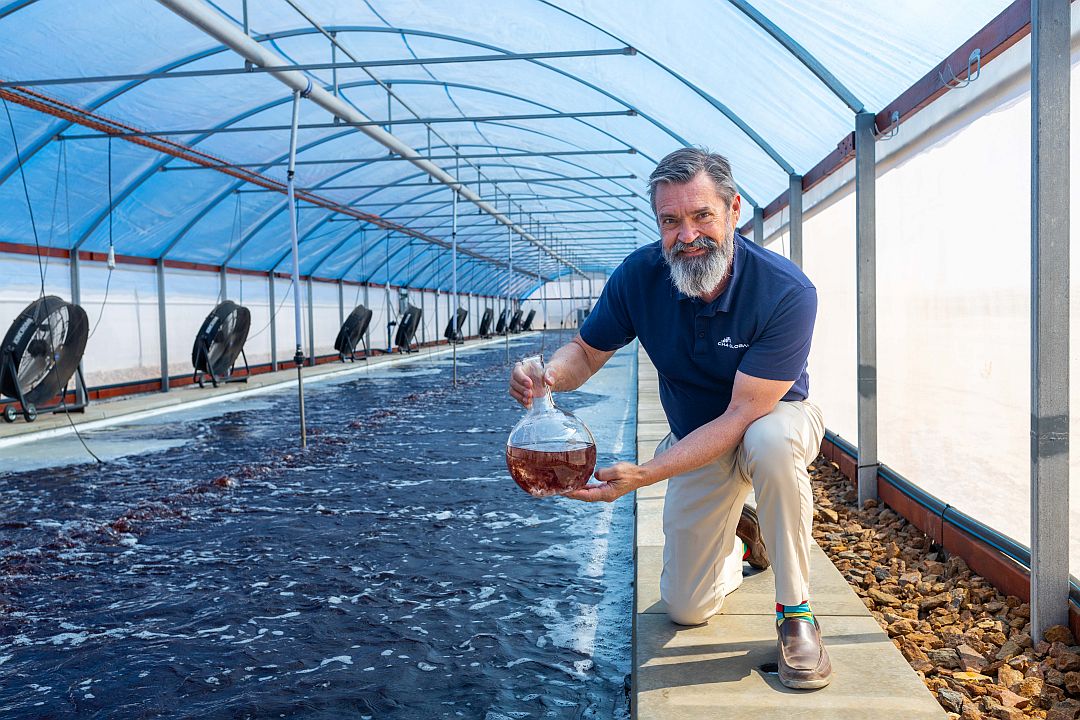
CH4 Global’s approach addresses the common issue of cultivating seaweed in tanks, where increased density can inhibit growth due to light blockage. The company innovatively developed covered outdoor ponds that allow better light penetration and circulation, enhancing growth rates significantly. The patented processing method thereafter ensures maximum retention of valuable bioactives, efficiency, and reduced operational costs.
The initial phase of the EcoPark comprises ten 200,000-liter ponds, projected to yield more than 80 metric tons of seaweed annually. Future expansion to 100 ponds, and potentially up to 500, could support the feed needs of hundreds of thousands of cattle daily. When included in livestock diets at under 0.5%, Asparagopsis is proven to cut methane emissions by as much as 90%, offering a natural alternative to synthetic solutions that often face consumer skepticism.
CH4 Global has also formed key partnerships to broaden its market reach. Recently, the company collaborated with Mitsubishi Corp to enhance technology adoption within Asia-Pacific and signed deals with CirPro and UPL to access markets in countries like India and Brazil. Additionally, they are exploring opportunities in South Korea and providing supplements for Wagyu beef cattle.
With methane recognized as a significant climate change factor, CH4 Global’s initiative is timely, aligning with the Global Methane Pledge targets to cut emissions by 30%. Their advancements in feed supplements represent a promising avenue for reducing the major greenhouse gas contributions from livestock farming, underscoring the effectiveness of natural solutions in the fight against climate change.
The content above is a summary. For more details, see the source article.