


Key Takeaways
- Smart home technology adoption is rising across Europe and the U.S., reshaping passenger expectations for responsive environments.
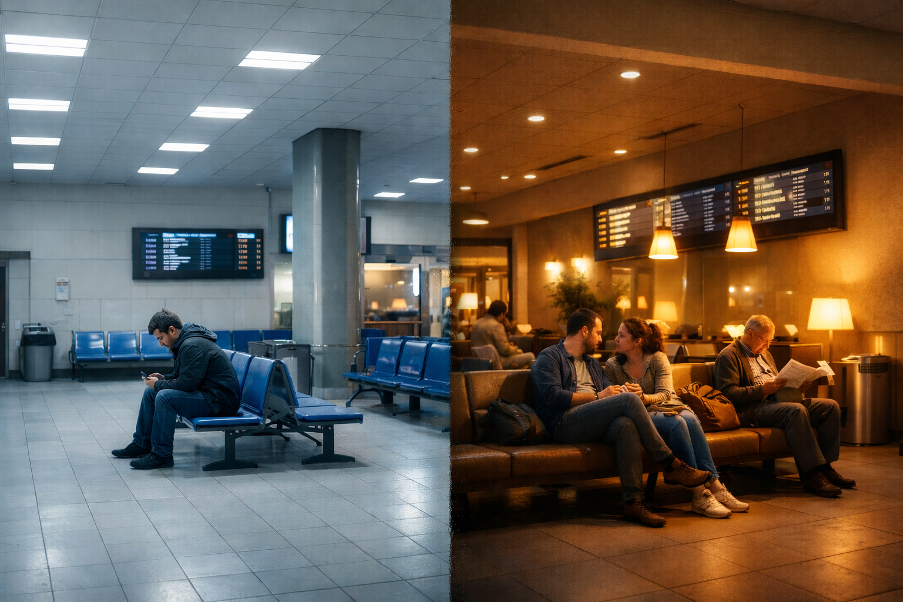
- Current rail lighting systems focus primarily on safety and uniformity, often neglecting comfort and atmosphere, which impacts passenger experience.
- Existing technologies for adaptive lighting can enhance rail environments, but application and system specification remain significant challenges.
Changing Passenger Expectations
Passenger expectations related to environmental responsiveness are evolving due to the increasing prevalence of smart home technologies. In Europe, around 30% of households utilize connected devices, with a similar trend in the United States. This heightened awareness of responsive spaces has set new standards for passenger environments, including rail systems.
Currently, rail lighting is primarily designed for safety and efficiency, resulting in systems that lack adaptability. Platforms might be overly bright during late hours or excessively dim when crowded, which could detract from passenger comfort and safety perceptions. Effective lighting influences the overall travel experience, yet rail environments often feel functional rather than inviting due to a lack of variance and responsiveness in lighting.
The technology to create more dynamic rail lighting already exists, with systems capable of occupancy sensing, daylight response, and time-based adjustments. Research indicates that such adaptive lighting can enhance both visual performance and space perception without compromising safety or compliance standards.
However, the challenge lies not in the technology itself but in its application. Lighting is often treated as a fixed aspect of infrastructure, with limited post-installation adjustments. In contrast, passengers increasingly expect environments in other sectors—like retail and hospitality—to adapt over time.
While safety and predictability remain essential, the rail industry has the potential to integrate controlled adaptability in lighting systems. This can lead to environments that respond more effectively to passenger needs, enhancing comfort and overall experience. The key issue is to leverage the existing capabilities in ways that align better with modern expectations, making rail travel environments more inviting and user-friendly.
The content above is a summary. For more details, see the source article.









