


Key Takeaways
- China is in a race to develop 10,000-card computing clusters, enhancing AI capabilities.
- Major tech players, including Huawei and Alibaba, are at the forefront of this innovation.
- The clusters operate like supercomputers, significantly improving AI model training efficiency.
Overview of China’s Computing Revolution
In the past two years, China has seen a dramatic rise in computing facilities, which are now considered crucial infrastructure. Cities and technology companies are engaged in an intense competition to establish 10,000-card computing clusters. These advanced clusters, consisting of 10,000 or more artificial intelligence accelerator chips, are designed to significantly enhance AI performance, allowing for both more rapid advancements in AI capabilities and reduced times for model training.
Leading this technological drive are domestic champions, including prominent firms like Huawei Technologies and Alibaba Group Holding, along with specialized companies like Moore Threads, which focuses on graphics processing units (GPUs). These entities are competing not only to provide the hardware but also to innovate around it, positioning their chips at the heart of these cutting-edge systems.
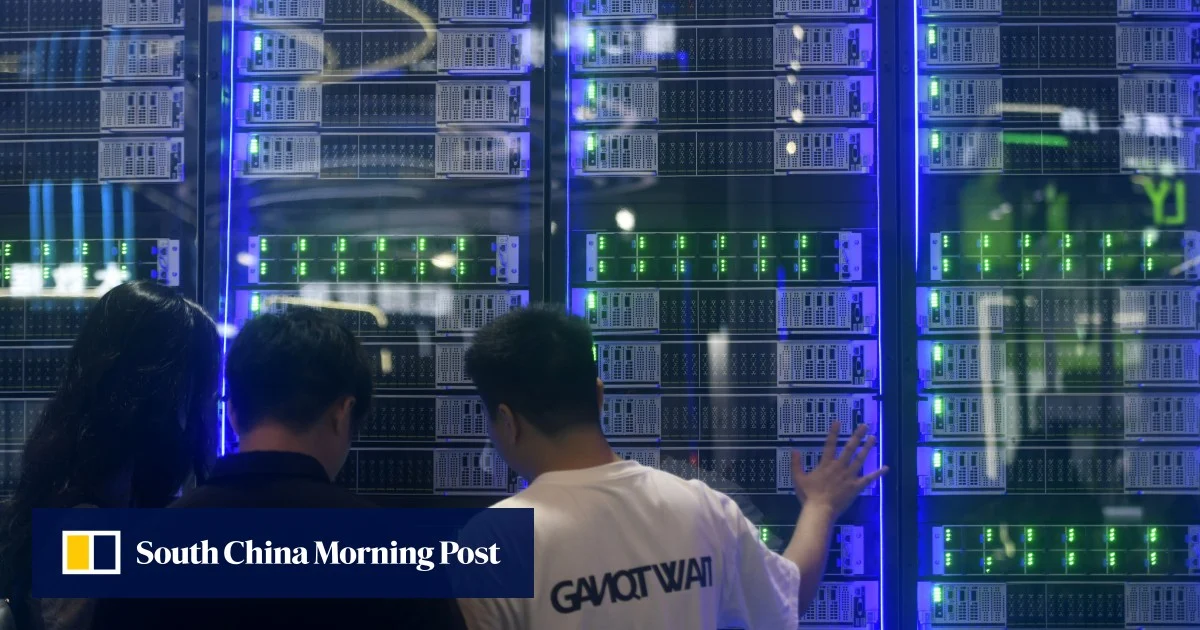
A 10,000-card cluster essentially functions similarly to a supercomputer, integrating high-performance GPUs with advanced storage solutions into a cohesive system. This integration allows for the efficient handling of vast amounts of data and complex computations, which are fundamental for training sophisticated AI models. As a result, these clusters are not merely hardware components; they represent a significant leap in computational capabilities, thereby transforming how AI technologies are developed and deployed across various industries.
The implications of this computing infrastructure extend beyond immediate technological benefits. As cities and corporations invest in these systems, their potential to further accelerate AI innovation could lead to broader economic transformations. The push for faster and more efficient AI training could place Chinese firms in a competitive position globally, influencing various sectors, from finance to healthcare.
Looking forward, the trajectory of these computing clusters is likely to shape the future of AI not just in China, but worldwide. Improvements in processing capabilities mean that even more complex and nuanced AI applications could emerge, offering solutions to challenging problems and enhancing decision-making processes across multiple domains.
China’s commitment to building these advanced computational facilities signifies an important moment in the global technology landscape, highlighting a shift towards prioritizing infrastructure that supports AI development. As the arms race continues, the outcome will serve as a crucial turning point for not only the participants but also for the global technological community as a whole.
The content above is a summary. For more details, see the source article.









