


Key Takeaways
- The Chinese State Council has unveiled a plan to modernize agriculture and rural areas during the 2026-2030 period.
- Key targets include raising grain production capacity to 725 million tonnes and ensuring a 98% quality inspection pass rate for agricultural products by 2030.
- The plan emphasizes technological advancements in agriculture, increased farmers’ income, and sustainable rural development.
New Agricultural Modernization Initiative in China
The Chinese State Council has introduced a comprehensive plan aimed at modernizing agriculture and rural areas as part of its 15th Five-Year Plan spanning from 2026 to 2030. This initiative aims to enhance food security, improve agricultural quality, efficiency, and competitiveness, and build upon past poverty alleviation gains.
One of the main goals is to increase the nation’s comprehensive grain production capacity to approximately 725 million tonnes by 2030. Alongside this, the plan sets a target for an overall pass rate of routine agricultural product quality inspections to reach at least 98% by the same year.
In addition to these binding targets, the plan outlines 13 anticipatory goals focusing on areas such as meat production, technology’s role in agriculture, environmentally friendly farming practices, sewage treatment in rural areas, and boosting farmers’ incomes. Emphasis will be placed on ensuring stable supplies of essential agricultural products while also enhancing their quality to meet the rising demand for nutritious foods.
The plan aims to bolster self-reliance and advancements in agricultural science and technology. It is also designed to transition agriculture into a modern industry while maintaining a steady increase in farmers’ incomes. Furthermore, it calls for a vision of a more harmonious countryside, promoting urban-rural integration and the high-quality development of agriculture.
To support these objectives, the initiative highlights the need for significant advancements in developing high-quality production capabilities in agriculture. There will be a push to foster specialty industries in rural regions, promote the green transition in farming, and improve infrastructure and public services in rural areas.
Major projects outlined in the plan include the establishment of high-standard farmlands, enhanced agricultural science and technology capabilities, and improved cold-chain logistics for food preservation. It also presses for the adoption of artificial intelligence in agriculture and upgrades to the agricultural product processing sector.
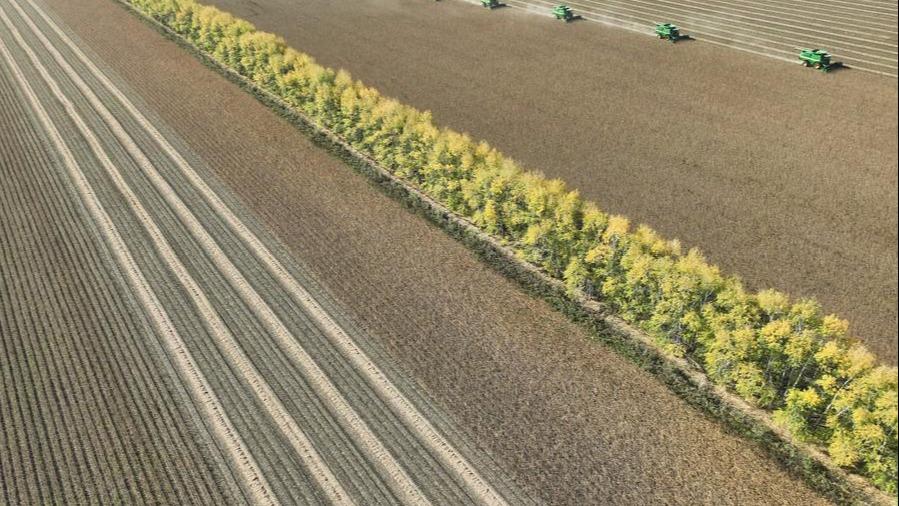
Recent trends indicate that technological advancements have already positively impacted agricultural productivity in China. In 2025, grain production reached approximately 714.9 million tonnes, maintaining levels above 700 million tonnes for two consecutive years. The contribution of agricultural scientific and technological progress surpassed 64%, with crop cultivation and harvesting mechanization at 76.7%.
Looking ahead, the plan aims to elevate the contribution rate of scientific and technological progress in agriculture to 67% by 2030, focusing on innovative sectors such as intelligent design breeding, energy-efficient agricultural machinery, low-altitude agricultural economics, and agricultural bio-manufacturing.
The content above is a summary. For more details, see the source article.









