


Key Takeaways
- The U.S. Department of Energy canceled nearly $7.6 billion in funding for 223 clean energy projects, impacting job security and grid reliability.
- Terminated projects include significant hydrogen hubs and methane reduction initiatives, affecting states that primarily voted for Democrats in the 2024 elections.
- Industry experts express concern over the long-term effects on energy costs, grid stability, and competitive power sectors due to politicized funding decisions.
Funding Cuts Impact Clean Energy Projects
The U.S. Department of Energy’s recent termination of nearly $7.6 billion in funding for 223 clean energy initiatives poses serious threats to job security and energy reliability, according to insiders and a report by House Democrats. The abrupt cut is expected to result in immediate job losses and work stoppages across multiple states.
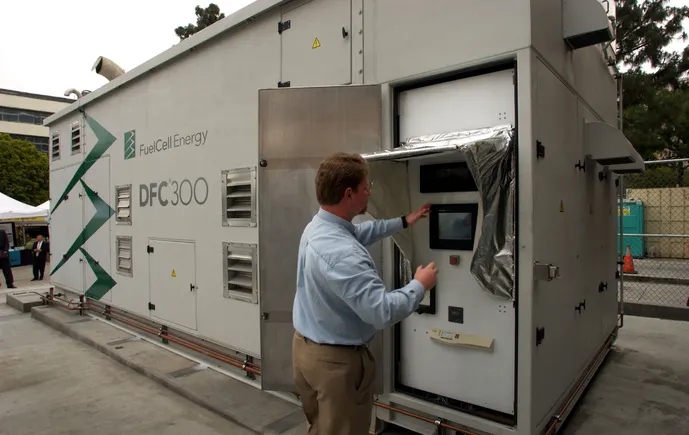
The canceled projects include key funding for hydrogen hubs in California and the Pacific Northwest, as well as initiatives aimed at strengthening local electrical grid reliability. Zealan Hoover, a former senior adviser to the Environmental Protection Agency, noted that these cuts will hinder competition in the electric power sector and could lead to increased energy costs and decreased grid reliability over time.
In response to the funding cuts, U.S. Office of Management and Budget Director Russ Vought criticized the moves as an elimination of “Green New Scam funding” intended to support a political climate agenda. Vought specifically listed 16 states affected by the funding cuts, which primarily voted for Democratic candidates, such as California, Colorado, and Illinois.
For instance, in Colorado, more than 30 grants totaling over $500 million have been canceled. These projects focus on methane reduction, grid resilience, and utility support for low-income communities. The Colorado Energy Office emphasized that the termination of these projects will exacerbate energy costs, undermine grid reliability, and create instability in the local economy.
Despite all terminated projects being based in states that supported former Vice President Kamala Harris in the 2024 presidential election, Hoover pointed out that many projects operate across several states, including those in politically opposing regions. An example is the Pacific Northwest Regional Hydrogen Hub, which could lose up to $1 billion in federal funding while spanning multiple states, including Montana.
Concerns over politicization have been voiced by officials, including Rep. Rosa DeLauro and Rep. Marcy Kaptur, both Democrats. They highlighted that a significant number of terminated projects are concentrated in districts represented by Democrats, with 108 projects in Democratic districts compared to 28 in Republican districts. This selective targeting raises alarms regarding the influence of partisan politics on essential energy funding.
In Illinois, for instance, the cancellation of nearly $280 million for projects focused on methane leak prevention and emissions reduction has been criticized by state officials who argue these decisions prioritize politics over the nation’s energy security. A spokesperson for Gov. JB Pritzker articulated the broader implications of these cuts, emphasizing that energy investments underpin economic stability, benefit workers, and ensure the proper functioning of homes and businesses.
The Alliance for Renewable Clean Hydrogen Energy Systems, based in California, faces a deficit of $1.2 billion in federal aid due to the cancellations. A representative from the Los Angeles Department of Water and Power reaffirmed their commitment to transitioning to 100% clean energy by 2035, despite the setback.
As stakeholders and industry experts scrutinize the implications of these funding cuts, the urgency of a stable and forward-thinking energy policy remains apparent, emphasizing the need for bipartisan cooperation in addressing the energy landscape’s challenges.
The content above is a summary. For more details, see the source article.









