


Key Takeaways
- Corteva celebrates the 100th anniversary of its Pioneer seed brand amid significant agricultural advancements and challenges.
- The company plans to invest in gene editing and AI technologies to enhance seed varieties and drive future agricultural yields.
- Expansion into global markets, particularly in South America, is a key focus for Corteva’s growth strategy.
Pioneer Seed’s Legacy and Future Innovations
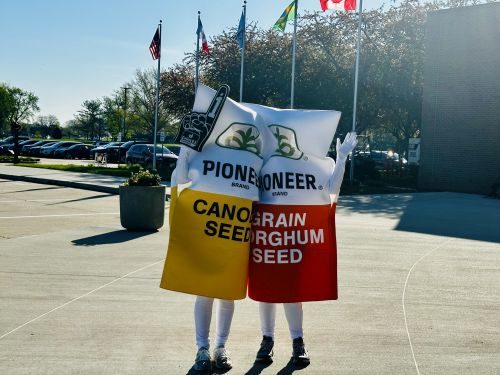
Corteva Inc. is commemorating a century of its Pioneer seed brand, a pivotal player in modern agriculture, as both the company and the U.S. farming landscape face transformative changes. In April, a celebration in Johnston, Iowa brought together around 1,500 employees, retirees, and industry leaders—some participating virtually—to reflect on Pioneer’s groundbreaking legacy, which began under the vision of Henry Wallace, a notable agricultural innovator.
Wallace’s efforts in the late 1920s, particularly the commercialization of hybrid corn, revolutionized crop production. This shift required farmers to purchase new seeds annually, positioning hybrid varieties as key to significantly increasing crop yields. The first prize in a corn yield contest awarded to Wallace and his then-student Raymond Baker played a crucial role in advancing the company’s research and development efforts. As Dean Podlich, Corteva’s digital seed lead, noted, “That ribbon started it all,” marking a turning point in corn production, which dramatically rose from around 25 bushels per acre in the mid-1920s to record levels of 186.5 bushels in recent years.
During the centennial event, executives expressed ambitions for 21st-century agricultural advancements, focusing on gene editing and artificial intelligence to reach unprecedented yields. Sam Eathington, Corteva’s executive vice president, proposed a future where national corn averages could approach 300 bushels an acre, with record yields potentially nearing 1,000 bushels.
Corteva is currently contending with increased competition from rapidly growing agricultural regions such as South America. As American farmers face a range of economic challenges and the aging demographic of the farming community, the company aims to harness global licensing opportunities, especially by expanding its soybean seed operations in Brazil.
In the wake of legal resolutions with Bayer, Corteva anticipates generating $1 billion in net royalty income by 2035 through its seed business, which ranks among the top players in key corn and soybean markets. The introduction of hybrid wheat in the U.S. next year is another milestone on the horizon, alongside efforts to develop short-stature corn varieties for better resilience and yield stability.
Magro pointed out the potential for gene editing technologies to revolutionize agriculture, proposing that enhancing crop genetics could help farmers achieve higher profits per acre and contribute to global food security. The benefits may include improved disease resistance and greater oil content in biofuel crops. Despite the complexity of pricing new genetic technologies, the potential for efficiency and yield enhancement remains significant.
Integrating AI into agriculture is a priority, focusing on efficiently analyzing vast amounts of data to produce higher yields with fewer resources. Judd O’Connor, Corteva’s executive vice president of the seed business unit, likened the current industry transition to past shifts in farming practices, emphasizing the need for data-driven decision-making.
As the agricultural landscape evolves, Corteva’s commitment to innovation promises to shape the future of farming, continuing a century-long transformation initiated by its Pioneer seed brand.
The content above is a summary. For more details, see the source article.









