

Key Takeaways
- House Republicans convened in Florida to discuss budget reconciliation crucial for Trump’s spending agenda.
- A study indicates proposed tariffs would significantly harm U.S. neighbors, particularly Canada and Mexico, while benefiting other countries.
- Calls for agricultural labor reform are increasing, with emphasis on providing legal status to essential immigrant workers.
House GOP Focuses on Budget and Tariffs
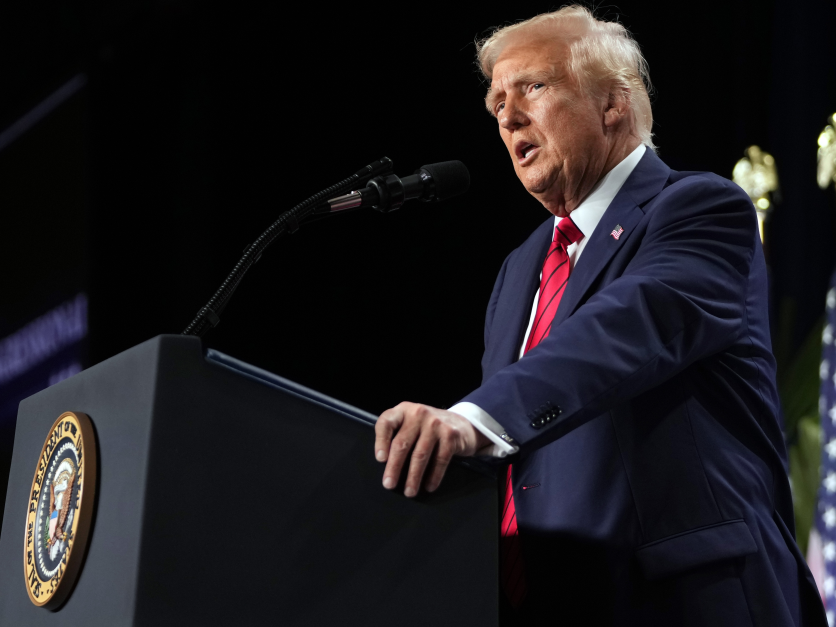
House Republicans are gathering in Florida to strategize regarding the budget reconciliation process, which is essential for advancing President Donald Trump’s fiscal goals. During the discussions, Trump underscored the importance of party unity, urging members to collaborate closely on the agenda. He expressed frustration over the lack of cohesion within the party: “You have to stick together. It’s the one thing I would say we don’t get very high marks [on].”
Trump reiterated his commitment to using tariffs as a tool to safeguard American industries. He highlighted the focus on specific products, including steel, aluminum, copper, pharmaceuticals, and semiconductors. Citing a recent trade dispute with Colombia, he asserted that tariffs can yield significant results.
Impact of Proposed Tariffs
A fresh study has emerged revealing that if Trump were to impose the proposed tariffs on Mexico, Canada, and China, both Canada and Mexico would bear the brunt of the economic fallout, with Canadian prosperity potentially declining by over 10% and Mexico’s by nearly 7%. Conversely, countries like Brazil, the United Kingdom, and Vietnam would likely benefit from redirected trade. Trump’s consideration of a 25% tariff on Canadian and Mexican goods, along with a 10% duty on Chinese products, is expected to be enacted imminently.
The study points to significant losses concentrated within the soybean, corn, ethanol, wheat, and dairy sectors, with Illinois and Nebraska projected to lose over $1 billion and Iowa potentially over $2 billion in exports due to tariffs.
Mexico’s Ban on GM Corn
In Mexico, President Claudia Sheinbaum is advocating for a constitutional amendment to prohibit the cultivation of genetically modified corn, aiming to protect the country’s agricultural identity. The proposal has garnered attention and is being treated as a legislative priority. This follows a U.S.-Mexico-Canada Agreement dispute where the U.S. challenged Mexico’s ban on GM corn in various food products.
USDA Trade Missions and Labor Reform Advocacy
The U.S. Department of Agriculture (USDA) plans to lead a trade mission to Thailand next month, hoping to tap into Southeast Asia’s growing consumer market. The USDA is also organizing a mission to Hong Kong, recognizing it as a strategic hub for accessing Chinese markets.
Meanwhile, the agricultural sector is increasingly vocal about the need for labor reform, especially amidst rising deportations affecting immigrant workers. Industry leaders are urging Congress to pass the Farm Workforce Modernization Act, which would provide pathways to legal status for immigrants working in agriculture, health care, and related fields.
Leaders in agriculture emphasize that while illegal actions should be addressed, it is crucial to protect the labor force essential to the industry’s success. The chair of the House Ag Committee, Rep. Glenn “GT” Thompson, voiced concerns about the necessity of timely legislation for the farm bill to avoid future economic distress, signaling that quick action is paramount to support U.S. agricultural producers.
The content above is a summary. For more details, see the source article.