


Key Takeaways
- SoftBank Group’s $41 billion investment in OpenAI elevated its valuation to $500 billion.
- Despite heavy investments, critics express concerns over OpenAI’s sustainability and potential collapse.
- AI demand appears robust, with many companies starting to see good returns on their AI investments.
SoftBank’s Major Investment in OpenAI
SoftBank Group recently finalized a significant $41 billion investment in OpenAI, marking its fourth major financial commitment to the creator of ChatGPT. This investment catapulted OpenAI’s market valuation to $500 billion. Shortly after, OpenAI secured a $10 billion contract with Cerebras, an AI chipmaker, to enhance its model performance and computational capacity.
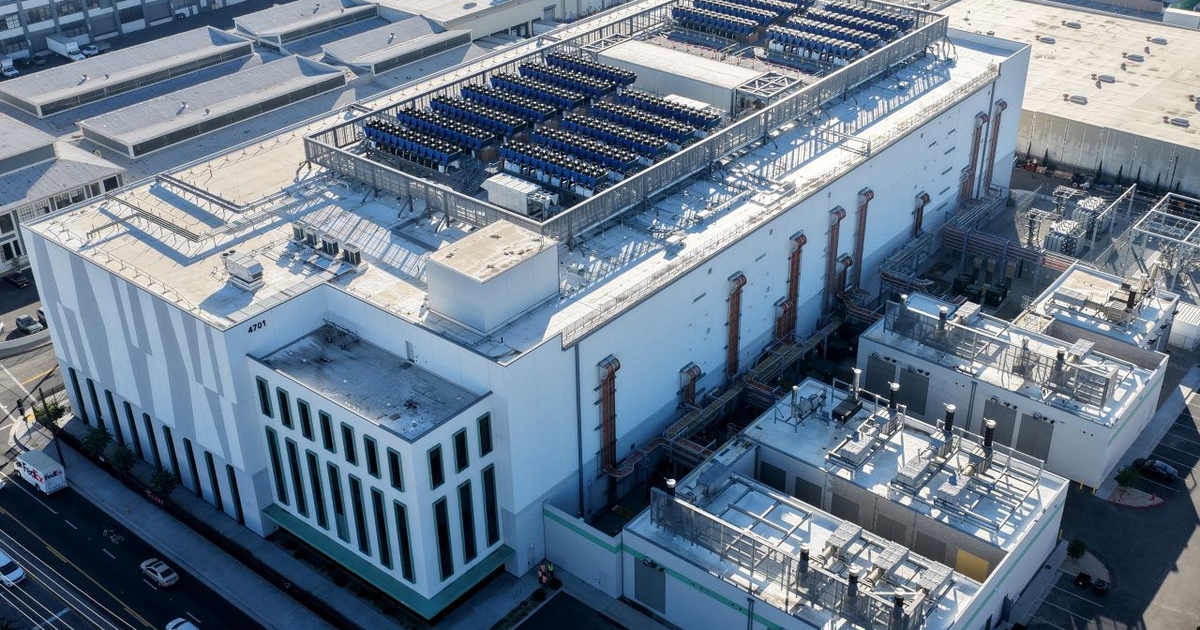
In a bustling year for artificial intelligence, OpenAI was involved in five of the ten largest deals within the industry, including a $500 billion partnership with SoftBank and Oracle, a $300 billion agreement with Oracle, and a $100 billion investment from Nvidia. Additionally, tech companies invested over $61 billion to establish AI data centers globally, to support the growing demand for computational power necessary for AI models.
Concerns About Financial Viability
Amid optimism regarding AI’s future, numerous experts argue that OpenAI faces significant financial challenges. OpenAI’s projected revenue for 2025 is around $20 billion, which pales in comparison to its expenses. As the company struggles to penetrate the enterprise AI market, competitors like Anthropic are emerging as favorites among business users, despite experiencing low revenue as well.
Economics experts highlight the unsustainable cost structure of many AI firms. Andy Wu from Harvard Business School notes that most AI companies are currently operating at a loss with no viable business model. Johna Till Johnson, CEO of Nemertes, points to the staggering infrastructure commitments in the AI sector—amounting to around $1 trillion—which could plunge the industry into financial turmoil.
If OpenAI were to fail, skeptics warn it could trigger a broader collapse within an already fragile AI market. Factors contributing to this perceived bubble include inflated demand forecasts, circular financing between firms, overstated revenues, and significant debts accrued by AI infrastructure companies.
Perspectives on AI’s Future
Proponents of AI argue that it is a transformative technology, deserving of investment beyond current valuations. Contrary to the dot-com bubble of the late 1990s, many dominant players in AI are financially stable with diverse revenue streams, making them less vulnerable to downturns. For example, Nvidia is well-capitalized and strategically investing in its ecosystem.
While Oracle has committed to building extensive AI data centers with associated risks (borrowing $100 billion), many believe that the potential failure of this venture would not threaten the wider AI sector. Portfolio manager Alison Porter indicates that while some neocloud companies bear heavy debts, they’re unlikely to jeopardize overall AI advancement.
Porter notes that OpenAI, which recently projected substantial revenue growth—rising from $2 billion in 2023 to $20 billion by 2025—is making strides, albeit at a fast pace of cash burn. Despite these advancements, concerns remain about profitability and the sustainability of astronomical valuations in the AI sector.
Recent data from a survey of 350 mid-sized to large enterprises indicates that businesses are beginning to see promising returns on their AI investments, contrasting with earlier assessments claiming minimal ROI. This suggests a more nuanced landscape than suggested by AI skeptics.
Overall, the current AI boom reveals a mix of enthusiasm and trepidation. Observers acknowledge both the potentially explosive growth in AI capabilities and the risk of a market correction arising from inflated valuations and unsustainable financial practices. As investments in generative and agentic AI technology continue unabated, understanding the balance between optimistic growth and realistic viability will be crucial.
The content above is a summary. For more details, see the source article.









