


Key Takeaways
- The White House launched “Winning the AI Race: America’s AI Action Plan,” promoting data center expansion.
- Communities express concerns over environmental impacts of data centers, including water usage and heat output.
- Some initiatives aim to develop smaller, more sustainable data centers to meet local needs and minimize risks.
Data Centers and Community Concerns
Generative artificial intelligence has increasingly become integrated into educational settings, and now a White House initiative seeks to expand this technology’s footprint beyond schools. The Trump administration’s recent “Winning the AI Race: America’s AI Action Plan” outlines 90 policy changes aimed at fostering innovation, developing AI infrastructure, and enhancing security. A key element of the plan centers on accelerating the establishment of data centers, essential for managing AI’s computing demands.
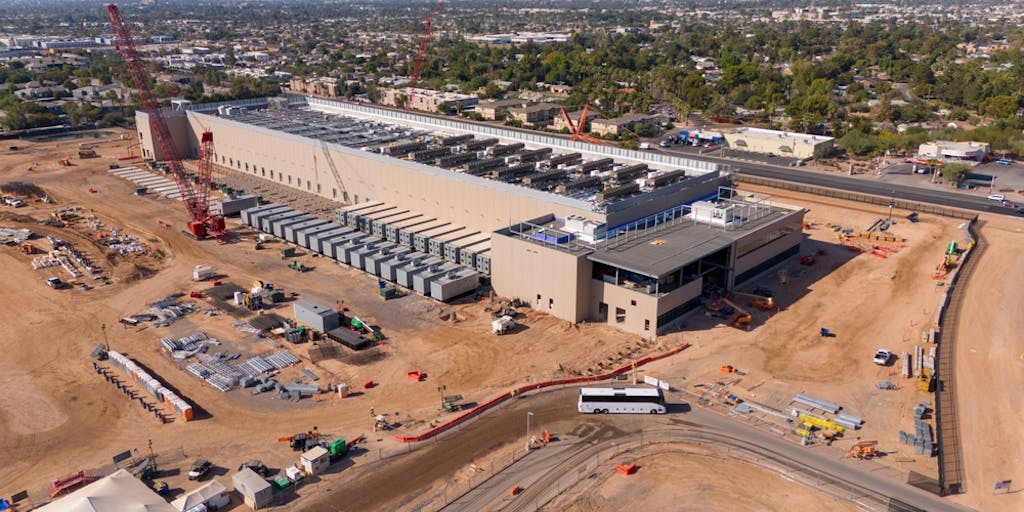
Data centers, often resembling large retail spaces, are rapidly being integrated into communities. Virginia stands out as the “data center capital of the U.S.” with 35 percent of worldwide hyperscale data centers located there. However, their proximity to schools raises several community concerns, particularly regarding energy consumption, water usage, and environmental sustainability. Critics point out that the construction of these facilities can negatively impact local drinking water sources and contribute to sound pollution.
Louisa County, Virginia recently gained attention for opposing a vast proposed Amazon Web Services data center covering 7.2 million square feet. Residents voiced apprehensions about its effects on water quality and land value. Local citizens feel compromised by large corporations encroaching on community resources. Experts like Andrew Chien voice similar concerns, suggesting that data centers pose broader regional challenges regarding power and water use.
The economic benefits touted by corporations—primarily job creation—are also viewed skeptically. Research indicates that employment opportunities generated by data centers tend to be limited and transient, typically lacking the local advantages typically associated with traditional factories.
Despite these issues, AI companies continue to expand, bolstered by governmental support. The demand for computing resources appears limitless. Hence, discussions are underway regarding sustainable practices for data centers. Innovations are being introduced to help identify more environmentally sensitive locations for these facilities. For example, some students at Harvard have developed tools promoting greener practices in data center development.
Additionally, smaller “edge data centers” are emerging, which may better fit community needs and align more closely with environmental goals. While concerns persist regarding data centers’ environmental impact, there is potential for these facilities to serve educational purposes, possibly inspiring students to pursue careers in AI and technology.
Overall, the expansion of data centers brings both opportunities and challenges, necessitating careful consideration from policymakers and community members alike.
The content above is a summary. For more details, see the source article.









