


Key Takeaways
- Donut Lab’s all-solid-state battery claims performance improvements at high temperatures, but experts caution about insufficient data.
- The battery’s pouch swelled after high-temperature tests, raising concerns about potential safety issues.
- Further independent testing results and data on energy density and chemistry are anticipated for more clarity.
Latest Developments in Solid-State Battery Technology
Donut Lab, a Finnish startup, recently announced its second independent test results for its all-solid-state battery, claiming it is the first of its kind ready for production. The tests were conducted at extreme temperatures of 80 and 100 degrees Celsius (176-212 degrees Fahrenheit), significantly exceeding the maximum operating temperatures of conventional lithium-ion batteries.
Initial findings seem positive; the battery performed well under high temperatures, achieving 110.5% and 107% of its normal capacity at 80C and 100C, respectively. This efficiency at elevated heat is notable, as traditional lithium-ion batteries typically lose effectiveness and risk damage in similar conditions.
However, various experts express skepticism regarding the claims made by Donut Lab. Eric Wachsman, a materials science professor at the University of Maryland, noted that while the tests don’t contradict thermodynamic laws, the data is too limited to signify real-world applicability for automotive uses. He emphasized that commercial viability requires batteries to retain less than 10-20% capacity fade over thousands of cycles, a benchmark that has yet to be proven by Donut Lab’s tests.
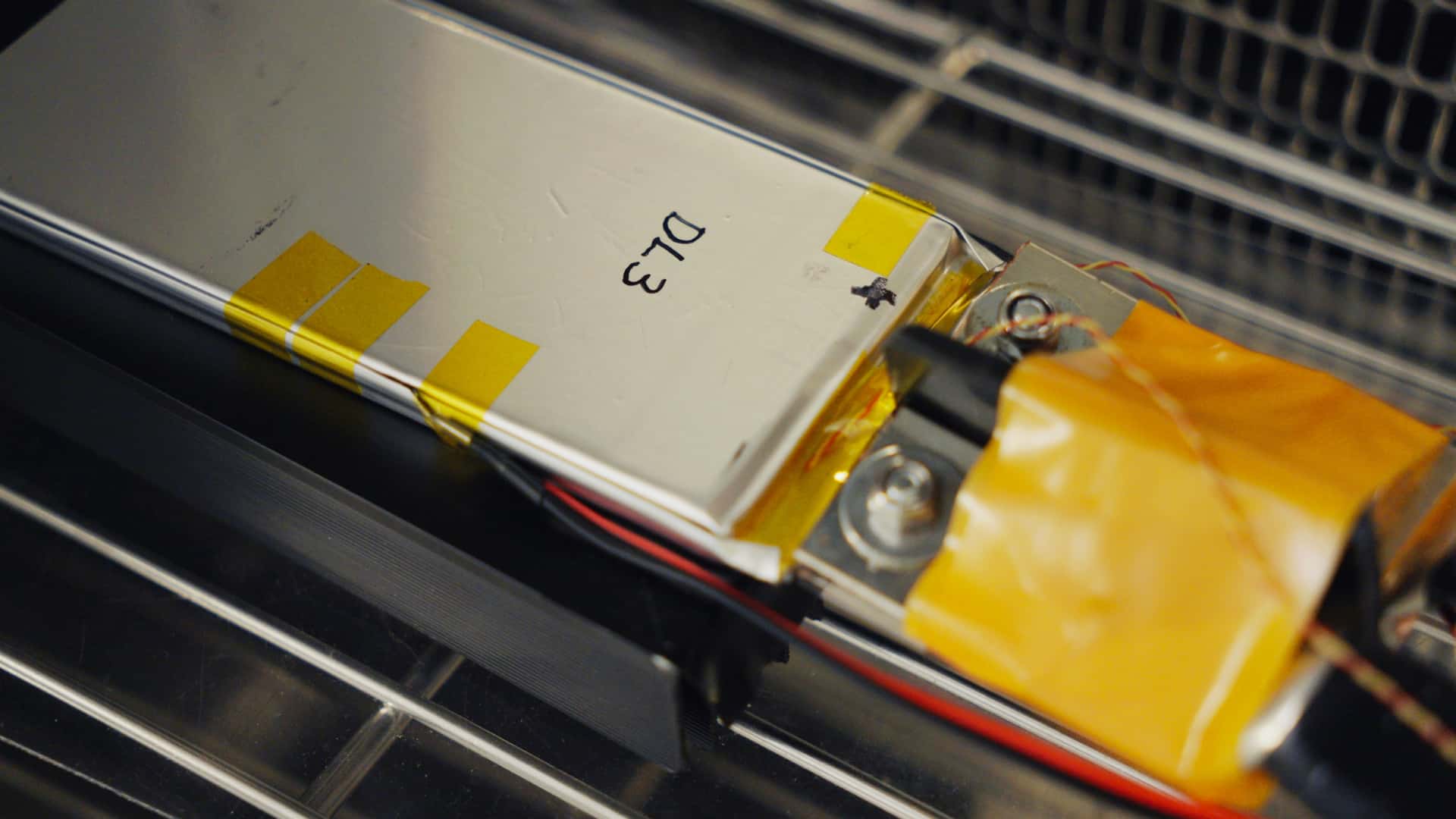
Concerns arose after the 100C test, where the battery’s outer pouch lost its vacuum, indicating that it may have lost its hermetic seal. This could imply issues related to the swelling of the pouch, which occurs when gas is released during cycling. Such swelling can lead to potential safety hazards, emphasizing the need for further investigation into the battery’s design and performance in long-term usage.
The ambition behind solid-state batteries lies in their potential to revolutionize electric vehicle (EV) technology. They promise improved driving range, reduced charging times, and diminished fire risks compared to current lithium-ion batteries. Despite numerous companies racing to develop these technologies, mass production remains complex and fraught with challenges.
Donut Lab’s initial announcement generated significant online attention due to its bold claims, including extraordinary specifications: an energy density of 400 watt-hours, a five-minute charging time, and a lifespan of 100,000 cycles without using rare earth materials. In response to initial skepticism, the company has committed to providing independent test results to validate its performance claims.
As the industry watches closely, more independent testing and data regarding energy density and battery chemistry are expected in the coming weeks. The broader consensus among experts underscores the importance of thorough testing and validation before solid-state batteries can be deemed commercially viable. Until further results surface, the technology remains in a critical phase of scrutiny and evaluation.
The content above is a summary. For more details, see the source article.









