


Key Takeaways
- Drone technology is transforming agriculture in Bangladesh, enhancing efficiency and precision.
- Government and institutional support are facilitating the adoption of drone-assisted smart agriculture.
- Challenges such as cost and technical know-how persist but are being addressed through cooperatives and training programs.
Transforming Agriculture Through Drones
In Bangladesh, agriculture is a vital sector, employing over 41 percent of the population and contributing approximately 14 percent to the GDP. However, the sector faces significant challenges, including climate change effects, diminishing arable land, and urban migration. These issues have fueled the adoption of drone-assisted smart agriculture, which is becoming essential for survival.
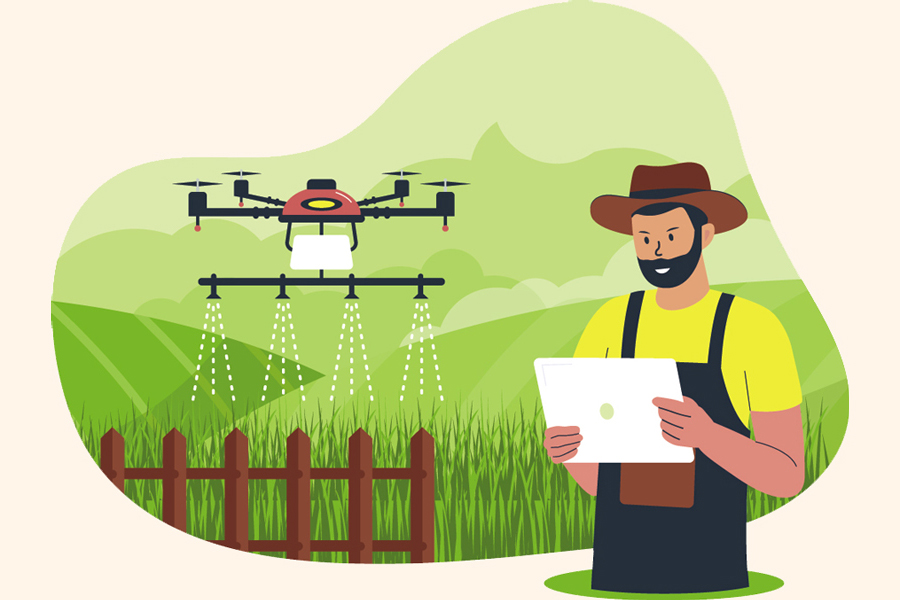
Drones are now integral tools in farming, equipped with advanced technologies like high-resolution cameras and GPS modules. They perform multiple roles: mapping fields, monitoring crop health, detecting pests, and applying fertilizers with precision. This shift from traditional farming methods to drone technology allows for real-time data analysis, improving efficiency and substantially increasing crop yields.
Significant backing from institutions like the Department of Agricultural Extension (DAE) and the World Bank has accelerated the incorporation of drone technology. The DAE has launched pilot projects that train agricultural extension officers to use drones for farming insights. Additionally, the World Bank’s Climate-Smart Agriculture Investment Plan has enabled over 127,500 farmers to adopt new technologies, leading to yield increases of up to 60 percent.
The government is working on regulatory frameworks for drone usage in agriculture, including licensing and training provisions. However, considerable barriers remain. High costs associated with drones make it difficult for smallholder farmers, who represent over 80 percent of the agricultural community, to afford them. Collaboratives and private companies are introducing rental services to mitigate this challenge.
Technical expertise is another hurdle. Training programs initiated by organizations like BRAC aim to educate rural youth in drone operations, creating skilled service providers. Additionally, research institutions are integrating drone technology into academic curricula, facilitating further innovations.
AI’s role in drones enhances efficacy; projects utilizing neural networks have been developed to identify crop diseases with remarkable accuracy. This technology not only minimizes crop losses but also optimizes farmers’ operations, offering actionable intelligence.
Adopting drones reduces ecological impacts by ensuring precise applications of chemicals and speeds up farming tasks, significantly lowering labor costs. Drones have also proven crucial in post-disaster assessments, enabling rapid evaluations of affected crops, leading to more efficient governmental relief efforts.
Looking forward, innovative trials aim to connect drone imagery with blockchain for farm traceability, promoting transparency and premium pricing in international markets. To realize this potential, experts advocate for comprehensive agricultural policies and enhanced infrastructure to support drone technology integration.
Bangladesh’s agricultural landscape is undergoing a pivotal change. By embracing drone-assisted smart agriculture, the country is carving out a path for sustainable and technology-driven farming that may serve as a model for other nations facing similar challenges.
The content above is a summary. For more details, see the source article.









