


Key Takeaways
- Energy Dome and ENGIE signed an offtake agreement for the first full-scale CO2 Battery in Italy, set to launch in Q1 2025.
- The project will enhance energy storage capabilities, supporting the transition to renewable energy sources.
- The CO2 Battery project received backing from EU-Catalyst, aiming to further promote emerging climate technologies.
Partnership for Clean Energy Storage
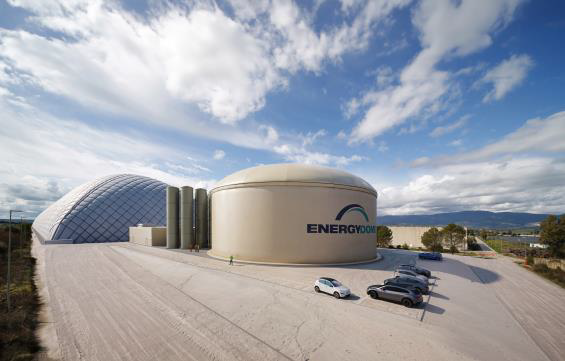
Energy Dome, a company specializing in long-duration energy storage (LDES), has partnered with ENGIE, a global leader in low-carbon energy, under an offtake agreement for Energy Dome’s CO2 Battery. This is a significant step toward transitioning from research to the commercial deployment of clean technologies. The CO2 Battery, located in Ottana, Sardinia, Italy, is scheduled for commissioning in the first quarter of 2025 and will be one of the few operational energy storage assets globally, capable of a 10-hour discharge duration due to a commercial agreement.
Under the terms of the agreement, Energy Dome will both own and operate the CO2 Battery facility. In contrast, ENGIE will utilize its market expertise to optimize the storage and dispatch of energy within Italian power markets. The partnership highlights the importance of long-duration energy storage in improving grid resilience and reliability. ENGIE aims to strengthen its energy storage position by leveraging solutions like the CO2 Battery to cater to the increasing demand for renewable energy. Since 2023, ENGIE has been proactive in the field, managing a portfolio of 43 MW/48 MWh of battery energy storage systems (BESS), and the deal with Energy Dome will enhance their knowledge in storage optimization even further.
The Ottana project achieved a notable milestone by being the first European initiative to receive funding from the EU-Catalyst program, which aims to expedite the deployment of emerging climate technologies with the support of public and private resources. This funding announcement took center stage at COP28 in Dubai and was reinforced at COP29, where stakeholders emphasized the critical role of technologies like LDES in achieving the Global Energy Storage and Grids Pledge, which aims for 1,500 gigawatts of energy storage capacity by 2030.
ENGIE’s Chief Executive for Global Energy Management & Sales, Edouard Neviaski, expressed enthusiasm about the partnership, underscoring a commitment to developing sustainable, flexible solutions that contribute to the energy transition. “This collaboration highlights our unwavering commitment to developing sustainable and flexible solutions that drive the energy transition,” he stated.
Mario Fernandez from Breakthrough Energy noted that scaling innovative projects is complex, requiring technological advancements as well as new commercial strategies. He sees the partnership as a tangible example of a commercial model that can lead to scalable opportunities worldwide.
Energy Dome’s CEO Claudio Spadacini reinforced their readiness for deployment, asserting that the agreement with ENGIE validates their business model and confirms the market-leading proposition of their technology. The goal is to accelerate efforts to decarbonize by providing sustainable utility-scale energy storage.
Additionally, Gelsomina Vigliotti from the European Investment Bank acknowledged the EIB’s crucial role in financing breakthrough technologies, including Energy Dome’s CO2 Battery, which is expected to contribute to Italy’s climate and energy objectives.
The cooperation also represents Energy Dome’s first offtake deal under its “Energy Storage as a Service” model, demonstrating readiness to scale its solutions commercially with public support mechanisms aiding the acceleration of clean technologies. The nearing completion Ottana project features a 20 MW/200 MWh CO2 Battery unit, capable of sustaining electricity supply for approximately 14,000 households for a continuous 10 hours, showcasing the scalability of Energy Dome’s technology.
The content above is a summary. For more details, see the source article.









