


Key Takeaways
- China’s energy production for coal, oil, natural gas, and electricity all reached record levels in the first quarter.
- Investment in the energy sector surged by 9%, significantly supported by policies aimed at expanding domestic demand.
- China’s shift toward renewable energy is diversifying the energy supply and increasing economic stability amidst rising international energy prices.
Record Growth in China’s Energy Sector
China’s energy sector showed impressive resilience in the first quarter, with record output for coal, crude oil, natural gas, and electricity. As global energy markets remain volatile due to geopolitical conflicts, experts indicate that China’s robust energy production acts as a critical stabilizing force for the national economy.
According to the National Bureau of Statistics, raw coal output hit 1.2 billion metric tons—an increase of 0.1 percent year-over-year. Crude oil production rose 1.3 percent to 54.8 million tons, while natural gas output increased by 3 percent to 68.07 billion cubic meters. These figures underpin domestic industrial and residential energy needs amidst international market instability.
Lin Boqiang, an energy policy expert, noted that China’s self-sufficiency in energy supply has mitigated the impact of volatile international prices on everyday life and businesses. Deputy head of the NBS, Mao Shengyong, highlighted that the nation’s forward-thinking approach in diversifying energy sources has significantly enhanced economic independence.
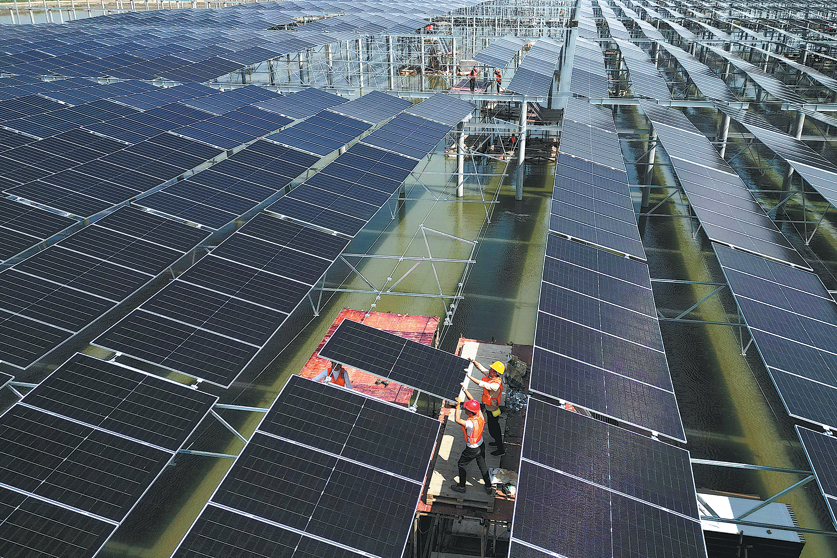
Additionally, the first quarter saw a 2.8 percent increase in electricity generated from clean energy sources, accounting for 33.2 percent of total large-scale industrial power generation. By the end of February, China’s renewable energy capacity reached 2.38 billion kilowatts, comprising 60.3 percent of the nation’s total power capacity. This transition is vital for reducing carbon emissions and mitigating risks associated with traditional fuels.
Investment dynamics are crucial for maintaining growth momentum in the energy sector. In the first quarter, fixed-asset investment in electricity, heat, gas, and water production surged by 9 percent, surpassing the national average for fixed-asset investment. Significant capital investments are also pouring into infrastructure development, particularly in power grid advancements.
Dong Xiucheng, a professor at the University of International Business and Economics, noted that the rapid rollout of major energy infrastructure projects, such as ultrahigh voltage transmission lines and large-scale renewable energy bases, is fueling industrial activity and ensuring long-term energy security. He emphasized that these initiatives have effectively bolstered energy supply stability, thereby stabilizing costs for both businesses and the public.
Overall, China’s energy sector’s achievements in the first quarter reflect a strategic approach to energy independence and resilience amid global uncertainties.
The content above is a summary. For more details, see the source article.









