


Key Takeaways
- India aims for 500 GW of non-fossil fuel capacity by 2030, requiring an integrated approach for reliable energy systems.
- Engineering strategies must adapt to diverse regional conditions, focusing on local environments and advanced technology integration.
- The rise of battery energy storage necessitates rigorous safety and performance measures throughout project design and execution.
Engineering the Future of Renewable Energy in India
India’s renewable energy sector is evolving, shifting its focus from mere capacity additions to creating reliable, integrated clean energy systems. Achieving the ambitious target of 500 GW of non-fossil fuel capacity by 2030 necessitates comprehensive engineering throughout the project lifecycle—from site assessment to construction and long-term operation. The quality of initial design decisions will significantly impact effective grid integration and project performance over the decades to come.
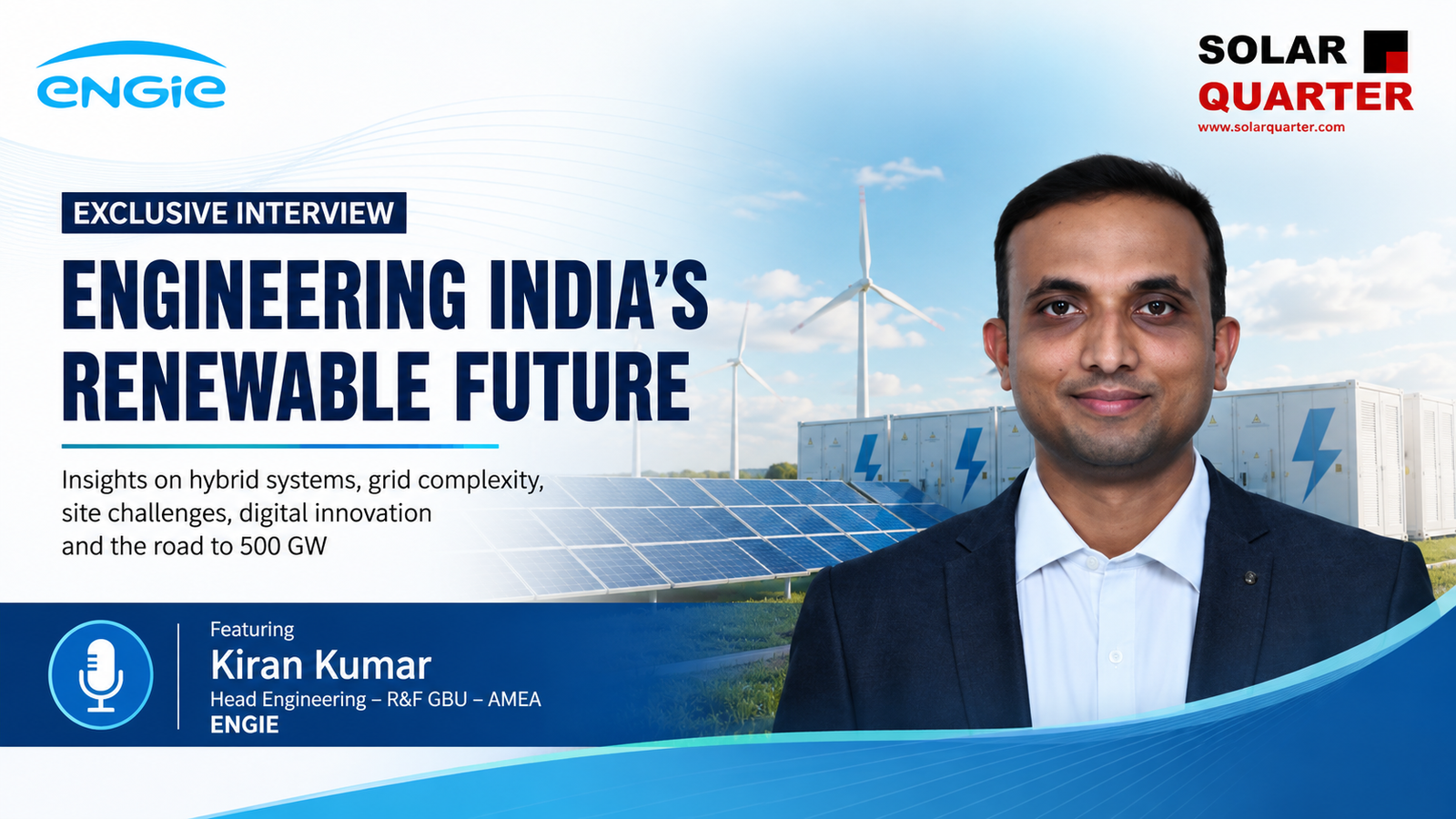
Kiran Kumar, Head of Engineering at ENGIE, notes that engineering discipline must be embedded early in projects. For example, ENGIE’s 200 MW ENREN II project in Khavda was commissioned in nine months, showcasing the speed and efficiency needed for accelerated renewable deployment. With over 2 GW of renewable capacity in India, ENGIE emphasizes creating assets designed for efficient integration and long-term reliability.
As hybrid renewable parks gain prevalence, engineering strategies must adapt. Projects must consider how solar, wind, and battery storage interact. This requires comprehensive power flow studies, advanced forecasting, and sophisticated plant control systems to ensure stable operation amidst varied generation profiles.
To counter grid complexity, early integration of grid considerations is essential. Detailed system studies and flexible project designs will enhance adaptability to shifting grid demands. Advanced digital capabilities are crucial for real-time monitoring and optimization, ensuring smoother integration of renewable resources.
Recognizing India’s diverse climatic conditions, ENGIE tailors engineering methodologies to geographical specifics. Solutions include water-free cleaning systems in the dusty regions of Rajasthan and optimized structural designs for high-wind areas. This site-specific approach is vital for achieving reliable energy performance across India’s varied landscapes.
The importance of engineering decisions during project design cannot be overstated. Factors such as equipment selection and operational architecture significantly influence long-term performance. ENGIE underscores a proactive maintenance approach, ensuring each asset delivers consistent clean energy throughout its lifecycle.
The government’s Make in India initiative promotes domestic manufacturing, influencing equipment selection and enhancing local capabilities. This growing ecosystem supports project engineering decisions while maintaining international standards for quality and performance.
Battery energy storage emerges as a crucial aspect of renewable integration, introducing various safety considerations. Key design elements must encompass thermal management, fire detection systems, and ongoing maintenance strategies.
Looking ahead, innovations such as AI, digital twins, and robotics are set to transform renewable infrastructure development. These technologies promise smarter, interconnected energy systems capable of real-time optimization and predictive maintenance. The future of India’s renewable landscape depends on creating infrastructure that is not only effective but also adept at continuously improving its performance.
The content above is a summary. For more details, see the source article.









