


Key Takeaways
- Eastern Oregon University’s Greater Oregon STEM Hub won the top award for its AI + Agriculture program at the Oregon Ag Fest.
- The program aims to enhance agricultural education through technology for rural students, impacting nearly 500 youths and over 70 educators.
- Recognizing the importance of ag tech, the program fits within a projected $46.6 billion market by 2034.
Recognition for Innovative Agricultural Education
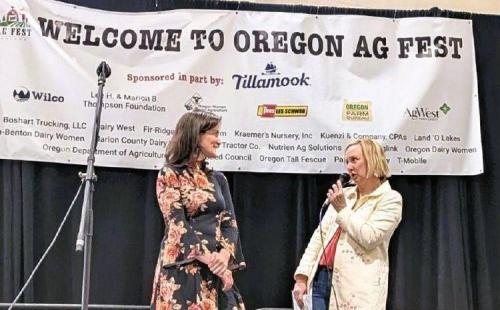
Eastern Oregon University (EOU) recently garnered significant acclaim at the 14th annual Oregon Ag Fest Agricultural Education Awards held in Salem. The university’s Greater Oregon STEM Hub secured first place with its innovative artificial intelligence (AI) and agriculture program, known as AI + AG.
Elaine Swanson, an instructor in EOU’s agricultural entrepreneurship program and the AI and technology educator for the GO STEM initiative, developed the AI + AG program. In her remarks, Swanson emphasized that this recognition not only highlights the program’s efforts but also reinforces the inclusion of rural communities in the future of agricultural technology.
The annual awards celebrate organizations dedicated to advancing agricultural education and enhancing public understanding of farming in Oregon. The first-place accolade comes with a $2,000 monetary award.
The AI + AG program seeks to fill the educational gaps in Eastern Oregon by introducing students to the integration of technology within modern agriculture. A 2025 study by Global Market Insights revealed that the AI and agriculture market is expected to reach approximately $46.6 billion by 2034, highlighting its relevance.
Since its launch, nearly 500 young individuals and more than 70 agriculture and career technical education teachers across six counties—Baker, Wallowa, Umatilla, Union, Grant, Harney, and Morrow—have participated in hands-on learning labs through the program. These labs provide practical experiences using artificial intelligence and satellite data for crop monitoring and water management.
Swanson expressed pride in the program’s impact, stating, “Through AI + AG, I’ve taught artificial intelligence, satellite data, and the future agriculture workforce all across our region.” She noted that a particularly rewarding aspect has been witnessing students transform from uncertainty into curiosity, as they engage with complex questions regarding water, technology, and the broader food systems.
The content above is a summary. For more details, see the source article.









