


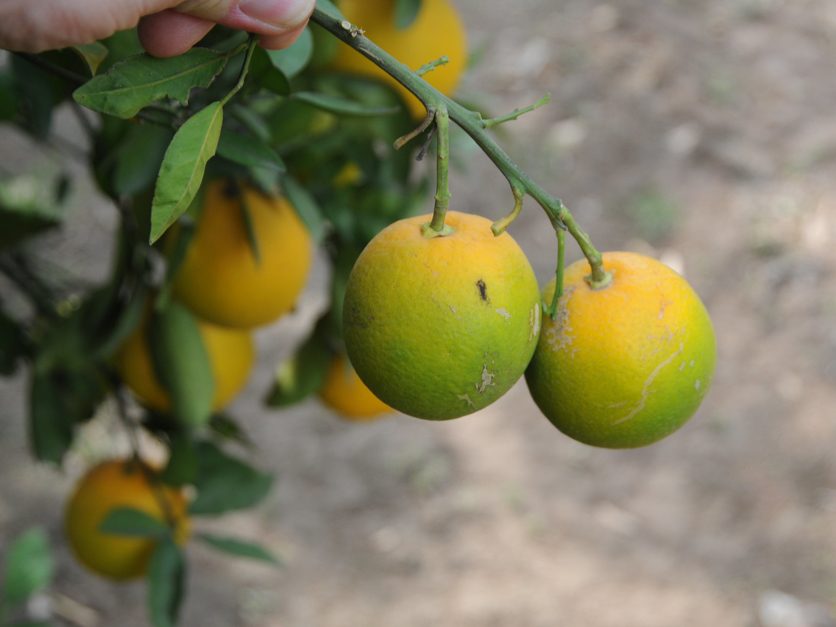
Key Takeaways
- The EPA has approved CarriCea T1, a gene-edited citrus rootstock resistant to the Huanglongbing disease.
- This disease has devastated the U.S. citrus industry, resulting in significant tree loss and economic damage.
- CarriCea T1 could reduce the need for pesticides while ensuring the fruit remains similar in quality to existing varieties.
EPA Approves New Gene-Edited Citrus Rootstock
The U.S. Environmental Protection Agency (EPA) has granted approval for CarriCea T1, an innovative gene-edited citrus rootstock designed to combat Huanglongbing (HLB), a bacterial infection that has plagued the U.S. citrus sector. Developed by Soilcea with support from the USDA and the National Science Foundation’s Small Business Innovation Research programs, CarriCea T1 exhibits resistance to HLB, which is notably spread by the Asian citrus psyllid.
Huanglongbing, also known as citrus greening, has been a significant threat since it was first detected in Florida in 2005. It has caused extensive damage to the industry, killing around 50 million trees, leading to the loss of approximately 47,000 jobs, and inflicting $76.5 billion in economic harm. The impact on Florida’s citrus production has been stark; in the 2003-04 season, the state produced nearly 292 million boxes of citrus fruits, a figure that plummeted to 14.6 million boxes due to the disease—reflecting a nearly 95% decline. Furthermore, HLB has spread to other citrus-producing states including California, Texas, and Alabama.
The EPA highlights that CarriCea T1 functions by making precise edits to the existing genetic structure of citrus plants, thereby altering the way the bacteria interacts with the trees. This technology does not involve the introduction of DNA from other organisms and has the potential to diminish reliance on conventional pesticides.
EPA Administrator Lee Zeldin emphasized the benefits of CarriCea T1 in an April 28 press release, stating it protects American citrus, bolsters the food supply, and allows growers a more sustainable pest control method. The approval comes at a critical time as Florida’s citrus industry is facing historic declines, with USDA projections indicating that the final production figures for the 2024-25 season will be the lowest since the 1919-20 season, registering only 12.15 million boxes of oranges, 1.3 million boxes of grapefruit, and 400,000 boxes of tangerines and tangelos.
Fruit derived from trees utilizing CarriCea T1 will be indistinguishable from conventional varieties, according to the EPA. The agency has conducted a comprehensive dietary safety assessment under its regulatory framework for plant-incorporated protectants (PIPs), confirming that CarriCea T1 meets both human health and environmental safety standards. Unlike some PIPs that incorporate genes from other species, CarriCea T1 merely modifies genes that are already present in citrus plants.
For those seeking more information on agricultural innovations and rural developments, additional details regarding the registration of CarriCea T1 will be made available in the docket EPA-HQ-OPP-2025-0211 on regulations.gov.
The content above is a summary. For more details, see the source article.









