Key Takeaways
- Hisdesat will launch the SpainSat Next Generation I satellite on January 29, 2025, from Cape Canaveral.
- The satellite, supported by ESA, aims to enhance secure communications for governments and emergency services across multiple regions.
- SpainSat NG1 features advanced technology for real-time coverage adjustments and is a major advancement in European satellite communications.
Launch of SpainSat Next Generation I
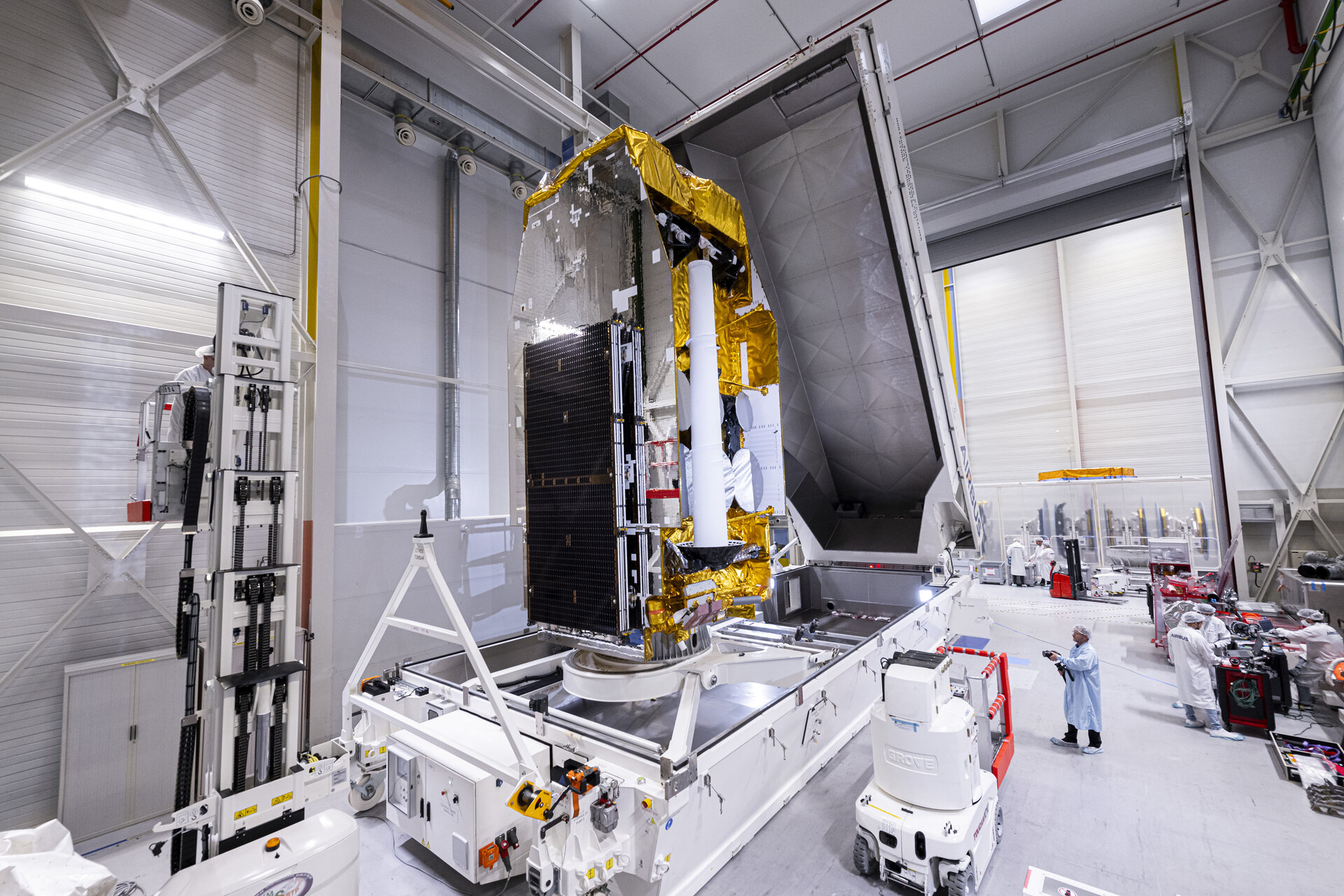
Hisdesat, Spain’s leading provider of secure satellite communications, is preparing to launch its SpainSat Next Generation I (SNG I) satellite on January 29, 2025. The launch will occur from Cape Canaveral, Florida, aboard a SpaceX Falcon 9 rocket at 20:34 EST (or 02:34 CET on January 30). This initiative, supported by the European Space Agency (ESA), highlights efforts to provide cost-effective, adaptable, and secure communication services to governmental and emergency response agencies across Europe, North and South America, Africa, the Middle East, and parts of Asia.
The launch represents a significant achievement in European space cooperation through the Pacis 3 Partnership Project. This project involves collaboration between ESA’s Connectivity and Secure Communications, Hisdesat, and Airbus Defence and Space. SNG I is part of the broader SpainSat Next Generation programme, which includes two satellites built on Airbus’ Eurostar Neo platform. ESA leads the development of the satellite’s advanced communications payload, equipped with state-of-the-art antenna technology that increases data transfer speeds, enhances security, and customizes communication beams based on demand.
With a weight of 6.1 tonnes and a height of 7.2 meters, the SpainSat NG1 is designed to safeguard its communications against interference. Its advanced antenna system allows for real-time adjustments to coverage, ensuring optimal bandwidth allocation according to user needs and environmental conditions. After launch, the satellite will ascend to geostationary orbit at an altitude of 35,786 km, where it will undergo in-orbit acceptance tests before becoming fully operational.
Laurent Jaffart, ESA’s Director of Connectivity and Secure Communications, emphasized that “SpainSat NG represents the next generation of secure satellite communications in Europe.” This initiative is expected to significantly improve adaptable and secure communication services for government users.
Miguel Ángel García Primo, CEO of Hisdesat, highlighted that SpainSat NG is a crucial project developed through public-private partnerships involving the Spanish Ministry of Defense and various Spanish ministries. It incorporates cutting-edge technology, including X-Band active antennas, bolstering secure satellite communications for the Spanish Armed Forces and NATO allies.
Enrique Granell, Project Manager at Airbus for SpainSat NG, stated that this satellite is the most advanced secure communications satellite in Europe, representing a key effort to maintain European innovation and autonomy in space technology. Overall, the SpainSat Next Generation programme marks a pivotal step in advancing secure communications in Europe through collaborative efforts and advanced satellite technologies.
The content above is a summary. For more details, see the source article.